

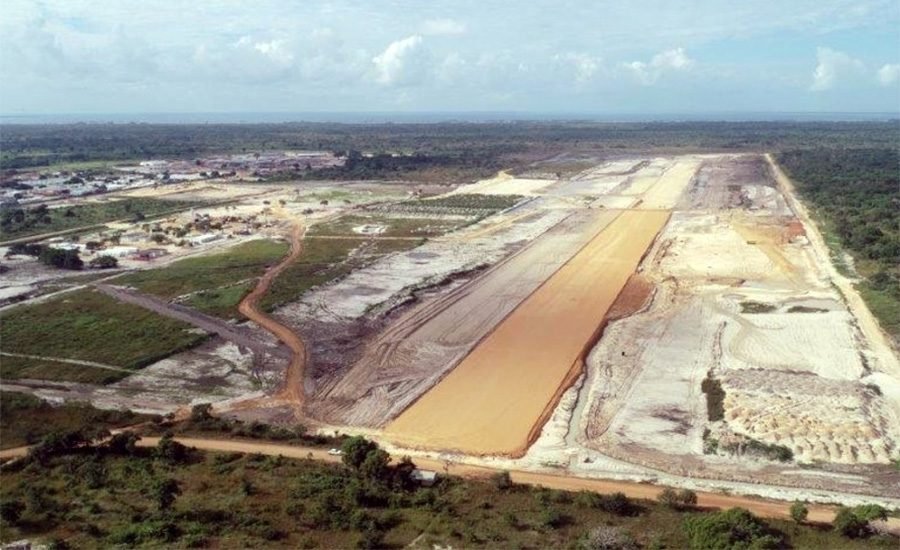
Construction has resumed on Mozambique’s $20 billion LNG export project in northern Mozambique, with more than 4,000 workers remobilized onshore and offshore after a four-year shutdown caused by insurgent violence in the African nation’s Cabo Delgado province.
Industry reports in early to mid-February confirm that workforce levels are rebuilding on the Afungi Peninsula in Cabo Delgado, home to the project’s onshore LNG facilities, following the formal restart announcement late last month.
RELATED
68 US companies receive federal support to supply Mozambique LNG project
The reports cited confirmation from Paris-based TotalEnergies that construction activities have resumed and that first LNG remains on target for 2029. The renewed activity follows a decision on November 7 by the company and its partners to lift. force majeurewhich had been in operation since April 2021 after insurgent attacks near the project area forced evacuations and halted construction.
TotalEnergies has a 26.5% stake in the Mozambique LNG consortium, with other partners including Japan’s Mitsui, ENH, Bharat Petroleum, Beas Rovuma, ONGC Videsh Rovuma, BPRL Ventures Mozambique and Thailand’s PTTEP.
In a January 29 statement, TotalEnergies said Mozambique LNG had “completely restarted all its onshore and offshore activities in Mozambique”, adding that the project is “currently 40% complete”.
Reuters reported on January 29 that improved security conditions, supported in part by Rwandan forces deployed in Cabo Delgado, enabled the consortium’s decision to resume work.
Looking for quick answers on construction and engineering topics?
Try Ask ENR, our new intelligent AI search tool.
Ask ENR →
Located in Mozambique’s Area 1 concession in the Rovuma offshore basin, the project is designed to produce around 13 million metric tonnes of LNG per year once fully operational.

The site plan of the Mozambique LNG development on the Afungi Peninsula shows the onshore processing area, construction and operations areas and the proposed marine export facilities in the Bay of Palma.
Site map courtesy of Earth Justice
For engineering and construction companies, the shift from suspension management to schedule recovery is the immediate proof.
Onshore development on the Afungi Peninsula includes LNG processing trains, storage tanks and marine facilities. The offshore scope includes subsea production systems and associated marine operations. TotalEnergies’ confirmation that work has resumed “both onshore and offshore” indicates that marine logistics, manufacturing sequencing and field installation activities have re-entered the construction phase after nearly four years of disruption.
Mozambique LNG has involved major international contractors and US involvement in the supply chain. ENR previously reported US Export-Import Bank support related to equipment and services for the development in 2020, when the engineering, procurement and construction of the LNG plant was partnered with a joint venture formed by Saipem, Chiyoda and McDermott International, with Worley providing support services.
In March 2025, the Export-Import Bank said its board approved a second amendment to a direct loan of up to $4.7 billion to support U.S. exports for an integrated LNG project in Mozambique, bolstering federal development-related support.
RELATED
Mozambique gives green light to $20 billion Anadarko LNG project
Security remains a material variable. The Armed Conflict Location & Event Data Project reports that violent incidents in Cabo Delgado remain below the levels of increase recorded during the period surrounding the 2021 suspension, although sporadic attacks continue in some parts of the province. The International Crisis Group has reported that while regional and foreign military deployments have reduced large-scale assaults, the insurgency has not been decisively defeated, leaving stability dependent on sustained security coordination.
With manpower levels rebuilt and offshore operations reactivated, the project’s ability to maintain stable logistics, security coordination and contractor remobilization through 2026 will determine whether the 2029 first load target remains on track.
