

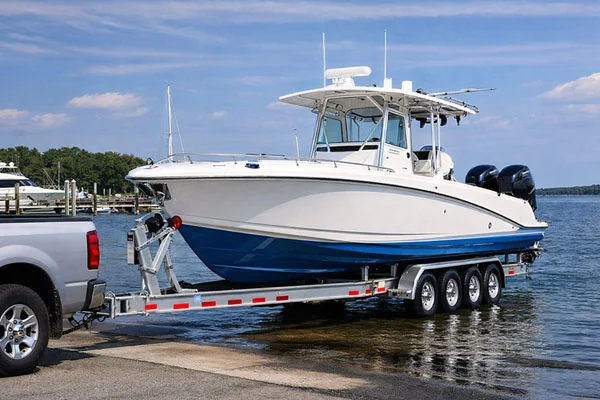
30ft boat trailer for heavy offshore vessels and road trailer
If you have a large offshore fishing boat, a 28- to 30-foot center console, or a mid-size cabin cruiser, choosing the right 30-foot boat trailer is not optional. It directly affects road stability, braking safety and long-term helmet protection. A properly designed 30-foot boat trailer offers balanced load distribution, controlled stopping power, and structural reliability when towing 9,000 to 15,000 pounds over long distances.
At this size, you are operating in a heavy duty category. Frame thickness, axle rating, suspension design and brake setup must all work together as a system. A misalignment in any area increases sway, accelerates wear and compromises safety. That’s why understanding the technical side of a 30-foot boat trailer is important before investing.

What type of boats need a 30 foot boat trailer
A 30-foot boat trailer is typically used for offshore center consoles, performance speedboats, fiberglass cruisers, and deep-V hull fishing boats. These boats are not only long, they are heavy and often carry full fuel tanks, batteries, electronics and fishing gear which add significantly to the total weight of the transport. A 29-foot offshore vessel can easily exceed 10,000 pounds when fully loaded.
The shape of the boat’s hull also affects the trailer configuration. Deep V hulls require precise alignment of the sleepers. Broad beam ships require adequate space between the cruisers to avoid pressure points. When the support system is designed correctly, weight is distributed evenly and strain on the helmet is minimized during transport.
Key specs you need to understand before you buy
GVWR and payload capacity
The gross vehicle weight rating is the maximum combined weight of the trailer and boat. If your boat weighs 11,000 pounds and the trailer weighs 2,000 pounds, your GVWR must exceed 13,000 pounds with an extra margin of safety. Never select a trailer that operates at its maximum rating continuously. The extra capacity reduces stress on axles, tires and brakes.
Total length and weight of the tongue
A 30-foot boat trailer is usually longer than 30 feet to accommodate the winch support and correct bow position. Correct tongue weight is critical to road stability. Too little tongue weight causes it to wobble. Too much load on the rear axle of the towing vehicle. Balanced positioning ensures predictable towing performance.
Brake type selection
Heavy marine applications require reliable braking systems. Electric trailer brakes allow cab adjustment. Hydraulic surge brakes are automatically activated when the towing vehicle slows down. The electric-over-hydraulic systems combine precision control with strong stopping power, making them ideal for trailering configurations of heavier 30-foot boats.
30 ft steel vs aluminum boat trailer for marine use
When comparing steel to aluminum 30-foot boat trailer options, corrosion resistance and weight are the main differences. Steel offers excellent structural strength and economic profitability. However, exposure to salt water requires a robust surface treatment such as hot-dip galvanizing to prevent corrosion inside and outside the frame.
Aluminum trailers reduce trailer weight and improve fuel efficiency. They naturally resist rust, which makes them attractive in coastal environments. The choice depends on towing frequency, environment and budget priorities.
Frame design and load distribution
A heavy-duty 30-foot boat trailer should use reinforced rectangular tubing or I-beam construction to resist torsional stress during braking and cornering. Reinforced cruisers distribute the weight of the hull evenly across the frame. Proper stretcher alignment prevents concentrated pressure in limited areas of the hull, reducing long-term structural fatigue.
Load distribution directly affects road control. When the frame stays stiff and the axles stay aligned, the trailer stays straight and reduces sway at highway speeds.
Tandem vs triple axle configuration
Most 30-foot boat trailers use tandem axles rated between 3,500 and 8,000 pounds per axle. Tandem axles improve stability, distribute weight evenly and reduce braking distance. For heavier vessels over 14,000 pounds, triple-axle configurations provide additional margin of safety and improved load balance.
The choice of suspension is also important. Leaf spring suspension is durable and widely used. Torsion axles provide a smoother ride quality and reduce vibration transfer to the helmet during long road trips.
Brake systems for large boat trailers up to 30 feet
Electric trailer brakes
Electric brakes are connected to a brake controller inside the towing vehicle. This allows the driver to adjust the braking force depending on the load and the terrain. Electric systems provide strong control during steep descents and emergency braking.
Hydraulic surge brakes
Surge brakes are automatically activated by hydraulic compression when the towing vehicle slows down. They do not require an electronic controller and are common in marine applications due to their simplicity and reliability.
Docking and snapping settings
Most 30-foot boat trailers use heavy-duty 2 5 16-inch ball couplers. For extremely heavy setups, gooseneck connections offer better weight distribution and greater stability when placing load on the truck’s rear axle. Always check compatibility between hitch capacity and trailer weight.
Lighting and safety features
Waterproof LED lighting systems provide visibility in rain, fog and night conditions. Side lights, reflective tape and sealed wiring protect against corrosion and electrical failure. A breakaway system automatically activates the trailer brakes if a breakaway occurs. Safety chains rated to match trailer capacity provide additional protection.
Launch and recovery efficiency
Launching a 30-foot boat requires controlled movement. Roller systems reduce friction and help with shallow ramps. Bunk systems provide better hull support for heavier boats. A heavy-duty manual or electric winch ensures safe recovery. Adjustable winch brackets and high-capacity tow jacks simplify alignment and connection.
Maintenance for long-term durability
Exposure to salt water requires routine rinsing and inspection. Check welds, fasteners, brake lines and axle components regularly. Lubricate your wheel bearings consistently and check your tire pressure before each ride. Proper maintenance significantly extends the life of the trailer and protects your investment.
Customization options for 30′ boat trailers
Professional manufacturers can customize axle ratings, sleeper systems, winch assemblies, lighting setups, spare tire mounts and surface treatments. The custom design ensures that the trailer fits the dimensions of your boat precisely rather than forcing a fit after purchase.
Three Horses Trailer offers an engineered frame design, precision welding and surface treatment options including hot dip galvanizing for marine durability. Its focus on structural strength and manufacturing precision supports rugged towing performance.
Frequently asked questions about a 30 foot boat trailer
What weight capacity should a 30 foot boat trailer have?
Most 30-foot boats require trailers between 12,000 and 15,000 pounds of GVWR. Calculate the full weight of the boat, including fuel and gear. Select a trailer with an extra margin of safety above the actual load to reduce stress on the braking and suspension systems.
It is the best galvanized steel for salt water use
yes Hot-dip galvanized steel provides superior corrosion resistance because the zinc coating bonds to the metal surface and protects internal cavities. It is widely considered the most durable surface treatment for marine environments.
Do I need power brakes for a 30 foot boat trailer?
For heavy highway towing, electric or hydraulic braking systems are highly recommended and often required by regulation. Electric brakes provide adjustable stopping power and improved safety during downhill travel.
How long can a 30 foot boat trailer last?
With regular maintenance and corrosion prevention, a high-quality steel trailer can last 10 to 15 years or more. Aluminum trailers can last longer in coastal climates because of their resistance to rust.
Can a pickup truck tow a 30 foot boat trailer?
Many three-quarter-ton and one-ton trucks can tow 30-foot heavy boat trailers when properly equipped with a rated brake controller and hitch. Always confirm that the fully loaded trailer weight is within the towing capacity of your vehicle before towing.
