

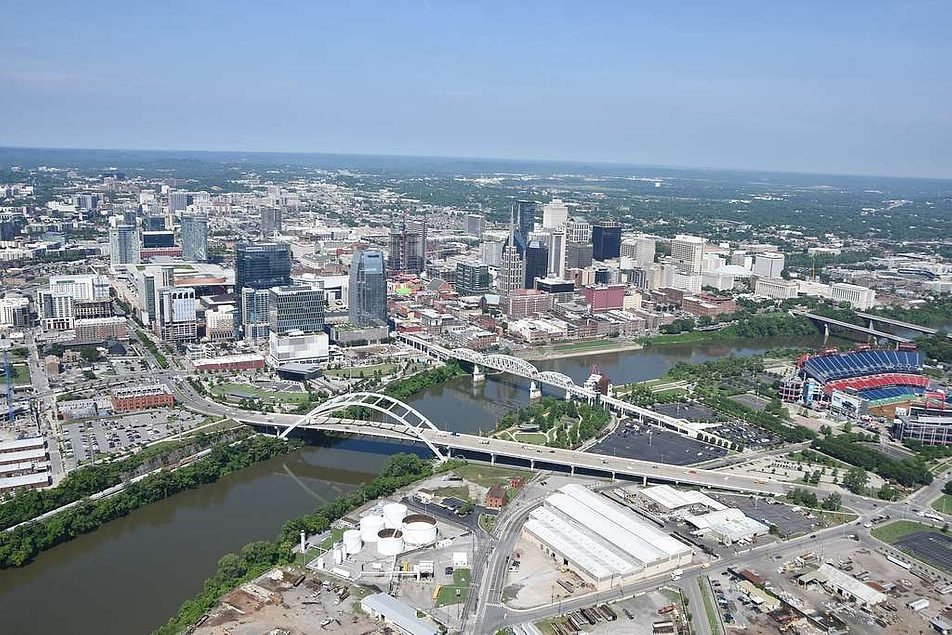

As Tennessee state and local officials voice concerns about limited transparency surrounding the proposed $400 million Music City Loop, a transit tunnel in Nashville intended to connect downtown with the city’s international airport, lead developer The Boring Co. digging has quietly begun near the Tennessee State Capitol.
This activity comes despite the company’s statement to ENR that the tunnel has not yet begun and final permit approvals are still pending, prompting renewed scrutiny over oversight and public participation.
“Right now, there’s a big hole in the floor, so I know something’s going on,” said Nashville At-Large Council Member Delishia Porterfield. “Something has started. Are they testing the soil? We just don’t know. We don’t have any information.”
Founded by Elon Musk, The Boring Co. is the main developer of the underground tunnel network. Despite the project’s scale and potential impact on public infrastructure, Porterfield said council’s concerns center on a lack of accountability.
He said large-scale tunnel projects often require permitting, geotechnical assessments, coordination of utilities and, most critically, engagement with local officials. Bypassing Nashville’s standard review channels could lead to cost overruns and compromise safety oversight if the project moves forward without input from local lawmakers, Porterfield said.
“There are many questions surrounding this project.” she said. “From the environmental impact to what happens if there’s a fire or someone gets stuck in the tunnel; is there a protocol? Those are questions that are usually answered before approval.”
According to Porterfield, “This is going to affect our local first responders — it’s taxpayer money that’s going to have to be used.”
Although city officials have expressed frustration at being left out of early discussions, the project has been championed by state leadership. In a July announcement, Tennessee Gov. Bill Lee (R) said the Music City Loop is “a bold step forward to advance mobility, economic growth and infrastructure modernization throughout the region,” adding that it would have “zero cost to taxpayers.”
But some state lawmakers remain unconvinced. State Sen. Charlene Oliver, who represents the 19th District, where the tunnel is planned to run, said she has not been contacted by the developer.
“They hide behind press releases and blog posts,” Oliver said. “They won’t respond to my emails or texts. It’s a failure of leadership because they don’t have a good product to sell us.”
Oliver said the lack of direct communication from The Boring Co. has left her and other lawmakers scrambling for answers, especially as the dig in her district continues. He described efforts to engage with the company as frustrating and one-sided, adding that scheduled meetings were canceled and messages went unanswered. In his view, the company avoids dialogue with representatives of Nashville’s most diverse communities, the ones most likely to be affected by the project.
“They’ve already started digging and yet those of us who represent the communities directly affected have not been consulted,” Oliver said. “They seem to be sending us on a wild goose chase when all they have to do is be honest and transparent.”
The Tennessee State Building Commission’s executive committee approved the lease agreement in July that gave the developer access to a state-owned parking lot in downtown Nashville. The site is expected to serve as a launch point for the Music City Loop.
In the statement to ENR, The Boring Co. said it is working closely with state and regional partners and has held “more than 100 one-on-one meetings with local elected officials and business leaders, including Council members and city staff.”
This claim, however, has been met with skepticism.
“I have no idea who they’ve met, if they’ve met at all [Council] members, I don’t know who that would be,” Porterfield said. “They keep us in the dark about everything.”
WKRN in Nashville reported that all 40 council members were contacted; only six members confirmed meeting with the company, 25 said no and nine did not respond.
Oliver also expressed skepticism about The Boring Co.’s claim. and said lawmakers representing the affected areas had not been engaged.
“If they are really transparent, I would ask a lot [the company] release the list of people they have met because those of us who represent the communities directly affected have been completely left out,” he said.
The company did not respond to questions about which permits are still pending or which elected officials it has met with.
According to the company’s blog, the first segment of the project will be operational in early 2027. The Loop is expected to operate about 30 feet underground. Each of the twin one-way tunnels will have an internal diameter of 12 feet, with more than 20 stations currently in the design phase. The full tunnel is expected to begin in the fourth quarter, pending permit approval and completion of final design work.
