

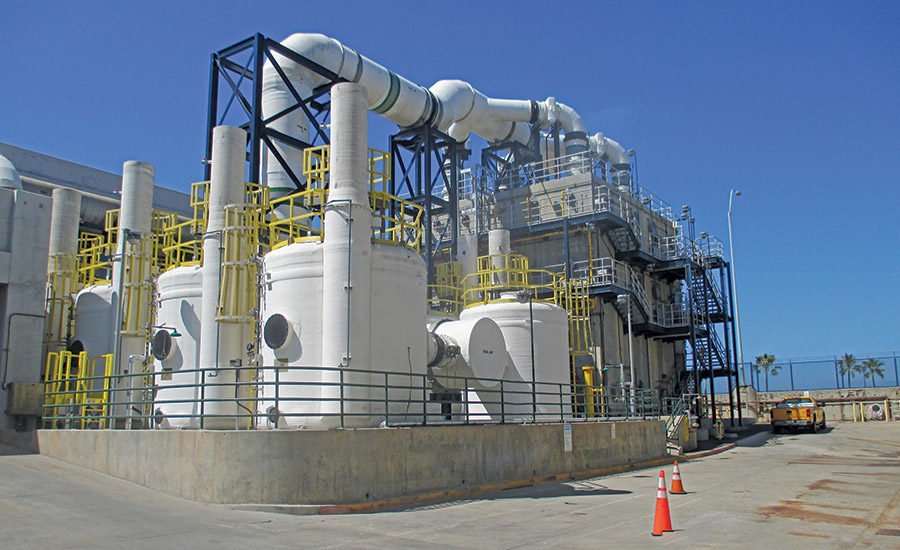
Hyperion Headworks Odor Control Update
los angeles
BEST PROJECT
Sent by: City of Los Angeles Engineering Office
Owner/Main Design Company: City of Los Angeles Engineering Office
General contractor: Murray Company Mechanical Contractors
To significantly improve air quality and reduce odor emissions at Hyperion’s water reclamation plant, crews replaced outdated odor control equipment with advanced technologies, specifically four bio-trickling filters (BTF) and eight carbon scrubbers to effectively remove hydrogen sulfide and malodorous gases from the influent. sewer and headwater areas.
BTFs use biological processes to break down hydrogen sulfide and other pollutants in a sustainable and environmentally friendly way. This approach improves odor removal effectiveness and reduces reliance on hazardous chemicals, promoting a safer work environment for plant operators.
In addition, the eight new carbon scrubbers use activated carbon to adsorb and remove residual odorous compounds, ensuring that the treated air released into the environment is virtually odor-free. The integration of BTF and carbon scrubbers creates a robust odor control system capable of handling different levels of odor emissions.

by Kenneth Frere
Gases extracted from the influent sewer and headers will be treated sequentially using the BTF system and activated carbon units, ensuring maximum odor removal efficiency and mitigating potential impacts to the surrounding community. The scope also included the installation of advanced monitoring and control systems to continuously assess the performance of the odor control equipment, allowing real-time adjustments and optimization.
During construction, a major flood threatened to derail the team’s progress. From the start, the flood created a chaotic, high-pressure environment. The first priority was to ensure the safety of all personnel. Clear and consistent updates were crucial as crews coordinated efforts to evacuate non-essential personnel and protect sensitive equipment. The quick response highlighted the importance of having a well-prepared emergency protocol and a team that could execute it smoothly.
The focus then shifted to recovery and restarting construction. As the waters receded, the facility not only returned to its original operating state but also incorporated improvements made during the flood to better withstand future events.
