


One thing that strikes me about reading ENR’s year-long series celebrating our 150th anniversary is the perspective it gives us on construction and journalism.
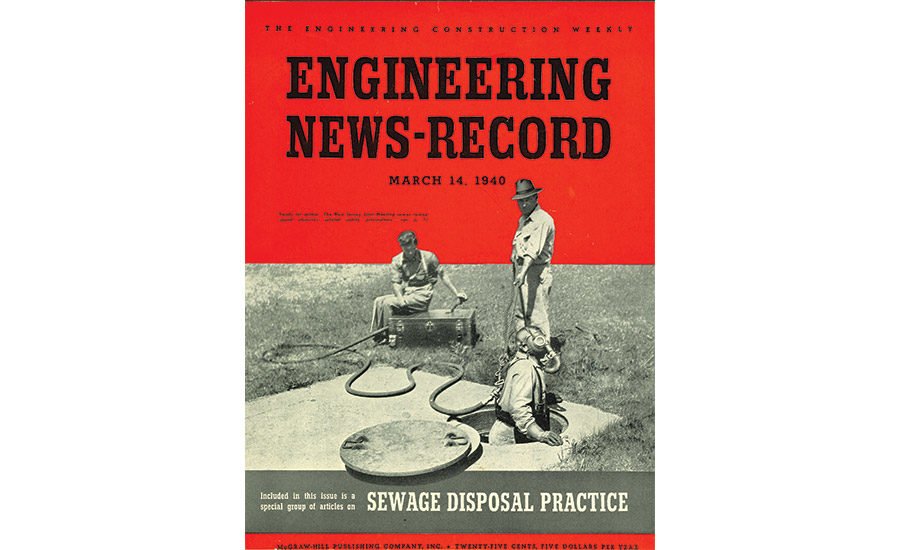
Written by recently retired ENR Research Director Scott Lewis, the series showed me that the creation and perfection of our built environment reflects a century and a half of ingenuity. However, a turning point for the publication came with the advent of magazine photography, which began in a German magazine in 1901. The addition of photographs brought visual life to ENR’s coverage , allowing the magazine in 1926 to show workers inside a wooden pipe under construction at a hydroelectric plant on the Klamath River. In 1944, ENR’s cover featured one of the first declassified images of a portable Bailey bridge, which proved invaluable to the Allies during World War II.
Another thing that strikes me was the drive of former ENR editor and engineer Arthur Wellington, described in a thoughtful article by Lewis, to investigate accidents for the lessons they could teach engineers in the late 19th century . In fact, ENR was an active part of perfecting the engineering and construction methods of railways and foundation construction.
The first such case, Lewis wrote, was a rail disaster in March 1887 where a Boston bridge collapsed while a commuter train was crossing it, killing 38 people. After hearing the news, Wellington sent a bridge engineer from New York to Boston to find out the cause. There, the ENR correspondent found “the pair of broken floor beam hangers whose failure had caused the disaster.”
Since then, construction and journalism have changed. The global industry is larger, highly segmented and specialized. It remains both localized (general contractors often rely on local subcontractors) and yet overall coordination of larger projects is increasingly carried out by large construction corporations. Concern for the environment is now paramount, while at the same time, areas of the world still lack safe water and reliable electricity. How the funds are spent and who is affected is considered more broadly.
And ENR is no longer written by and for engineers exclusively. We remain obsessively dedicated to those who design and build the built environment. But we are no longer an academic engineering journal, as Lewis has pointed out. Instead, we reflect the broadly diversified industry. Our coverage and top company rankings and cost data, project competitions and award programs are used by executives, estimators, HR managers, risk managers, security personnel, lawyers, suppliers and sellers Public works officials read us. Also union leaders. Our stories are also seen by the general public, whose welfare is also paramount in our minds. We try to tie together this loose confederation of sometimes-disputing constituencies. And we depend far more on you, our audience, to know what’s important and what you need than those who created this publication 150 years ago ever imagined.
By Richard Korman
Assistant Editor
