

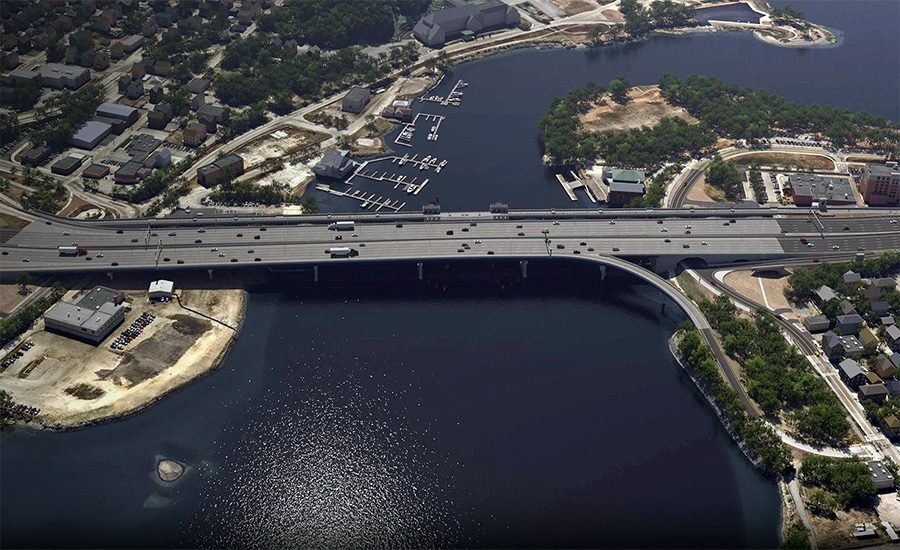

As federal infrastructure aid slows and subsidy cuts loom, a new Volcker Alliance report warns that many state governments are not disclosing billions of dollars in deferred maintenance liabilities, an omission that obscures the true extent of infrastructure decay and hinders long-term planning.
The three-part series, “Meeting the Trillion-Dollar Challenge,” released Oct. 16 by the nonprofit public-sector think tank, estimates the nation’s backlog of needed repairs at about $1 trillion, or about 4 percent of U.S. GDP.
RELATED
Washington DOT says $8 million needed to stop crumbling infrastructure
Developed with the University of Minnesota Humphrey School of Public Affairs and supported by the Pew Charitable Trusts, the project examines how states identify, assess and report maintenance needs.
“There is no one-size-fits-all approach to assessing or disclosing deferred maintenance across states,” said Camila Fonseca Sarmiento, director of fiscal research at the Humphrey School and lead author of the report. “Without standardized disclosure, policymakers and engineers are flying blind.”
RELATED
Harsh realities of infrastructure maintenance: It won’t be new for long
About 30 states now reference deferred maintenance liabilities in their capital budgets — up from 23 in 2019 — so about 20 have no public accounting of the issue, according to the alliance, founded by former Federal Reserve Chairman Paul Volcker.
ENR’s own review of state budget documents mirrors the alliance’s findings when it comes to locating credible, up-to-date and verifiable numbers.
State practices expose deep gaps
The report highlights stark contrasts in asset management and disclosure practices.
The California Department of General Services estimates about $8 billion in deferred maintenance at more than 12,000 state-owned facilities, reporting those numbers annually to lawmakers. The state also mandates five-year capital outlay plans detailing project status and condition scores.
Oklahoma, by contrast, does not list any statewide totals. Each agency maintains its own asset data and deferred maintenance figures are not consolidated in capital budget documents.
In Massachusetts, the Division of Capital Asset Management and Maintenance has developed a full inventory, but faces a backlog of more than $3.2 billion, mostly in higher education and public safety facilities.
Those variations underscore what Noah Winn-Ritzenberg, the alliance’s senior director of public finance, called “a patchwork of definitions and accounting practices that make it nearly impossible to compare progress across states or allocate resources efficiently.”
Buildings to bridges, data gaps widen
The problem of disclosure goes far beyond public facilities. A July analysis by the Pew Charitable Trusts estimated that state and local governments face about $105 billion in deferred maintenance on roads and bridges alone.
Pew found that while nominal spending has increased since 1999, inflation and asset depreciation have eroded real investment. More than 30 states project funding shortfalls totaling $86.3 billion through 2035.
“Even when agencies have maintenance goals, inconsistent data and weak reporting make it difficult to connect funding decisions to outcomes,” the Pew analysts wrote.
The transparency gap is not the exclusive competence of states. At the federal level, the US Government Accountability Office reported that the deferred maintenance and repair backlog for civilian agencies and the US Department of Defense more than doubled (from $171 billion in FY 2017 to $370 billion in FY 2024), prompting the agency to add “Construction Conditions” to the your 2025 high risk list.
Accurate data is important
When a bridge fails, quick fixes are rare. Failures that could have been avoided through routine maintenance often turn into more costly crises. The absence of consistent baseline data also hinders agencies’ ability to move from reactive repairs to strategic and proactive asset management.
“When you don’t know the status of your assets, you can’t prioritize investments,” said Natalie Wood, a policy analyst at the National Conference of State Legislatures.
The consequences are tangible: An asset management study found that without regular maintenance, average bridge condition ratings dropped from 4.64 to 2.67 over 30 years, indicating accelerated deterioration and higher replacement costs.
RELATED
Pool cover failure cited as trigger in Surfside apartment collapse
“As federal dollars dwindle, states that don’t quantify their liabilities run the risk of increased costs later,” said William Glasgall, the alliance’s public finance adviser. “Deferred maintenance isn’t just a number, it’s a future service failure.”
For infrastructure planners, engineers and contractors, the alliance emphasized that reliable data and message dissemination are the foundations of predictable capital planning. Without transparency reforms, he said, the $1 trillion backlog will continue to grow, putting essential public assets at risk.
“We strongly encourage states to address this imminent threat before it becomes a crisis,” Winn-Ritzenberg said.
