

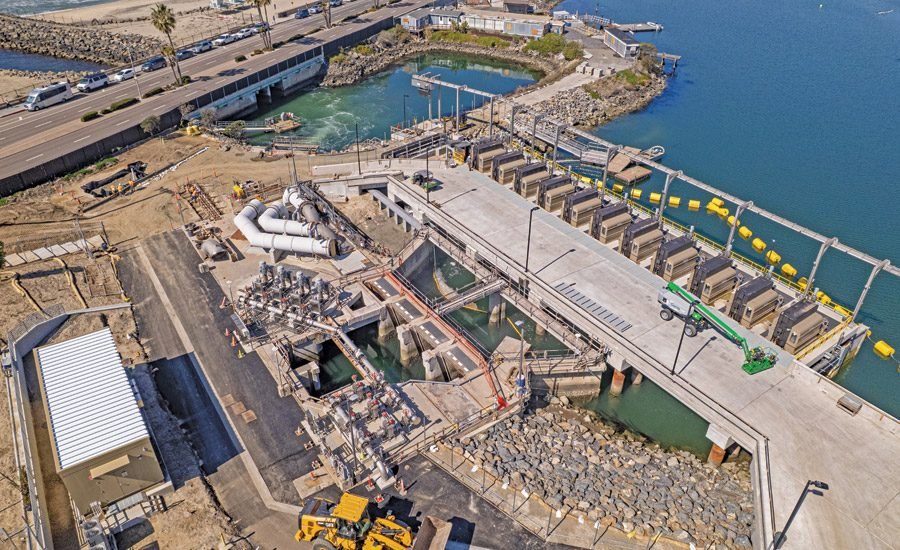
Intake and discharge installation of the Carlsbad desalination plant
Calif.
BEST PROJECT
Presented by HDR
owner Water resources next to the canal
Leading design company HDR
General Contractor Kiewit Shea joint venture
When the largest seawater desalination facility in the United States officially opened in 2015, it initially relied on cooling water drawn through the Encina Power Plant. After the plant ceased operations in 2018, stakeholders had to create a temporary catchment and discharge system while they planned a permanent solution. This $200 million effort replaces the temporary structure with a technologically advanced and environmentally sensitive seawater intake and discharge facility.
The project, part of a multi-decade strategy to diversify the county’s water supply and minimize vulnerability to drought, will allow the desalination plant to continue delivering 50 million gallons per day of water to the San Diego County Water Authority.
To implement the system, the team used a complex computational fluid dynamics model and a collaborative design and construction approach in multiple phases. Construction continued while the team maintained active plant operations. This project also includes the country’s first 1 millimeter screens to filter seawater – a total of 11 screens help protect marine life and reduce the rate of water intake.

Photo courtesy of HDR
Due to supply chain issues and the short project schedule, the team procured equipment prior to final design when possible. Several items, including screens, pumps and electrical components, took more than a year to source, while other items took months.
As for the new dam itself, it is designed to withstand tidal fluctuations, sea level rise, tsunamis and earthquakes, all while resting on difficult and highly liquefiable soils. Without buttresses, the addition of more piles and a cast-in-place end span will help the facility overcome large longitudinal displacement during earthquakes.

Photo courtesy of HDR
For more than 50 years, power plant operators regularly maintained Agua Hedionda Lagoon and dredged an opening to the ocean to maintain a source of seawater to cool the plant’s generators. The 388-hectare lagoon is a shallow man-made coastal reservoir. Now that Channelside has taken over responsibility for dredging Agua Hedionda Lagoon from NRG Energy, the intake system project will better protect critical wildlife, the environment and the plant. It includes a mudline 19 feet deep, with 14 feet of artificial fill and high groundwater, influenced by seawater and tides. With only a few borings separated by hundreds of feet, the team verified that all the borings hit bedrock without going too deep, which would be costly.

Photo courtesy of HDR
Completed on budget and on schedule in December 2024, the dual flow screens at the new intake and discharge facility improve sustainability, maintain the productive lagoon and comply with the California Ocean Plan Amendment. To implement the system, the team used a complex computational fluid dynamics model and a collaborative design-build approach in multiple phases, while maintaining plant operations throughout construction.
