

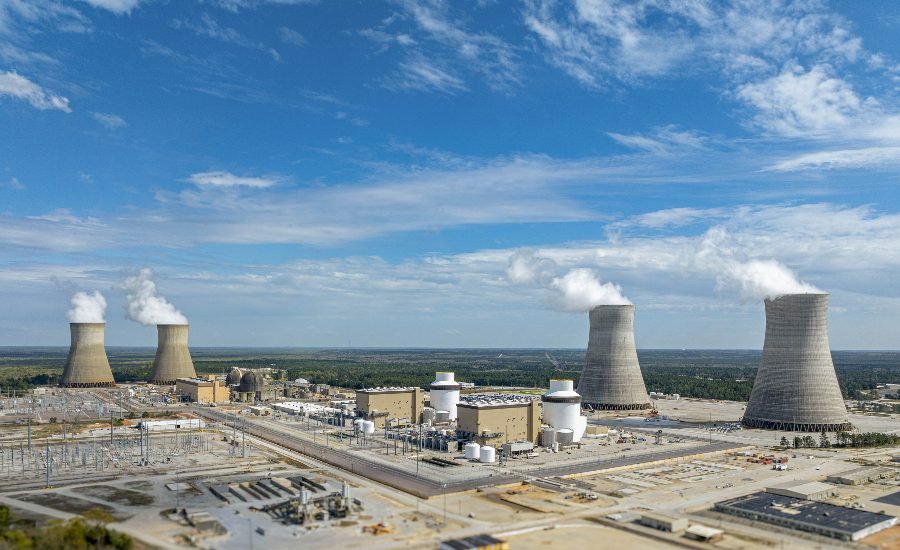

At least $80 billion in nuclear reactors using Westinghouse Electric Co. technology. will be built in the US under a tentative agreement between the company’s owners and the US Department of Commerce, the parties announced on 28 October.
The deal comes as data centers for artificial intelligence help drive demand for electricity and the Trump administration promotes the development of nuclear power projects and related technologies, as President Donald Trump said by executive order in May.
Under the agreement, the government would arrange financing and facilitate the approval of permits for the construction of Westinghouse nuclear reactors in the US.
“Our administration is focused on ensuring the rapid development, deployment and use of advanced nuclear technologies,” Commerce Secretary Howard Lutnick said in a statement.
Westinghouse’s Canadian owners, uranium supplier Cameco Corp. and Brookfield Asset Management, which partnered to acquire Pennsylvania-based Westinghouse in 2023, indicated it will use its 1,200 MW AP1000 reactors under the deal.
Two AP1000s are currently in use in the US at Plant Vogtle in Georgia, and South Carolina utility Santee Cooper announced this month that it intends to work with Brookfield to evaluate the possibility of resuming construction of two AP1000s at the unfinished expansion of the VC Summer nuclear plant, which was abandoned in 2017.
Another four AP1000s are operating in China and more have been contracted in Asia and Europe to come online in the 2030s.
The national rollout of the reactors is estimated to involve more than 100,000 construction jobs, the companies say. Earlier this year, Westinghouse leaders said the company planned to build 10 of the reactors in the US starting in 2030.
“[W]We believe the US government’s participation in the partnership creates the right incentives to deploy its full set of tools behind the construction of Westinghouse’s reactors, including financial, regulatory, political and diplomatic support,” Cameco CEO Tim Gitzel said in a statement.
Under the deal, the government would receive an equity interest that entitles it to 20 percent of the more than $17.5 billion in cash distributions made by Westinghouse. And if the government’s interest has taken over by January 2029 and Westinghouse’s valuation in an initial public offering is estimated at $30 billion or more, officials may require an IPO.
In this case, the government could buy equity securities equal to 20% of the public value of the IPO entity, after deducting $17.5 billion from that value.
Once they close the deal, Westinghouse plans to start ordering equipment with long lead times.
