

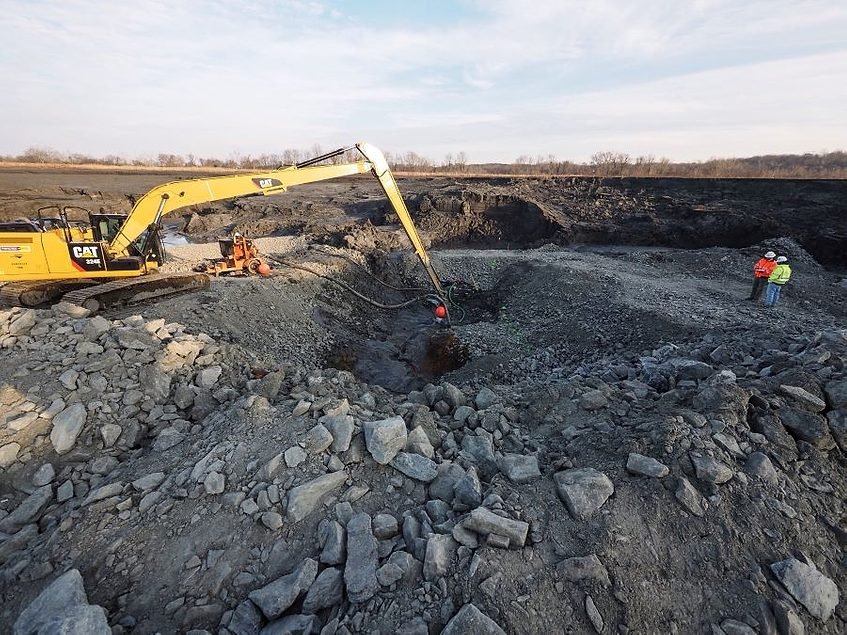

North Dakota has become the fourth US state to receive authority to manage its own coal ash disposal operations, following the US Environmental Protection Agency’s approval of the state’s coal combustion waste program.
The decision, announced Nov. 5, allows the state Department of Environmental Quality, rather than the EPA, to issue permits for the disposal of coal combustion waste (CCR) in surface impoundments and landfills. In addition to North Dakota, Georgia, West Virginia and Ohio have previously received approval to run their own CCR programs.
Earlier this year, the EPA announced it would take swift action on CCRs, including revisions to state permitting programs and updates to regulations. The administration has proposed approval of Wyoming’s program and is working with other states as well.
An EPA spokesperson told ENR that North Dakota “has a unique landscape and unique community needs, and [that] Local experts should lead the way in protecting the environment and fostering economic growth,” adding that the approval “exemplifies how the partnership between EPA and the states can unlock American energy and create jobs.”
The action is in line with the Trump administration’s plan to “reinvigorate” the coal industry and increase domestic energy production. In an executive order last April. President Donald Trump said this is necessary to ensure the nation’s economic prosperity and national security and to lower the cost of living.
In addition, EPA issued a direct final rule and supplemental proposal last July to extend the compliance deadlines for the CCR management unit requirements. The agency said this allows facilities to submit both sections of the facility assessment report together, as long as both reports are submitted no later than February 8, 2027.
CCR, which is produced primarily by burning coal in coal plants, includes various byproducts such as fly ash, bottom ash, boiler slag, and flue gas desulfurization material.
After reviewing North Dakota’s program, the EPA said it determined last May that its CCR application meets the standards and, after review of public comments submitted to the agency, finalized the approval.
“There might be lessons learned that we should take into account,” EPA Administrator Lee Zeldin said in a live news conference with North Dakota Gov. Kelly Armstrong (R) in Bismarck on Nov. 5. “But what I assessed very quickly is that this agency was very well prepared to send a message to every state across the country that we are ready and open for business.”
Armstrong said the state has effectively regulated CCR for more than 40 years while protecting the environment and public health. “The potential to extract rare earth elements and critical minerals from CCR, rather than having to import them from foreign adversaries, makes this approval of our CCR permit program even more important to US energy independence, the economy and national security.”
Environmental groups quickly condemned handing over CCR oversight to the states.
“The EPA buried its head in the sand and ignored the permits that North Dakota has already issued to eight coal ash landfills. These permits have allowed rampant noncompliance for years, and it is illegal for the EPA to ignore them,” Lauren Piette, senior attorney for Earthjustice, said in an email. “The EPA knows it’s illegal because the agency said it was just a year ago, when it denied Alabama’s application after evaluating the state’s coal ash permits.”
According to the American Coal Ash Association, 69% of the coal ash produced in the US in 2023 was recycled, marking the ninth year in a row that more than half of the production was put to beneficial use rather than disposal.
