


The two federal agencies charged with ensuring that waterways considered “Waters of the United States,” or WOTUS, are protected from pollution have released a proposed rule that they say will clear up decades of confusion over which wetlands and bodies of water require federal permits for construction projects that could damage or disturb them.
Critics argue that the new rule would result in degraded water quality in some states, as millions of miles of streams and acres of wetlands would be removed from current federal permitting requirements.
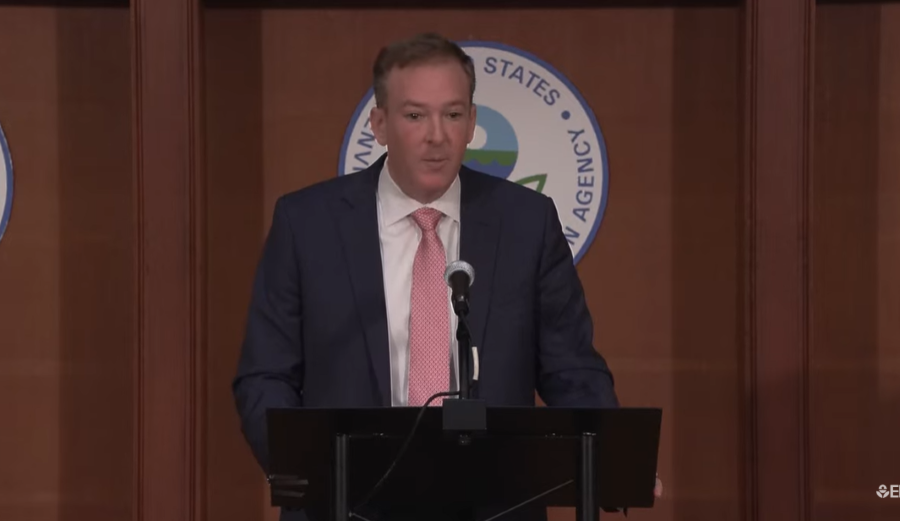
Officials from the US Environmental Protection Agency and the US Army Corps of Engineers announced details of the proposal at a press conference in Washington, DC on November 17.
EPA Administrator Lee Zeldin said the agencies are trying to establish “clear and practical” rules that are easy to understand and codify the US Supreme Court’s 2023. Sackett v. EPA decision This ruling eliminated the “significant nexus” test created by Justice Anthony Kennedy in an earlier ruling in 2006, Rapanos vs. United States.
In the 2023 opinion, the court said federal waters requiring Clean Water Act protections should only include relatively permanent, standing, or continuously flowing bodies of water, such as streams, oceans, rivers, and lakes, and wetlands connected and indistinguishable from those bodies of water. Under the proposed rule, waters and wetlands without such a connection would no longer require a federal permit.
In the pre-publication language of the intended Federal Register notice, the agencies wrote that they “now recognize that the Clean Water Act ‘does not define EPA’s jurisdiction based on ecological significance’ or similar impacts,” which was part of the basis of Kennedy’s “significant nexus” language.
Industry groups respond
Many industry groups tell ENR they agree with the administration’s rationale for the proposed rule. American Highway and Transportation Builders Association President and CEO David Bauer described the Nov. 17 action as “a much-needed return to reality that respects the Supreme Court’s Sackett decision and protects actual waterways, not all roadside puddles or ditches.”
Kristen Swearingen, vice president of government affairs for Associated Builders and Contractors, says the proposal would eliminate much of the confusion and delays in the current regulatory framework.
But others argue that the rule, if finalized in its current form, would degrade the health of ecologically sensitive waters and wetlands that would previously have fallen under federal jurisdiction.
The Chesapeake Bay Foundation notes that the Bay Region is home to thousands of isolated wetlands and more than 118,000 linear miles of streams that flow intermittently or during certain seasons. Without federal protection, loopholes, waivers and limited enforcement could put many of these wetlands at risk, says CBF Senior Policy Director Keisha Sedlacek.
“EPA’s plan to further remove wetland protections would deal a serious blow to bay restoration,” he said in a statement. “In the absence of strong federal protections, the Bay States and DC must fill in the gaps or risk losing wetlands and streams that help save the Bay to short-sighted and irresponsible development and destruction.”
Several states have strong laws that protect water quality. They include Maryland, Virginia, the District of Columbia and California, says Larry Liebesman, a former attorney with the US Department of Justice’s Environmental and Natural Resources Division. But others don’t, he adds.
“Many states have relied on the federal definition, so they may not have laws or regulations in place to protect water resources across the state. . . . The question is, what will this mean for overall water quality?” Liebesman, now senior counsel at environmental permitting firm Dawson & Associates, told ENR.
Also, with fewer locations considered federal waters, the number of projects requiring state water quality certifications, which establish whether or not a project meets state water quality standards, could be “significantly reduced,” Liebesman added.
EPA will accept public comments for 45 days after the proposal is published in the Federal Register.
