

Central Business District Toll Program
new york
BEST PROJECT
Presented by HDR
Owner/Developer: Triborough Bridges and Tunnel Authority dba MTA Bridges and Tunnels
Construction Director and Principal Design Firm: TransCore
Program manager: HDR
North America’s first congestion pricing program aims to solve Manhattan’s decades-old traffic burden by paying for vehicles entering what have historically been the most congested areas of the borough, discouraging private vehicles and encouraging transit use in a designated Congestion Relief Zone (CRZ). Combining design, construction, operation and maintenance under a single contract eliminated multiple procurement processes, saving considerable time and effort in implementing the necessary infrastructure while ensuring long-term operational efficiency and encouraging the use of innovative technologies.

Photo courtesy of HDR
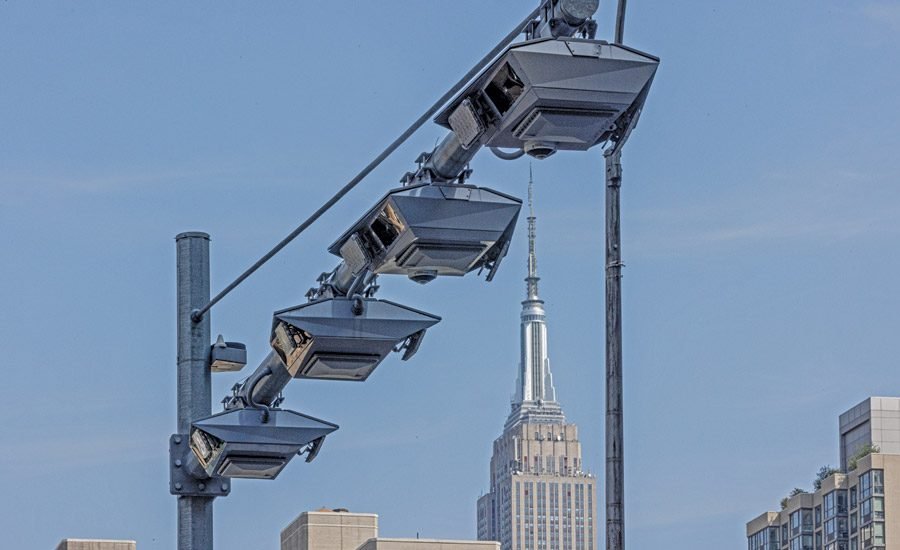
The project team deployed 110 detection points to form a perimeter around lower Manhattan. The toll collection system uses all innovative light detection methods that rely on neural network data processing and machine learning to accurately identify vehicles entering and leaving the area. To minimize visual impact, the equipment is mounted on existing infrastructure or light poles whenever possible, blending into the urban landscape. In addition, the team developed an algorithm to detect vehicles entering the CRZ from the excluded roads located along the perimeter. Using strategically placed detection points rather than installing equipment along all entrances and exits along the roadway minimized infrastructure sprawl.

Photo courtesy of HDR
In addition to technical challenges, the project navigated an uncertain political environment with multiple federal, state, and local stakeholders. Conflicting interests and shifting priorities added a layer of complexity that required persistent communication, negotiation, and flexible planning.

Photo courtesy of HDR
With the system launched on time and on budget, toll collection at the CRZ began on January 5. Since then, approximately 70,000 fewer vehicles enter the area each day, representing an 11% reduction from historical trends for the same months. With fewer vehicles on the road, journey times and reliability have improved and transit ridership has grown. The program has also generated $215 million in revenue in the first four months that will be applied to address long-standing transit system needs.
