

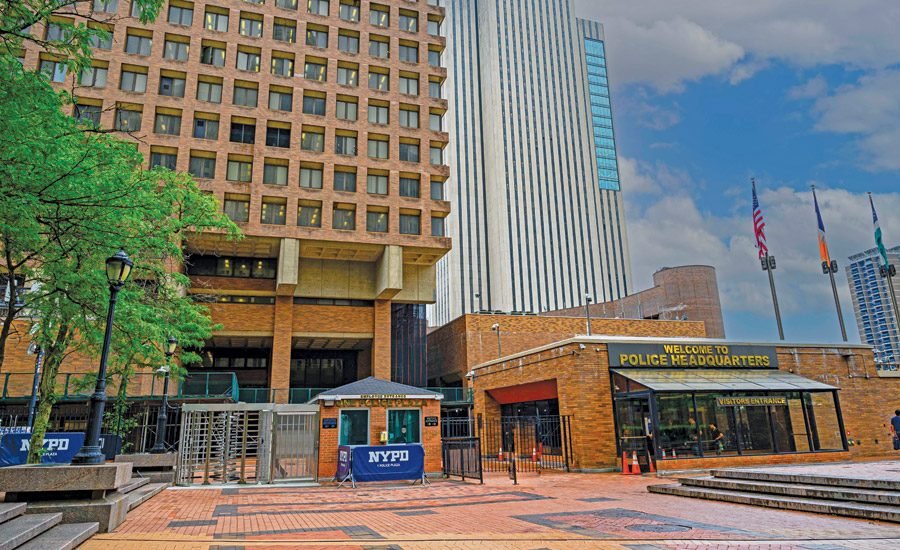
NYPD Headquarters – 1 Police Plaza – Electrical System Upgrade
new york
PROJECT OF THE YEAR FINALIST and BEST PROJECT, GOVERNMENT/PUBLIC BUILDING
Presented by H&L Electric
Owner/Developer: The city of New York
Main design company: H&L Electric
General contractor: H&L Electric
Structural Engineer and MEP: Bala Consulting Engineers
Architect: Architect Michelle Drolette
While all good project teams strive for success, the designer and builder of the $38 million electrical infrastructure upgrade serving the New York City Police Department headquarters recognized that failure was not an option. The 16-story, one-million-square-foot facility serves as an operational center that supports life safety and public safety 24/7. The 40-month project, which was completed in May 2024, required the project team to conceptualize, design and execute the entire scope while ensuring continuous and uninterrupted critical and general operations, including the Joint Operation Command Center, the Real-Time Crime Center and the NYPD’s main data center.
“We always said that any disruption to this project would make the front page of the New York Post, and every New Yorker knows that, that’s not a good thing,” recalls Harris Sokoloff, vice president and co-owner of H&L Electric, the designer.

Photo courtesy of H&L Electric
Over the decades since its opening in 1972, the power demands at 1 Police Plaza increased and were met with one-off improvements: trailer-mounted generators, scattered UPS installations, and necessary upgrades. Many systems became obsolete or failed, with no spare parts available. Critically, the building did not have a full generator backup. In response, the NYPD awards a contract to H&L Electric to completely replace the electrical infrastructure. The scope included new generators, UPS systems, automatic transfer switches, switchboards, motor control centers, paralleling devices, transformers and a complete fuel system with new tanks, pumps and structural reinforcements including underwater doors.
With no existing design documents, the design-build update began by conducting field surveys, producing as-built elevation diagrams, and developing a complete in-house construction plan. “Since there were no design drawings, we were able to design and engineer it ourselves,” he says. “That’s normal on a smaller project, but for a project of this magnitude, with so many systems involved, it was unique to have a blank slate to find what the best options were for the NYPD. That’s what we’re most proud of in this job.”
The building information model was used to coordinate tight clearances and avoid pitch conflicts. Models were also used to pre-fabricate off-site components, including new custom watertight generator enclosures. “[The enclosures] Not only did it improve the schedule, but it also reduced site disruption,” says Sokoloff. “Other than placing steel and electrical conduit, we didn’t have to do heavy, pre-formed construction outside.”

Photo courtesy of Bala
To address flooding risks identified during Superstorm Sandy, the generator enclosures were elevated and equipped with “submarine-style” access doors designed to withstand potential significant flood levels.
Early in the project, H&L Electric encountered delays due to extended approval cycles and unexpected work stoppages. Navigating the NYPD’s highly structured and hierarchical chain of command was critical. Complications included strict noise restrictions, security limitations, and organizational silos within the NYPD, which required personalized communication with different departments and commissioners on each floor. Success depended not only on technical accuracy, but on the team’s ability to navigate a highly structured hierarchy, gain trust, and streamline approvals.

Photo courtesy of Bala
During construction, foremen and electricians were empowered to collaborate with project managers and suggest improvements to both design and field installation. Tools, materials and work areas were tightly controlled. On several occasions, construction schedules and worker entry and exit points were quickly adjusted to accommodate real-time events affecting NYPD and City operations. Despite the complexities, the upgrade project was completed on time and on budget. Perhaps most importantly, a complex project that presented daily opportunities for disruption with city-wide consequences was accomplished without critical incident. The team’s meticulous planning, rigorous coordination and execution kept all critical systems operational from start to finish.
The project was completed on budget and on schedule, providing a modern, resilient and fully redundant electrical system for the NYPD, ensuring uninterrupted service to millions of New Yorkers and strengthening the city’s safety infrastructure for decades to come.
