


Nicholas V. Beare
During the gold rushes of the 19th century, few prospectors struck it rich, but merchants made real fortunes selling essential tools for the job, giving rise to the expression “pick and shovel companies.”
Fast forward, while today’s headlines heralding the rise of artificial intelligence (AI) focus on chip innovation or software breakthroughs, an equally significant story is unfolding in the background: massive infrastructure development that is allowing this technological revolution to even happen.
According to McKinsey research, a staggering $5.2 trillion in data center capacity expansion is required by 2030 to handle AI processing loads, far exceeding the additional $1.5 trillion required for traditional IT applications.
While it may be too early to pick long-term winners from the AI gold rush, an immense investment opportunity lies with modern “pick and shovel” companies—the design firms, contractors, and others responsible for building and powering the large data centers that underpin AI and form a constant, essential, and often overlooked group.

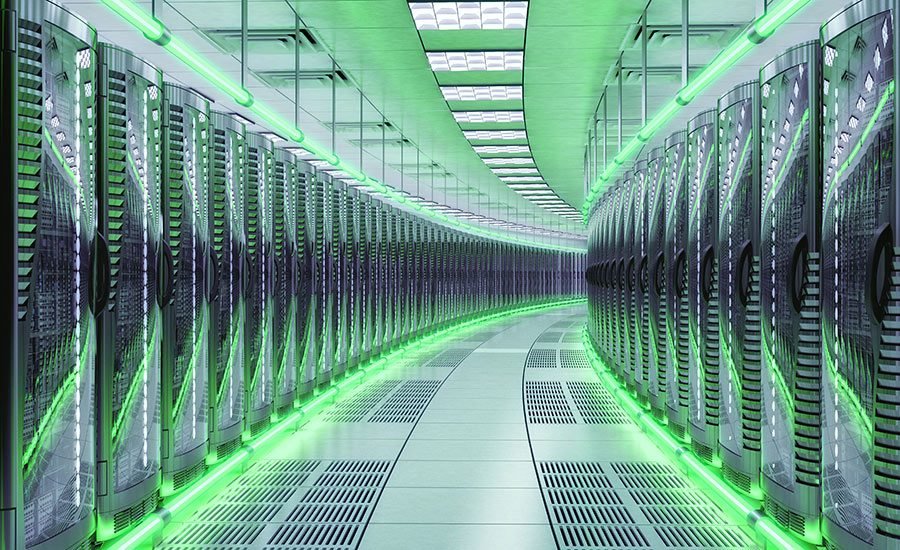
Companies in the construction industry are 21st century AI companies that provide essential services for the growth of this industry. Credit: Getty Images/Rawf8
Complex requirements
Data center construction is not new, but facilities now driven by the scope of AI demands are on a completely different scale. They are often several times larger than legacy sites and consume exponentially more energy, in some cases enough to meet the needs of a small city. The scale and technical sophistication of today’s data centers and the speed at which developers and users want them built is creating demand for companies that train and employ skilled engineers and craftsmen. technologists and managers who understand and can execute complex requirements of these projects.
Cooling is a particularly critical challenge. AI processors generate immense heat, which is pushing the industry beyond traditional air cooling and into liquid and immersion systems. Companies experienced in providing these advanced solutions are seeing demand accelerate as new data centers come online.
Hyperclimbers are also looking for experts who can find sites large enough to host these facilities, along with access to an affordable and plentiful supply of water and energy. This has reshaped the geographic landscape and the need for local construction resources and expertise. While Virginia was an early hotbed for data center development, construction has moved to southeastern and midwestern states like Texas, Georgia, Louisiana, Ohio and the Dakotas, where project location and permitting have fewer potential hurdles.
Touching the tailwind
Technology cycles can be volatile, and AI has experienced episodes of exuberance and uncertainty. But data centers’ significant upfront investment, land acquisition, long-term equipment orders and multiple approvals have created a multi-year demand backlog, insulating contractors and suppliers from any short-term sentiment swings.
This reality has not gone unnoticed by strategic and financial buyers, who are increasingly attracted to construction companies with significant data center exposure. Stephens recently worked on the sale of a multi-generational family owned mechanical contractor. Before the current AI phenomenon, potential acquirers may have seen the company’s exposure to new construction as a risk. But seeing a significant portion of its portfolio in data center work, private equity swooped in with bids to buy the company at a premium multiple to take advantage of that long-lasting, multi-year tailwind.
Public markets are also rewarding companies that pivot. A civil contractor also recognized the opportunity and acquired a private electrical contractor specializing in semiconductor and data center work. The buyer’s repositioning to gain exposure to one of the fastest-growing construction markets has been a driver of its share price boom in recent years.
No one knows precisely how the AI ecosystem will evolve over the next decade. There will be winners, losers and inevitable hype cycles. But if the infrastructure is to be built to support this transformation, construction services companies will continue to be in high demand to do the building. According to ConstructConnect, US data center starts, both AI and traditional, reached $26.9 billion in the first seven months of 2025. The figure is nearly triple the amount for the same period in 2024 and nearly ten times more than in 2023.
Many construction companies taking advantage of the current surge in data center construction are multi-generational private companies with strong regional ties that have learned to wield power. These legacies may make them particularly attractive to acquirers and equity partners as consistent “pick and shovel” providers in the new AI era, but should also help them survive if the current hyper-growth, hyper-scale AI market fails to live up to current rosy predictions.
Nicholas V. Beare is managing director of the investment banking division of financial services firm Stephens, based in New York City. He heads its construction and infrastructure group and co-leads its iindustrial group, which also oversees mergers and acquisitions, management buyouts, and exclusive sales and divestitures, among other areas.
