

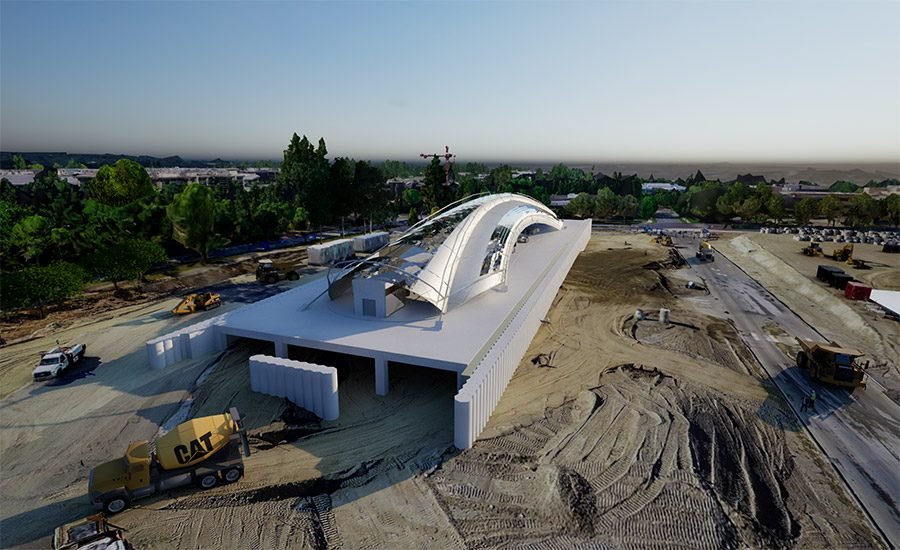

The Architecture, Engineering and Construction (AEC) industry has always depended on visualization technology. From hand-drawn sketches to blueprints, CAD models and photorealistic renderings, each generation of tools has aspired to make complex projects more understandable. However, as infrastructure projects continue to grow in scale and complexity, traditional visualization methods are showing their limits.
Static renderings and pre-produced flyovers can only go so far in capturing the scale and nuance of billion-dollar transportation programs or major urban redevelopment projects. They can also be expensive, time-consuming, and often obsolete by the time designs evolve. Most importantly, they do not provide the kind of clarity and interactivity that modern stakeholders (owners, regulators and the public) demand.
In line with the past evolution of project visualization technology, a new era of real-time, accessible, high-fidelity and impactful is emerging. Driven by advances in gaming technology and open data standards, advanced real-time visualization is changing the way projects are communicated, understood, and delivered. However, one of the biggest challenges remains: bridging the skills gap that has historically made high-quality visualization the domain of specialists.
The evolution of visualization in AEC
AEC visualization has evolved in waves. First came the 2D drawings and schematics, essential but difficult for non-technical stakeholders to interpret. Then came 3D CAD models and photorealistic renderings, which took the next step in bringing projects to life, but required considerable time and money to produce.
By the early 2000s, animations and video flyovers had become a staple for large projects. They provided an enhanced sense of scale and context, but were still static in nature, showing only what the designers had selected to reveal. They could also come at a high price: producing a high-quality video could require weeks of effort by teams or highly skilled display vendors.
Today, the industry is at another viewing inflection point. With the rise of real-time video game rendering engines and standards, such as Open Geospatial Consortium (OGC) 3D tiles, infrastructure models can now be rendered interactively, on the fly, with photorealistic quality and the ability to add additional context to the image in the form of geospatial data, 3D objects, and 4D timelines. These innovations represent more than a technical update; it is a fundamental change in the way infrastructure projects and designs can be communicated and experienced.
The power of context: geospatial, 3D and 4D in visualization
Visualization in AEC has gone far beyond static images and offline models. Today, advanced visualization combines real-time interactivity, geospatial context, 3D smart objects, and 4D timelines to provide a more complete and compelling view of a project.
By incorporating geospatial context, teams can place designs within their actual physical location, showing surrounding roads, terrain and infrastructure, so decision-makers can instantly see how a project fits into the real world. Adding 3D objects such as people, vehicles and vegetation provides depth, scale and detail, allowing stakeholders to explore assets as they will actually exist, rather than as abstract shapes. With the addition of 4D timelines, the visualization evolves into something even more powerful: a living narrative that illustrates how a project will unfold over months or years.
This overlay of dimensions transforms viewing a “pretty picture” into a practical decision-making tool. Engineers can anticipate challenges earlier, planners can optimize sequencing and phasing, and communities can better understand both immediate impacts and long-term benefits.
Equally important is real-time interactivity. Instead of waiting for specialists to generate static renderings, teams can adjust materials, lighting or phasing on the fly. Stakeholders can ask what-if questions and see immediate answers, making visualization an active part of the decision-making process rather than a passive delivery.
Together, these capabilities represent a fundamental shift: from visualization as a presentation tool to visualization as an engagement platform. They create shared understanding, accelerate consensus, and make even the most complex infrastructure projects easier to communicate. For stakeholders, this approach makes conversations less abstract and more tangible. For project teams, it accelerates alignment, reduces misunderstandings, and supports safer, more informed decisions at every stage of delivery.
Democratization of viewing
While the technology required for advanced visualization is not entirely new, complicated tools and workflows, as well as the need for trained specialists, have held back its adoption. Optimizing large design files for real-time rendering, integrating them into game engines, and creating interactive experiences are tasks that most engineers and project managers are not trained for.
The next big leap for the AEC industry is not simply better display technology; it’s about making the technology usable by non-specialists. The goal is to democratize visualization, making it as easy for a project manager to create an immersive project presentation as it is to set up a slide deck.
This trend towards democratization is already visible throughout the sector:
- Democratization of design through BIM and digital twins.
- Democratizing data through cloud-based collaboration.
- Now, the democratization of visualization ensures that all team members, regardless of technical background, can visually tell the story of the project.
The benefits are profound:
- Faster communication: Presentations can be created in hours, not weeks.
- Cost Effectiveness: It reduces the need for specialized outsourcing.
- Enhanced Engagement: Non-technical stakeholders can intuitively understand complex projects.
- Net worth: All project team members gain the ability to communicate visually, not just a select few.
The road ahead
The AEC sector is entering a new era of project communication. Real-time interactive experiences that can be produced by any project team member are replacing static visualizations and expensive preset flyovers.
In this new paradigm:
- Stakeholders expect interactivity. Static images will not be enough to gain approval or build trust.
- Visualizations become routine. Every project, not just flagship shows, will take advantage of real-time viewing.
- Skills are not a barrier. The tools will continue to evolve so that anyone on the project team can create impactful presentations.
This is not just a matter of efficiency; it’s about competitiveness. Companies that embrace accessible real-time visualization will achieve approvals faster, build stronger customer relationships, and engage communities more effectively. Those who don’t run the risk of being left behind.
Conclusion: A new visual language for infrastructure
The future of project visualization is no longer about static representations or isolated models, but about advanced, contextual and interactive experiences. By combining geospatial awareness, 3D smart objects, 4D timelines and real-time interactivity, project teams can go beyond aesthetics to deliver visualizations that drive real understanding and alignment.
For stakeholders, this means clearer communication and more confidence in decisions. For project teams, it means fewer delays, early detection of problems, and stronger engagement in every phase of delivery. And for the AEC industry, it marks a turning point: visualization is no longer a supporting role – it has become a core enabler of smarter, faster and more sustainable project outcomes.
Projects that succeed in this new era will be those that not only showcase their designs, but bring them to life, in a context, in time, and in ways that everyone can understand.
Discover the next era of visualization with Bentley’s iTwin Engage
The future of advanced visualization is coming soon. iTwin Engage, Bentley’s new visualization application, will make it easier than ever to bring infrastructure projects to life with geospatial context, intelligent 3D models, 4D timelines and real-time interactivity. Visit our campaign page to learn more, stay informed about the upcoming release and be the first to experience how iTwin Engage can transform the way you communicate your projects.
By Mike Williams, Bentley Senior Director of Product Marketing
