

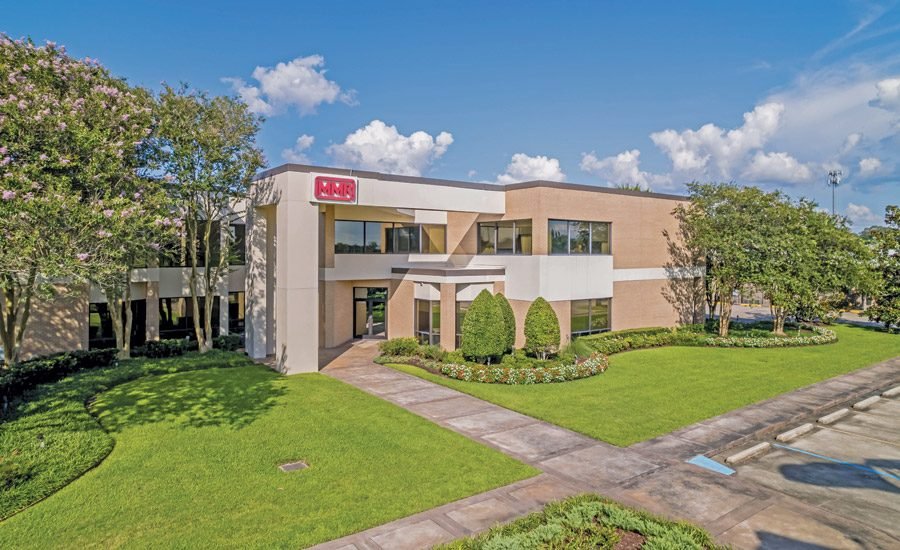
On the cusp of its 35th anniversary, it appears that MMR Group Inc. epitomizes the adage that the more things change, the more they stay the same.
Founded in 1991, the Baton Rouge-based electrical and instrumentation contractor has grown from 25 employees to more than 5,000, from a single office focused on the Louisiana market to more than two dozen locations across the U.S. and from an emerging industry player to the No. 16 company on ENR’s most recent list of the nation’s specialty contractors and the nation’s largest electrical contractor position. country The company posted revenue of $2.33 billion last year.
Along the way, new service lines have helped expand the company’s business footprint while deepening its capabilities. However, one constant from the time MMR opened its doors to today is a commitment to the electrical and instrumentation business, especially for heavy industrial and manufacturing projects, says James “Pepper” Rutland, founder, president and CEO.
“Instead of going into other industries that maybe we’re not good at, we’ve strived for excellence in trying to be the best electrical contractor, with the best staff to do the job,” he says. “It’s a high bar to uphold.”
Based on its recent financial performance, MMR appears to have no difficulty meeting this challenge, one of the many factors that contributed to its selection as the 2025 Specialty Contractor of the Year for the Texas and Louisiana region. Revenues reported across the country for all MMR Group companies last year marked an increase of almost 67% over the previous year. While MMR did not respond to ENR’s Texas and Louisiana 2024 Specialty Contractor Survey, Rutland says robust activity over the past year in the region, particularly in the data center/artificial intelligence and liquefied natural gas (LNG) construction sectors, has kept the 10 Louisiana and Texas locations moving.
Rutland adds that a number of influences at the national level “have pushed all the contractors to an extreme that I don’t think anyone saw coming, at least not to this point.”

In January, MMR Group announced that its artisan training center had been certified by the US Department of Labor and the state of Louisiana for its apprenticeship program.
Photo courtesy of MMR Group
Expansion to meet demands
Because many of MMR’s client relationships are bound by confidentiality agreements, the company declined to provide details on most of its current major projects.
Rutland shared with ENR that the company is preparing to begin work on developer Venture Global’s CP2 LNG export facility, located on a 1,150-acre site in Cameron Parish, La. With a minimum export capacity of at least 20 million tonnes per annum, the project will double the size of the company’s recently commissioned LNG facility CP1, for which it also provides MMR electrical and instrumentation services.
For the new terminal, Rutland says, MMR will be the project’s sole electrical contractor, involved in both the plant’s power block and liquefaction processes.
“It’s a massive project that will require a very large workforce in a very remote part of the state,” he says.
MMR says its work in the telecommunications and security systems sector under its mission-critical service line has helped it reach a milestone in 2024, surpassing 1.5 GW of capacity by supporting work on complex facility upgrades and hyperscale megaprojects.
Because these projects require contractors to be ready to respond on short notice, MMR bolstered its prefabrication capabilities this year by retrofitting a Lafayette Parish manufacturing building into a facility to produce modular server racks and other electrical components.
“Instead of going into other sectors that maybe we’re not good at, we’ve strived for excellence to try to be the best electrical contractor.”
—James Rutland, CEO of MMR Group
Rutland says the $55.2 million investment will also continue the company’s long-standing relationship with the area’s workforce.
“It made it a natural fit when we found the right facility that could be converted for this purpose,” he says.
Similarly, MMR added advanced equipment to its 40,000-square-foot Baton Rouge panel manufacturing and integration center. A new fiber laser and press brake will enable the facility to design and manufacture a wider range of electrical and specialty instrumentation components, including electrical and control systems, racks and enclosures.
Other branches of MMR’s business also set milestones last year. The company introduced a new utility services division to provide power system EPC capabilities from offices in Conroe, Texas, and Brookhaven, Mississippi.
Fabricated Pipe Co., a longtime affiliate acquired by MMR in 2023, marked the completion of a major upgrade and renovation effort at its Fernwood, Miss., production facility. The improvements include a 58,000 square meter building with 5 and 10 ton overhead crane, two 6,000 square meter covered paint shops and other facilities that will provide the capacity needed to supply pipe for MMR’s industrial and manufacturing projects.
Rutland sees these and other initiatives as part of MMR’s overall horizontal integration strategy. “Everything he touches [electrical and instrumentation] we are interested in doing”, he says.

A big driver of MMR’s growth has been self-build electrical construction, as well as work in telecommunications and security systems through its mission-critical service line.
Photo courtesy of MMR Group
Reducing labor shortages
MMR’s ability to safely and efficiently meet the demands of these challenging endeavors is evidenced by the awards and accolades it has collected over the years.
Most recently, MMR’s major power and communications systems upgrade at an ExxonMobil refinery gas compressor unit in Baton Rouge earned the company recognition from both the chapter and national builder and contractor partners for maintaining exceptional safety standards during the yearlong project, which preserved the operation of 12 waste gas flares at the plant.
David Pugh, chairman of ABC’s national board of directors, had high praise for MMR’s “relentless commitment to workplace safety”. Speaking at the organization’s National Awards for Construction Excellence event last May, Pugh said the company’s leadership and employees “make a decision every day to create a culture that refuses to compromise safety, relentlessly ensuring that every employee leaves the workplace in the same or better condition every day.”

Through the company’s MMR University, fellows complete a two-and-a-half-year program that combines classroom instruction, virtual learning, hands-on lessons and immersive internships for university students interested in construction.
Photo courtesy of MMR Group
Internal training
To ensure that MMR maintains its high quality and safe work standards, the company has aggressively developed and improved its internal training programs and resources.
The contractor already has a 15,000 square meter training center for craft and supervisory employees and says it is increasing the company’s capacity to meet growing labor demands with the recent completion of another 20,000 square meter building that will be used primarily for office space.
Additional renovations to the facility are also planned, according to the company.
While MMR has used the builders and associated contractors craft training curriculum as a model for its own programs, the company has also developed modularized task training for critical components of larger projects.
“We’ve also invested in training master trainers, who can take that training to other parts of the company,” adds Rutland.

MMR has received recognition from associated builders and contractors for recent upgrades to a gas compressor unit at the ExxonMobil refinery in Baton Rouge.
Photo courtesy of MMR Group
Preparing for the future
Another recent initiative, MMR University, aims to provide the company with a reliable recruitment channel.
The training program includes a 30-month internship that complements participants’ higher education and/or professional experience with technical training and field experience on MMR projects. This year, MMR University “graduated” its first cohort of participants.
“We are looking for continued growth thanks to financial strength and the ability to fill the biggest gap [overall]which is skilled labor”.
—James Rutland, CEO of MMR Group
“They get to see all the parts and pieces of how projects work and develop skills that we believe will accelerate their development in their first few years as full-time employees,” notes Rutland. “They’ll come away knowing the things we really want them to know.”
This will be critical to sustaining MMR’s success, according to the CEO, as the supply of sufficient skilled labor remains a chronic challenge across the industry, particularly for markets where electrical and instrumentation services continue to be in high demand for the foreseeable future.
“The market is very strong in almost every area — oil and gas, LNG, data centers — and I don’t see that changing significantly this year or for the next few years,” says Rutland. “We are looking for continued growth thanks to financial strength and the ability to fill the biggest gap [overall]—which is skilled labor. This is everyone’s problem, and it will be a problem for a while.”
