

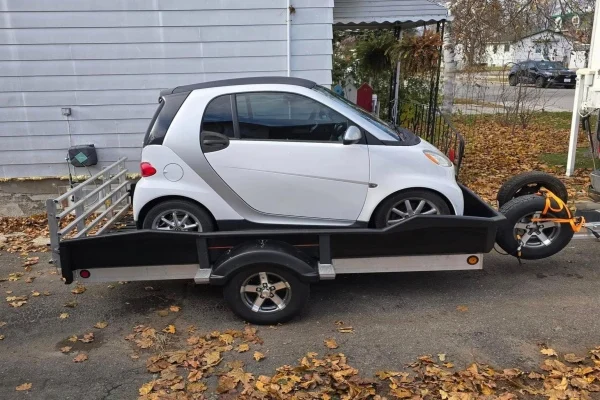
How to choose a smart car trailer
Choosing the right car trailer for a smart car seems simple at first. After all, a Smart Car is small, light and designed for urban driving. But in real-world transportation, these same characteristics create very specific requirements. A smart car sits low to the ground, has a short wheelbase and concentrates its weight differently than larger vehicles. This means that the wrong trailer can quickly turn an easy tow into a frustrating or even unsafe experience. This guide tells you everything that matters, from trailer size and load angle to axles, brakes and long-term ownership considerations, so you can make a safe and informed decision.

Understanding the smart car and its transportation needs
Smart car dimensions and actual weight
Most smart cars are a little over 106 inches long and typically weigh between 1,800 and 2,000 pounds, depending on the model and configuration. On paper, this makes them one of the easiest passenger vehicles to transport. In practice, however, its compact footprint and low ground clearance make trailer geometry more important than gross load capacity. A trailer that is technically strong enough but poorly proportioned can lead to scraping, awkward load positioning or unstable towing behavior.
Why smart cars need a purpose-built trailer
Smart cars benefit from trailers designed for small cars rather than hauling generic vehicles. Features like a gentle approach angle, properly spaced anchor points and an appropriately sized deck reduce stress during loading and unloading. Instead of forcing the car to fit the trailer, the trailer should work naturally with the size and shape of the smart car.
Why choosing the right car trailer for a smart car is important
Safety, balance and confidence in the trailer
A well-matched car trailer for a smart car improves stability on the road. When the deck length and axle placement are right, the load sits where it should, the tongue weight stays within a safe range, and the trailer follows smoothly behind the tow vehicle. This translates directly into better braking response, less sway at highway speeds and an overall more relaxed driving experience.
Legal and compliance considerations
Even when transporting a light car, trailer regulations still apply. Many regions require brakes once a trailer exceeds a certain GVWR threshold, and lighting and safety chains are mandatory almost everywhere. Choosing a trailer that already meets common regulatory standards saves time, avoids fines and ensures you can travel with confidence across state or regional borders.
What trailer size is best for a smart car
The length and width of the cover have been explained
In most cases, a deck length of 12 to 14 feet is ideal for a smart car. This provides enough room for proper positioning without excess length adding unnecessary weight. A deck width of about 6.5 to 7 feet provides comfortable tire placement while keeping the trailer compact and easy to maneuver. Oversized trailers may seem safer, but they often reduce efficiency and increase towing demands.
Single axle versus tandem axle for smart cars
A single axle trailer is often the most practical option for transporting smart cars. It is lighter, easier to store and easier to maintain. Tandem axle trailers add stability and redundancy, but are usually unnecessary unless you plan to haul heavier vehicles in the future or want extra braking capability for frequent long-distance towing.
The best types of trailers to transport a smart car
Flat car trailers
Flatbed trailers are simple and versatile. With proper ramps and tie-downs, they handle smart cars reliably. The key factor is the length of the ramp. Longer ramps reduce the loading angle, which helps prevent contact with the bumper or underbody during loading.
Car trailers with tilting bed
Tilt bed trailers are one of the most popular options for smart cars. By allowing the deck to tilt and touch the ground, they eliminate the need for loose ramps and create a smooth and controlled loading process. This is especially valuable for vehicles with low ground clearance and for users who often load the car alone.
Enclosed car trailers
Enclosed trailers offer protection against weather, road debris and theft. For smart cars, a compact enclosed trailer is usually sufficient and easier to tow than larger enclosed units designed for full-size vehicles. This option is popular with owners who transport their car frequently or want maximum peace of mind.
Why tilt bed trailers are especially suitable for smart cars
Low loading angle and reduced risk
Tilt-bed trailers naturally create a shallow loading angle, which is critical for low-profile vehicles. Instead of relying on long ramps that can be moved or flexed, the entire deck becomes the loading surface. This reduces the chance of scraping and makes the process more predictable every time.
Efficiency for individual operators
For drivers who often load and unload alone, tilt trailers save time and physical effort. The car can be driven or decked, secured and ready to go with minimal setup. Over time, this convenience becomes one of the biggest advantages of owning a tilt bed trailer.
Aluminum vs. Steel Trailers for Smart Cars
Comparison of weight, durability and cost
Steel trailers are known for their strength and affordability, making them a practical choice for many buyers. Aluminum trailers, on the other hand, are lighter and naturally resistant to corrosion. For smart cars, the weight savings of aluminum can improve fuel efficiency and reduce the strain on the towing vehicle.
Long-term ownership considerations
If you tow frequently or live in a coastal or wet environment, aluminum trailers tend to offer better long-term value due to lower maintenance needs. Steel trailers are still an excellent choice for occasional use or buyers focused on the initial cost.
Carrying capacity, GVWR and common mistakes
Understand real capacity needs
A Smart Car does not require a large capacity trailer. In fact, choosing a trailer with an excessive GVWR can add unnecessary weight and cost. The goal is to match capacity with actual usage, allowing for a reasonable margin of safety without overloading.
Avoid overloads and imbalances
Overloading often occurs not because the car is heavy, but because poorly placed accessories, tools or loads alter the weight distribution. Always load the car so that the weight is balanced across the axle and the tongue weight stays within the recommended limits.
How to secure a smart car on a trailer
Attachment points and straps
Secure each wheel or designated attachment point with high quality straps. Properly placed D-rings facilitate this process and reduce the risk of movement during transport.
Wheel arches and additional security
Wheel chocks provide extra safety, especially on long trips or uneven terrain. They help keep the car stationary while the belts do their job.
Maintenance tips for long-term reliability
The routine inspections that matter most
Check tire pressure, wheel bearings, brakes and lights regularly. These simple inspections prevent most problems down the road and extend the life of your trailer.
Storage and corrosion prevention
Cleaning the trailer after use and storing it under cover significantly reduces corrosion. Even aluminum trailers benefit from basic care and inspection.
FAQs about car trailers for smart cars
What is the best trailer size for a smart car
A 12- to 14-foot trailer with adequate width and tie-down placement is usually ideal. This size balances ease of loading with stable towing.
It is a tilt bed trailer that is worth the extra cost
For many smart car owners, yes. Tilt-bed trailers simplify loading, reduce the risk of damage and save time, especially for solo users.
Do I need brakes on a Smart Car trailer?
Brake requirements depend on local regulations and trailer GVWR. Even when not legally required, brakes improve safety and control.
Can a Smart Car be transported on a single axle trailer?
yes A well-built single-axle trailer is more than capable of safely hauling a smart car when well loaded.
Is aluminum better than steel for Smart Car trailers?
Aluminum offers weight savings and corrosion resistance, while steel offers affordability and strength. The best choice depends on the frequency of use and the environment.
