

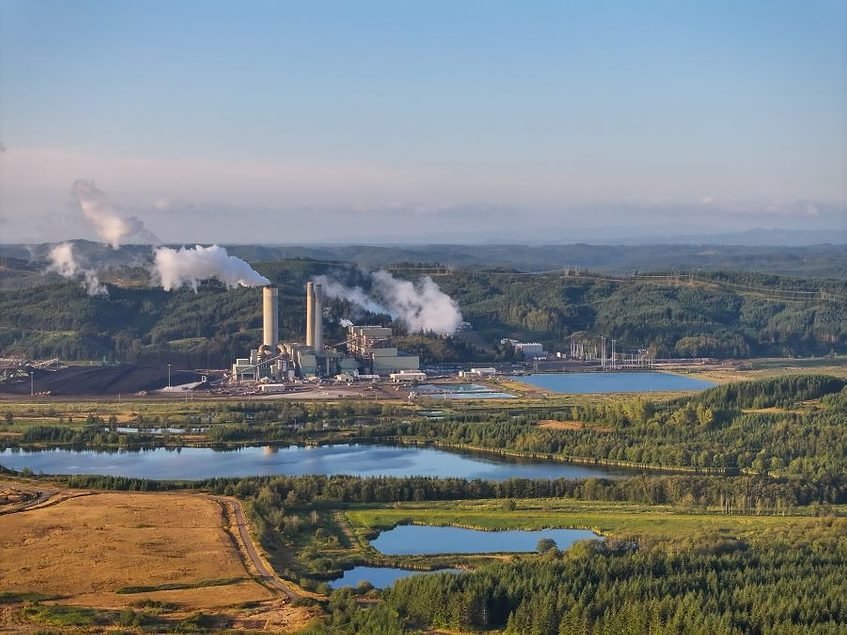

In the Trump administration’s continued push to increase U.S. coal production and use as an energy source, the U.S. Environmental Protection Agency has acted on its previously stated intent to lower emission standards for mercury and other toxins in air emissions from coal and oil-fired power generating units.
The EPA announced on February 20 that it has repealed the Biden administration’s 2024 amendments to the mercury and air toxics rules (MATS, which imposed stricter requirements for particulate matter and mercury in plant emissions, and a requirement that all facilities monitor particulate matter emissions on an ongoing basis. EPA’s final rule includes other toxics). arsenic, chromium, nickel and cadmium.
The EPA says the change will save the energy sector $78 million annually through 2037 and described the latest action as part of the administration’s effort to boost domestic energy production.
West Virginia Senate Republican Shelley Moore Capito, who chairs the Environment and Public Works Committee, released a statement praising the EPA’s new rule, saying it “demonstrates” President Donald Trump and EPA Administrator Lee Zeldin’s “support” for affordable and reliable electricity provided by coal.
But environmental groups point out that the 2024 rules were due in part to technological advances that allowed the vast majority of operating coal plants to cost-effectively reduce emissions of mercury, lead and other cancer-causing toxins.
Hayden Hashimoto, an attorney with the Clean Air Task Force, said the federal Clean Air Act clearly shows that “Congress intended strict regulation of toxic air emissions, including a ban where possible, to prevent EPA from taking the unprecedented action of weakening or repealing standards for favored industries.” He added that executive orders expressing “a bare preference for coal do not justify a rule that violates statute and allows more emissions of dangerous air pollutants into the air.”
Julie McNamara, associate director of policy for the Climate and Energy Program of the Union of Concerned Scientists, said the new rule vastly underestimates the public health harms associated with repealing the 2024 changes. “By trying to justify this indefensible about-face against public health, EPA Administrator Zeldin is now actively hiding from the massive public health harms associated with this repeal. But hiding the data will not hide the facts.”
Looking for quick answers on construction and engineering topics?
Try Ask ENR, our new intelligent AI search tool.
Ask ENR →
Trump administration officials have made clear their desire to keep older, less efficient coal plants running in place of cleaner energy sources such as offshore wind and other renewables.
On February 11, Trump signed an executive order directing the US Department of Defense to purchase power at military facilities from coal producers through long-term power purchase agreements. In addition, the board of federal power producer Tennessee Valley Authority voted unanimously in mid-February to continue operating two large coal-fired plants, the 1.4 GW Kingston Fossil Plant and the 2.4 GW Cumberland Fossil Plant, both in Tennessee. They were slated to close in 2027 and 2028, respectively, but will continue to operate alongside new natural gas plants being developed in their places.
The Kingston plant was the site of a catastrophic collapse of a coal ash disposal structure in 2008 that released 5.4 million cubic meters of toxic slurry into surrounding land and water areas, causing more than $1.7 billion in damages and costs.
