

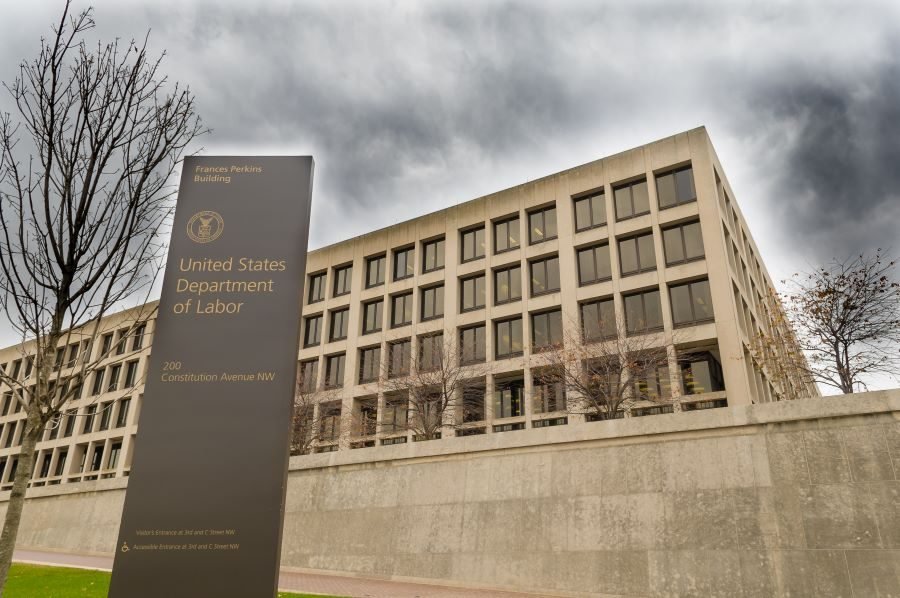

Industry groups are applauding the U.S. Labor Department’s recent proposal to rescind a 2024 final regulation that makes it harder for companies to classify workers as independent contractors under the Fair Labor Standards Act, which governs when minimum wage and overtime are required.
The proposal from the department’s Wage and Hour Division would replace the Biden-era rule, which applied a multi-factor “economic realities” test to determine employee or independent contractor status, with the employee classification analysis that was in effect in 2021. The agency also proposes to apply that analysis to the Family and Medical Leave Act and the Migrant and Seasonal Worker Employment Protection Act, which also incorporate the Fair and Seasonal Labor Protection Act.
“The 2024 final rule creates an ambiguous and difficult-to-interpret standard for determining independent contractor status,” Kristen Swearingen, vice president of government affairs for Associated Builders and Contractors, said in a statement. The new proposal would simplify and clarify the process for determining worker or independent employee status under the Fair Labor Standards Act. she added.
The Associated General Contractors of America also supports the proposal. “AGC has long called for federal clarification of independent contractor status and the preservation of legitimate independent contractor relationships, such as those that have historically existed in the construction industry,” a spokesperson for the group told ENR.
The AFL-CIO supported the 2024 rule to help “end the employer practice of intentionally misclassifying workers as independent contractors to deprive them of their rights under the Fair Labor Standards Act.”
A 60-day public comment period on the measure is in effect until April 28.
When finalized, the rule would likely be a positive development for companies that rely on construction workers, making it easier for them to maintain an independent contractor relationship, Todd Lebowitz, a partner at the law firm BakerHostetler, told ENR.
Looking for quick answers on construction and engineering topics?
Try Ask ENR, our new intelligent AI search tool.
Ask ENR →
“But I think people will exaggerate its importance,” said the attorney, whose practice focuses on employment and labor law. “The extent of where [the proposal would be] relevant is so narrow that I don’t think anyone should get too excited about this rule,” since its impact on businesses that rely on independent contractors would be minimal.
Only the Fair Labor Standards Act and the Family and Medical Leave Act would be affected by the proposal, he said. In relation to the first, the new rule would only affect that law’s test and become the department’s interpretation of who is an employee and who is an independent contractor, a rule the agency would apply in its investigations, he said.
But that wouldn’t be much in the federal courts, which have been interpreting the Fair Labor Standards Act for more than 90 years, Lebowitz said. “There is no obligation to postpone it [the Labor Dept.] interpretation,” he said. The court “does not need the [department] to tell them what he thinks the rule should be, especially when you have a new administration every four or eight years that wants to change the rule.”
Most of the legal activity related to misclassification of independent contractors is also at the state level, he added, and the federal Department of Labor has no jurisdiction over state laws, he said.
“The rule would have no effect on who is an employee or an independent contractor under federal tax law or federal employee benefit law or state wage and hour law, or state workers’ compensation or state unemployment or state taxes,” Lebowitz said.
Meanwhile, several groups have challenged the 2024 final rule in federal court, including ABC and its Southeast Texas chapter, the Coalition of Workforce Innovation, the US Chamber of Commerce and four others.
The case is still pending in federal district court in Beaumont, Texas, according to ABC.
