

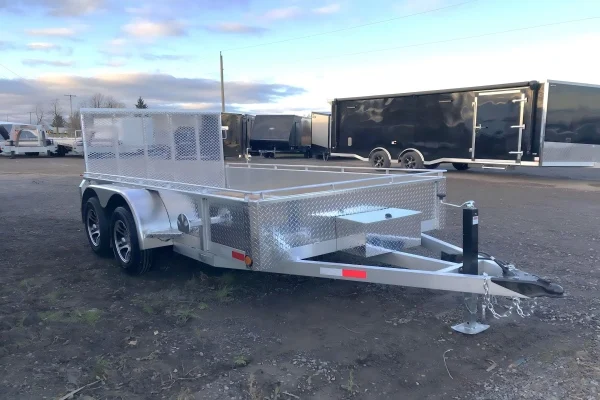
Tandem axle aluminum utility trailer
A tandem axle aluminum utility trailer is one of the most practical transportation solutions for contractors, landscapers, farmers, and equipment owners who need reliable transportation every day. The biggest advantage comes from the combination of a light aluminum frame and a double axle structure. Two axles distribute the weight between all four wheels, which improves stability, increases payload capacity and reduces stress on the trailer frame. The aluminum construction also helps reduce trailer weight, making the trailer easier to tow with a pickup truck or SUV while improving fuel efficiency on long trips.

Another important advantage of aluminum trailers is corrosion resistance. Steel trailers are strong, but can rust over time when exposed to rain, road salt and moisture. Aluminum naturally resists corrosion, meaning the frame stays cleaner and structurally stronger for many years of use. For people who operate trailers in coastal regions, agricultural environments or construction sites where moisture and chemicals are common, this advantage is extremely valuable. Because of this durability, many aluminum trailers remain in service for decades with only routine maintenance such as tire checks, lubrication and occasional cleaning.
What is a tandem axle utility trailer?
A utility trailer is an open trailer designed to carry a wide variety of cargo, including gardening equipment, construction tools, farm equipment, and recreational vehicles. Unlike enclosed trailers, utility trailers have open decks with side rails or mesh panels. This design makes loading and unloading faster because equipment can be driven directly onto the deck using ramps. The open layout also allows larger or irregularly shaped goods to be transported more easily.
The term tandem axle refers to the trailer that has two axles placed one behind the other under the frame. Each axle usually carries two wheels, so the trailer has four wheels that support the load. This configuration improves balance and allows the trailer to carry a heavier load compared to single-axle models. Many tandem-axle utility trailers use two 3500-pound axles, which together provide about 7000 pounds of total capacity depending on the trailer design and the vehicle’s gross weight rating.
Advantages of aluminum utility trailers
The most notable advantage of aluminum trailers is weight reduction. Aluminum trailers can weigh much less than steel trailers of the same size. This lighter structure puts less stress on the towing vehicle, allowing drivers to safely tow midsize trucks and SUVs. The lower trailer weight also improves braking efficiency and reduces fuel consumption during transport.
Durability is another key advantage. Aluminum doesn’t rust like steel, meaning the frame can withstand years of exposure to rain, snow and road salt. Therefore, maintenance requirements are lower. Owners typically only need to inspect bolts, axles and tires rather than constantly repairing rust damage or painting the frame. In the long run, this makes aluminum trailers a smart investment for businesses that rely on daily transportation.
Common uses for tandem axle aluminum trailers
Tandem axle aluminum trailers are widely used in many industries because they are extremely versatile. Landscaping companies use them to transport grass clippings, soil, mulch and tools between jobsites. Construction crews often transport generators, compressors and other equipment in these trailers because the open deck makes loading simple and efficient. Farmers also rely on utility trailers to move feed, fencing materials and farm tools around their property.
Recreational users also benefit. Owners of ATVs, motorcycles, and outdoor enthusiasts often use tandem axle trailers to transport vehicles to driving areas or camping destinations. Because aluminum trailers are lightweight, they are easier to tow over long distances. The dual-axle structure also keeps the trailer stable on the roads, making trips safer and more comfortable for drivers.
Choosing the right trailer
When selecting a tandem axle aluminum utility trailer, the most important factor is load capacity. Always calculate the weight of the load you want to haul and choose a trailer with a gross vehicle weight rating that safely exceeds that number. It’s also important to make sure your tow vehicle has enough towing capacity to support the combined weight of the trailer and the load.
Cover size is another key consideration. Trailers are commonly available in lengths such as 12 feet, 14 feet, or 16 feet. Smaller trailers are easier to maneuver and store, while longer trailers offer more room for gear. Additional features such as mesh ramps, anchor points, tool boxes and spare tire holders can make everyday use more comfortable and efficient.
FAQ
Tandem axle trailers are better than single axle trailers
Tandem axle trailers generally offer better stability and greater load capacity because the weight is distributed over four wheels instead of two. This makes them ideal for transporting heavy equipment or cargo over long distances. They also handle highway speeds more smoothly compared to single-axle trailers.
How long does an aluminum trailer last
A well-built aluminum trailer can last more than twenty years with proper maintenance. Because aluminum does not rust like steel, structural damage from corrosion is much less likely. Routine maintenance, such as checking wheel bearings, brakes, and tires, will help extend the life of your trailer even further.
Do tandem axle trailers require trailer brakes?
In many regions, trailers above a certain weight must have braking systems installed. Electric trailer brakes are common on tandem axle trailers because they improve stopping performance and allow the driver to control braking from inside the tow vehicle. Even when not legally required, trailer brakes are recommended for safety when hauling heavy loads.
Can a pickup truck tow a tandem axle aluminum trailer?
Yes, many pickup trucks can tow tandem axle aluminum trailers as long as the total weight stays within the vehicle’s towing capacity. Most half-ton trucks can handle trailers around 7,000 pounds, while heavier trailers may require a three-quarter-ton or one-ton truck for safe towing.
