

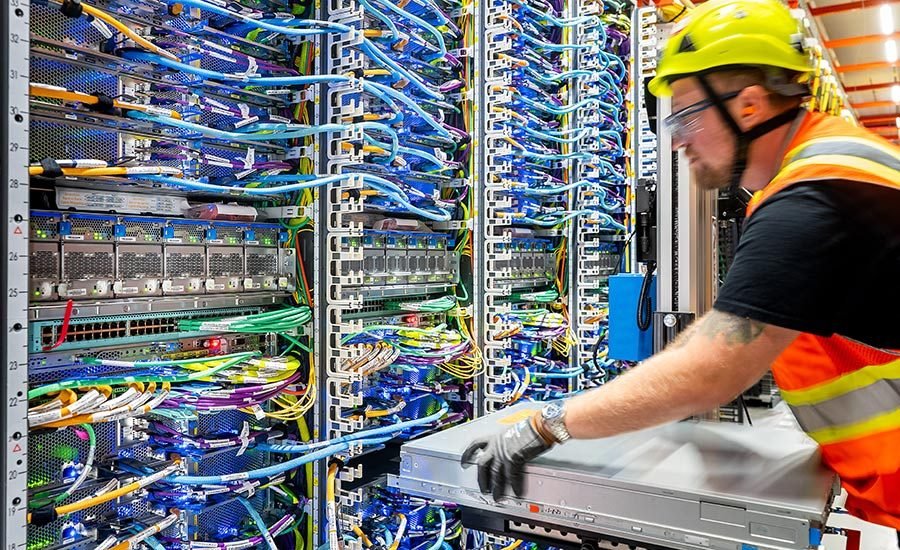

Artificial intelligence giants are turning their attention and investments to a critical component of this technological development: the artisanal workers needed to build the data center and related power infrastructure to meet unprecedented demand and complexity.
Private infrastructure investor BlackRock announced on March 11 an infusion of $100 million in funding over the next five years to boost the training of up to 50,000 skilled artisan workers, called the Future Builders initiative, who can meet the demand for building AI’s expanding infrastructure. The company has become a key financial driver for the industry, backing megaprojects like Meta’s estimated $27 billion, 2,250-acre Hyperion data center in Louisiana, which will be operational by 2030.
But as the building boom grows, demand for skilled electricians, HVAC technicians, plumbers, ironworkers and other trades is accelerating amid an aging workforce. Over the next decade, employment in US infrastructure-related skilled trades is projected to grow by more than 5% on average, with some trades much higher, compared to the national average of 3%.
“Throughout our history, traders have built our country,” said Larry Fink, BlackRock’s chief investment officer. “The United States needs about $10 trillion in infrastructure investment by 2033 to modernize aging systems and build new energy, digital and AI infrastructure. Capital alone is not enough: people are critical to building our nation’s future.”
The company, through its foundation, said it aims to address America’s urgent labor needs by connecting workers with skilled trades training, program completion and licensing, focusing on workforce development entities, both union and non-union, including those operated by federal, state and local governments, labor organizations, businesses and nonprofits “to strengthen effective skilled trades programs and offer them at scale…”.
The status of recipient selection and funding allocations was not disclosed.
Melissa Perkins, director of philanthropy and partnerships at the National Center for Construction Education and Research (NCCER), which provides training, certification and national verification services for 70 trades, particularly open shop construction, said she welcomes “the opportunity to partner with Black Rock to get more people into the skilled trades and expand craft training opportunities.” Added Lisa Strite, its director of learning, “we see AI as a tool that can strengthen craft training and credentials, not replace the hands-on skills that define this industry. Our goal is to prepare people to use emerging technologies effectively, while building the hands-on experience the industry depends on.”
Looking for quick answers on construction and engineering topics?
Try Ask ENR, our new intelligent AI search tool.
Ask ENR →
BlackRock said it will announce additional phases of Future Builders over the next 12 months.
Future Builders’ effort reflects that meeting America’s economic growth “requires both capital and people … to build and maintain the energy, digital and AI infrastructure” to power it, Kenneth Cooper, international president of the electrical workers union, and David Long, CEO of the National Electrical Contractors Association, said in a statement. They have a jointly administered apprenticeship program.
The National Association of Building Trades Union also announced a new deal with AI developer OpenAI to link its 14 craft unions to the growing demand in the data center infrastructure sector. While the statement does not address project labor agreements for enterprise data centers or other projects, “OpenAI and NABTU will work together to help ensure that building AI-related infrastructure supports union careers, strengthens union-registered apprenticeship programs and creates economic opportunity in the communities where that infrastructure is built,” it said. Through their alignment, the statement said, the two entities will engage in “policy development, project rights, workforce development, labor standards, project safety and the responsible expansion of infrastructure associated with artificial intelligence technologies.”
OpenAI has also provided a five-year, $1.5 million funding commitment to TradesFutures, the national construction nonprofit 501(c)3 pre-apprenticeship program launched with contractors in 2023 that now supports more than 270 training efforts in 34 states, director Marina Zhavoronkov told ENR. Initial training “helps ensure workers are prepared for an industry transformed by both artificial intelligence and the growing demands of energy construction,” he said. The construction trades say it “represents the largest pre-apprenticeship network of any national industry”.
At the Black Rock Infrastructure Summit held March 11 in Washington DC, corporate, political and labor leaders emphasized the generational appeal of AI. “We’re now in a world of amazing things you can do,” said Sam Altman, CEO of OpenAI. “When can a CEO not get the job done without making heavy use of AI? I’ve never seen any other industry like this.”
While Altman separately confronted members of Congress last week over domestic surveillance concerns over OpenAI’s contract work with the U.S. Department of Defense, and his company and other developers face a recent uptick in state legislation to pause or restrict data center construction, he also acknowledged at the conference that AI is “not popular in the US.”
But the CEO insisted: “If we fall behind and can’t catch up, and can’t keep building infrastructure, there’s a vulnerability. If we don’t move as quickly as other countries, we’ll lose our economic advantage. This is a once-in-a-generation opportunity.”
A group of construction executives also noted the unprecedented role of skilled craft workers. “We want to have a seat at the table and an opportunity to collaborate like we’ve never done before,” said Sean O’Brien, president of the Teamsters union. “We need to promote the opportunity for a new career but we also need trust and guarantees.”
National Electrical Contractors Association President Long noted the need for more training in rural areas where there are numerous data center projects but fewer journey-level tradesmen.
“Business and labor must be proactive. We are in a cold war with China over AI and data,” said Sean McGarvey, president of the construction union. “We can attract and train workers, but we’re also a business. We need long lead times and be at the table ahead of the game. We add value to your project.”
