

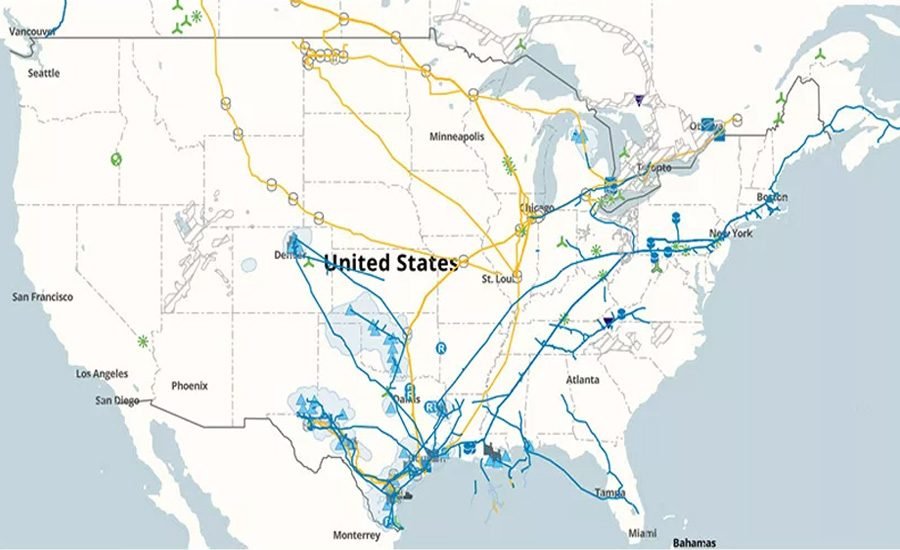

Enbridge Energy and its subsidiary, Bakken Pipeline Co., have received presidential permits to continue operating and maintaining the US-Canada cross-border pipeline facilities in North Dakota and Michigan.
The move is expected to support future construction related to the pipeline and ultimately increase capacity by hundreds of thousands of gallons of oil per day.
The permit covers facilities in Burke County, ND, including an existing 12-inch diameter pipeline from the international border to Portal, ND. It also includes the installation of the first shut-off valve or pumping station on the US main line approximately 0.5 miles south of the border, together with any associated structures, facilities or equipment.
In Michigan, the permit applies to an existing 30-inch diameter pipeline in St. Clair, extending from the international boundary to the first US shutoff valve or pumping station, approximately 0.3 miles from the border, and associated facilities.
Lines in both states can carry crude oil and other petroleum products, including naphtha, liquefied petroleum gases, natural gas liquids, jet fuel, gasoline, kerosene, and diesel, but not natural gas.
Enbridge Energy and Bakken operate more than 40 pipeline-related facilities in Michigan and North Dakota. The companies are proposing about $620 million in construction projects, according to Industrial Info Resources, which tracks the pipeline industry. me
In Burke County, the Bakken system includes a crude oil pumping station near Lignite, ND, which feeds a line to Steelman, Saskatchewan, with a capacity of about 145,000 barrels per day.
“These permits add flexibility to our existing permits and support our mainline optimization programs that are currently expected to add more than 250,000 barrels per day to the US by the end of 2028,” Enbridge spokesman Ryan Duffy said in a statement.
He added that Enbridge’s existing cross-border pipeline network carries more than 3 billion barrels of oil per day.
RELATED
Enbridge Begins Construction on $450 Million Line 5 Relocation in Northwest Wisconsin
Under the permits, Bakken is responsible for obtaining necessary grants or easements, permits and other authorizations, and for indemnifying the US against any liability arising from the operation or maintenance of border facilities, including environmental pollution.
Citing national security concerns, the permits also authorize the federal government to take control of border facilities if necessary.
Michigan’s presidential permit does not apply to Enbridge’s proposed Great Lakes Tunnel, a 4-mile structure planned to house twin pipelines under the Straits of Mackinac, which is the subject of litigation.
On April 1, the U.S. Supreme Court refused to hear Michigan’s bid to move its lawsuit against the pipeline over safety and environmental concerns from federal to state court, which was the state’s preferred venue.
The dispute in federal court continues.
