

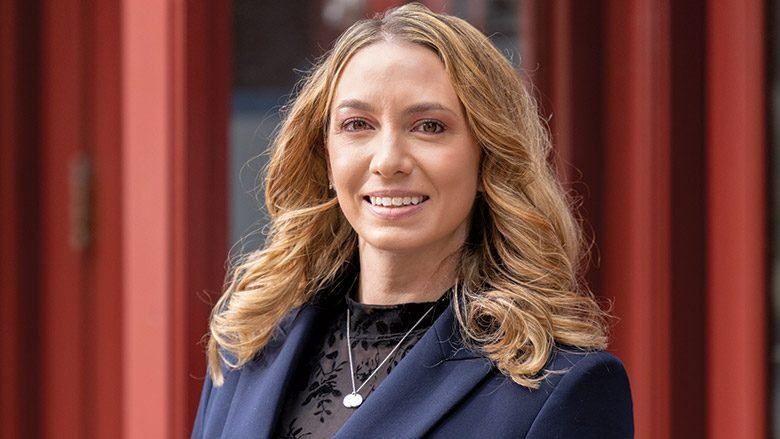

Michelle Hoysick
37, Greater West transport business development manager
AECOM
Denver
Prior to joining AECOM in 2024, Hoysick was the alternative delivery capture manager at Michael Baker International, where she led strategy and risk assessments for US activities. He played a key role in the US-89 project in Utah, the nation’s first progressive design-build transportation project, and advised on best practices for its delivery and risk management. She also served as the Program Manager Oversight Consultant for several major transit projects in the Denver area while at Jacobs, including the $6.5 billion Eagle P3 FasTracks program, Denver Union Station, and the West and I-225 rail lines.
Hoysick is the immediate past president of the Colorado chapter of the Women’s Transportation Seminar and is vice president of programming for the Denver chapter of the Airport Minority Advisory Council, which supports minorities and women in the aviation and aerospace industries. She is also membership chair for MOVE Colorado, a transportation funding advocacy group, and is a member of the Colorado chapter of the Conference of Minority Transportation Officials. Hoysick has received honors from several industry organizations, including the APTA Early Career Program, ACEC Colorado’s New Faces of Engineering, and several honors from WTS Colorado, where she was named an Emerging Leader in 2015 and Member of the Year in 2020.
How did you get into the industry?
Graduating from college in 2010 meant navigating the uncertain waters of a post-recession economy. After graduating from the Colorado School of Mines, I landed a pivotal role as an intern on the Regional Transportation District’s (RTD) West Rail Line. This position was more than an entry-level job; it was an overview of all aspects of major infrastructure development during a critical time for the industry. I was hired by Jim Starling and Paul von Fay, two figures who provided essential mentorship and guidance. Their willingness to hire an intern during a low economic period provided me with hands-on experience that was hard to find at the time. The West Rail Line project was my training ground, allowing me to work both in the office on design review and in the field doing construction management.
What is your favorite project and what challenges have you overcome?
Among the extensive portfolio of projects I’ve been fortunate enough to work on, Denver Union Station stands out as my favorite. It’s a career-defining effort that reshaped the city’s transportation landscape. Serve as a program management oversight consultant within the RTD team. The project was unique in its complexity and scope, successfully integrating light rail, commuter rail and bus systems with pedestrian, bicycle and automotive infrastructure. This complex layer of transit modes transformed the station into a true hub of connectivity, requiring rigorous coordination and a holistic view of urban mobility.
While the technical complexity was enormous, the most impactful personal challenge – and ultimately the highlight of my experience – was the transition from office-based engineering to field-based construction management. Leaving the theoretical side of engineering to handle the tangible realities of the workplace presented a steep learning curve, especially as a twenty-one-year-old woman. I watched the site evolve from a simple field of dirt to the iconic center it is today, a transformation made possible by an incredible project team whose collaboration turned a grand vision into a concrete reality.
Where do you see yourself in 10 years and what goals have you set yourself to get there?
Ten years from now, I see myself in a strategic role where I’m not only pursuing the future of transportation infrastructure but actively defining it. My goal is to use my background in alternative provision to shape policy and procurement models that enable us to build smarter, more equitable communities faster. I want to be the person who connects the dots between complex engineering solutions and tangible improvements to the quality of life in communities.
Looking for quick answers on construction and engineering topics?
Try Ask ENR, our new intelligent AI search tool.
Ask ENR →
On a personal leadership level, I see myself as a visible mentor to the next generation of women in engineering. I want to have established a legacy that demonstrates that high-performance executive leadership and active, present fatherhood are not mutually exclusive, creating a more inclusive path for the leaders who come after me.
How do you balance work and family life?
In my role, work-life balance is less about the perfect balance and more about energy management and intentional presence. I am diligent with prioritization, with the understanding that my family comes first. Clear communication about deadlines and travel expectations is critical, and setting these boundaries allows me to be fully engaged both at work and at home.
What is one piece of advice you would like to share with other young professionals in this industry or those coming after you?
My biggest piece of advice is simple: remember why you love going to work every day. Early in your career, it’s easy to get bogged down in technical details, calculations, and immediate deadlines. But the leaders who really shape this industry are those who can look above the blueprints and articulate how a project will improve a community.
In my role in business development and alternative delivery, I’ve learned that we don’t just sell engineering services, we sell the vision of a better future. The sooner you can connect your technical expertise with that human impact, the faster it will grow. Finally, don’t be afraid to bring your full, authentic self to the table. Being authentic builds trust with clients and colleagues, and professionalism doesn’t require you to leave your personality behind.
