

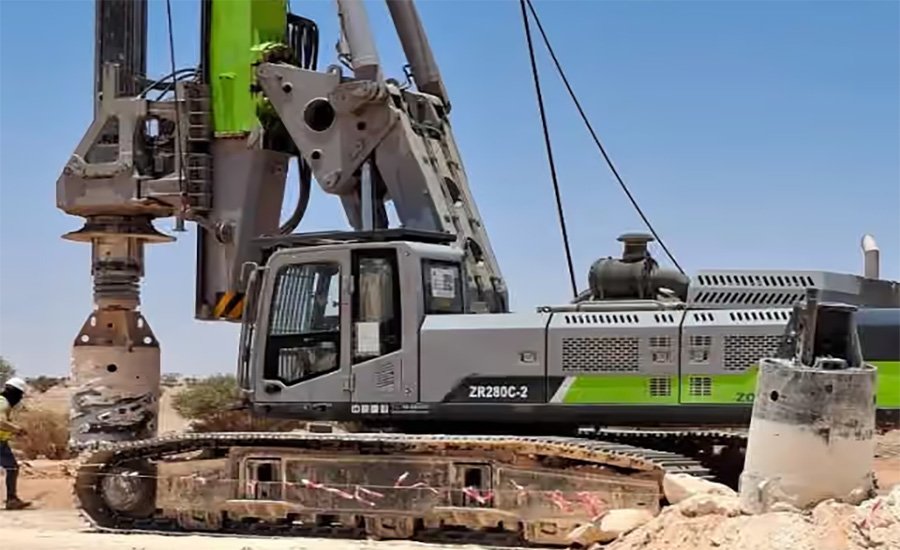
An Elsewedy Electric-Sinohydro joint venture announced on October 13 that it had secured a $2.2 billion engineering, procurement and construction contract for the expansion of a 2.3 GW natural gas-fired power plant in western Saudi Arabia, with the contractor reporting that the project is now more than 39% complete.
The developer Al Mourjan Two Electricity Co. awarded the contract for the expansion of the Rabigh 2 independent power plant, approximately 80 miles north of Jeddah. The joint venture combines Egypt’s Elsewedy power system projects with Sinohydro, part of Chinese state-owned PowerChina.
The deal comes amid escalating military attacks on Saudi infrastructure, including an Oct. 13 strike on a Saudi Aramco administrative building in Dhahran, the Associated Press reported. Three days earlier, an attack at Riyadh’s King Khalid International Airport killed at least 13 people. The companies’ announcements did not address whether the dispute has affected construction of the Rabigh site.
Saudi Energy, formerly Saudi Electricity Co., said the project reached financial close on Oct. 4 with approximately $2.58 billion in long-term financing from a consortium of local, regional and international lenders. Commercial operations are planned for May 2029.
Construction progress before signing the contract
Construction was already underway with limited prior notice to proceed when the joint venture finalized the EPC agreement, according to Elsewedy Electric. The company’s reported disclosure also cited more than five million hours of safe work, although a separate company announcement reported more than three million. Neither statement acknowledged the discrepancy.
Elsewedy did not provide a breakdown distinguishing field construction from engineering, procurement, equipment manufacturing, or other activities. The reported progress figure also does not state which major equipment packages have reached manufacturing or delivery milestones.
Under the agreement, the joint venture is responsible for engineering and design, equipment procurement, civil construction, installation, commissioning, performance testing and connection to Saudi Arabia’s national power grid.
Looking for quick answers on construction and engineering topics?
Try Ask ENR, our new intelligent AI search tool.
Ask ENR →

Construction crews are working on the Rabigh 2 expansion, which will add two combined cycle generator units with six Siemens gas turbines and two steam turbines.
Photo courtesy of Talha Integrated Modern Company
It has not been disclosed how the work is divided between Elsewedy and Sinohydro, nor have the companies identified the construction packages remaining under the new agreement entered into.
“Together with Sinohydro, we bring the full scope of this project from engineering to commissioning under a responsible team,” Hesham Hegazy, CEO of Elsewedy Electric PSP, said in a statement announcing the deal.
Six Siemens SGT6-5000F gas turbines and two Siemens SST-5000 steam turbines will anchor two combined cycle generator blocks, with six heat recovery steam generators. Shunt stacks and shunt dampers will allow simple cycle operation.
The additional scope includes plant cooling and balancing systems and the extension of a 380 kV electrical substation, with the design providing for the future installation of carbon capture equipment. ACWA Power and Saudi Energy have a 40% stake in project developer Al Mourjan Two Electricity Co.
Unlike the expansion, the existing 2,060 MW Rabigh 2 plant was built under a separate contract. ENR reported in 2013 that the original project had a $2.6 billion contract with Samsung C&T as the EPC contractor. According to ACWA Power’s project records, the plant entered commercial operation in 2018.
Regional conflict increases infrastructure risks
An October 13 attack hit a Saudi Aramco administrative building in Dhahran, causing a fire. Saudi authorities reported no casualties, and officials said oil production and export infrastructure were not damaged.

Rabigh is located on the Red Sea coast of Saudi Arabia, off the Persian Gulf and the Strait of Hormuz.
Map by ENR
The strike followed the Oct. 10-11 attacks at Riyadh’s King Khalid International Airport, where Saudi Arabia is undertaking a $7.2 billion redevelopment of King Salman International Airport, as previously reported by ENR. The attacks damaged existing passenger terminals and forced the suspension of airport operations. Saudi authorities have not confirmed whether areas of active construction or newly built infrastructure were damaged.
Rabigh is located on the western coast of Saudi Arabia, off the Persian Gulf and the Strait of Hormuz.
The contractors’ announcements identified no disruption to construction activity or changes to the May 2029 commercial operation target.
