

The US Department of Energy is scheduled to close a $1.6 billion loan to clean energy technology company Plug Power Inc. at the end of March. to build six green hydrogen production plants in the United States, company executives told analysts and investors on Jan. 23. start in the second half of 2024, with plans to produce 500 tonnes per day domestically by the end of 2025.
“The loan can catalyze our ongoing projects … expected to generate more than 200 tons of hydrogen per day,” said CEO Andy Marsh. The DOE loan and the January opening of the Latham, N.Y.-based company’s Georgia hydrogen production plant made some analysts less concerned about the company’s recently released financial statements.
Plug Power is a corporate sponsor of five of the seven U.S. hydrogen centers that the DOE selected last year to share in a total of $7 billion in federal funding from the bipartisan infrastructure law of 2021.
Citing supply chain constraints, the company said in a November federal filing, “there is no assurance that our hydrogen production will ramp up at the rate we anticipate or that we will complete the hydrogen production plants in the expected period”. sufficient capital to fund our operations over the next twelve months.” BMO Capital analyst Ameet Thakkar noted an “uphill road” for the company until its federal funding is in place.
But other analysts were more positive and Marsh was upbeat. “Although the growth of the industry over the past few years has not met our initial expectations, we remain optimistic about its future, especially with increased government support,” he said. “Hydrogen’s essential role in tackling climate change is indisputable.”
Shares of Plug Power (NASDAQ: PLUG ) rose 34.3% to their highest point during the week ended Jan. 26, S&P Global Market Intelligence said.
the company it is now building hydrogen plants in Texas, New York and Louisiana, with four sites under development.
Startup in Georgia
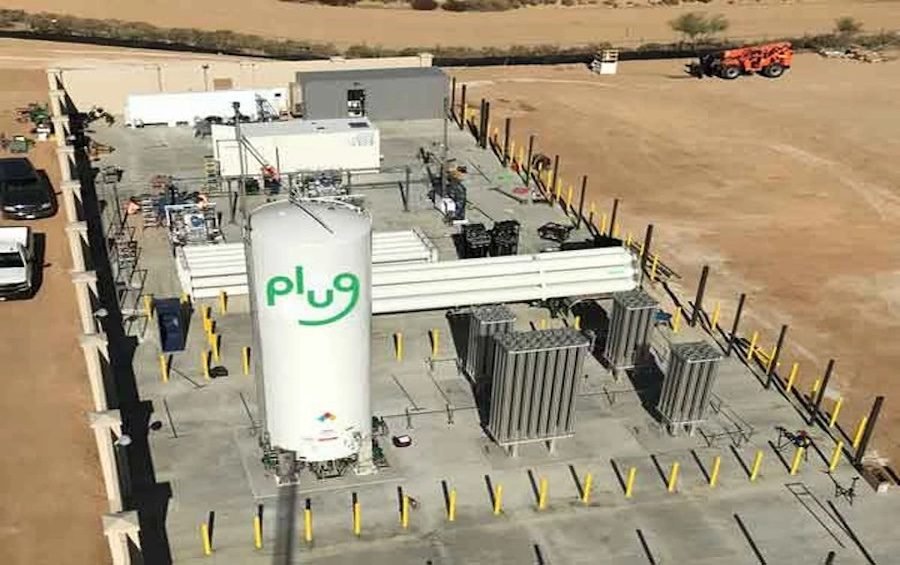
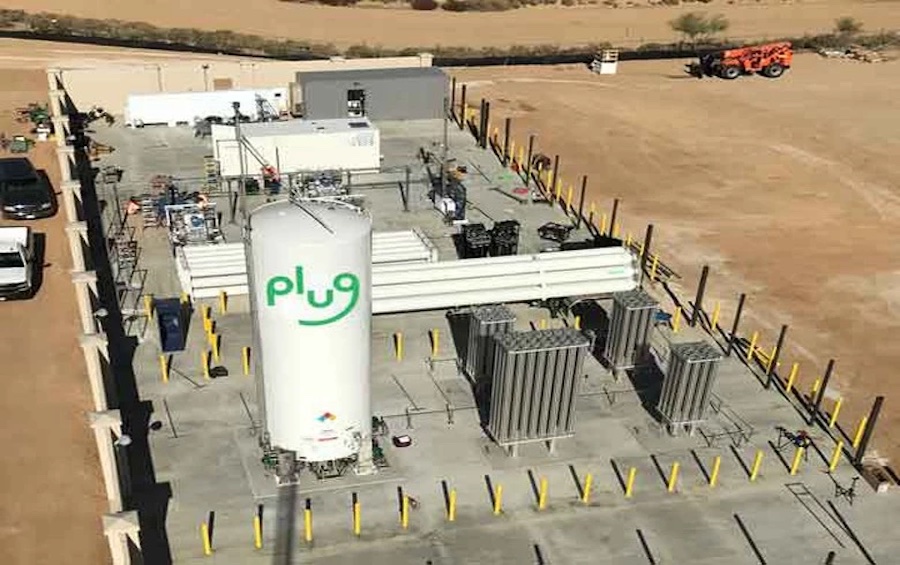
The Woodbine, Ga.. plant is a large proton exchange membrane electrolyzer coupled to a liquefaction plant that will initially produce 15 tons of fuel per day, which is expected to double. The company’s plant in St. Gabriel, La., underway in a joint venture with chemical manufacturer Olin, will begin operations later this year.
Plug Power Chief Financial Officer Paul Middleton told analysts that the U.S. Treasury Department’s proposed rules last month on federal tax credits for hydrogen projects were not as favorable as expected. Marsh called them “disappointing” but expected them to “loosen up” as the final rules are negotiated, he told Bloomberg TV.
The added cost of building the Georgia plant was a source of concern, Marsh told investors. “Part of it was really difficult, because it was the first of its kind,” he said, adding that “we certainly made design changes.” Marsh said that the EPC [contractor] “I wasn’t willing to commit to how much it would cost.” The construction of the project took 18 months to complete. S&B Engineers and Constructors Ltd. was the EPC contractor.
The final cost of the plant was not disclosed and was not provided at the time of publication of the story.
Plug Power hopes to get a compromise on the construction cost of its Texas plant, built by Kiewit, said Marsh, who added that the design changes would actually lower the number. It expects that expanding the size of the Georgia plant will cost 40% less and that the price of its hydrogen would be a third of what it would be if it were bought from a third party. Marsh estimated that figure at about $10 million per ton.
Capital investment at the 45-ton-per-day plant in Texas and 74-ton-per-day in New York has slowed “until we find the right financing solution,” CFO Paul Middleton said on the call. The latest project, in Genesee County, New York, was estimated by Marsh during a November earnings call to cost at least $678 million.
Solving Plug Power’s cash management issues is its “top priority,” but growth is critical, the CEO said on the latest call. “We are focusing on growth that can improve cash generation,” he noted.
Amazon ordered a 1 MW aa Plug Power electrolyzer system in December The Colorado fulfillment center, the vending giant’s first, will produce green hydrogen for more than 225 hydrogen fuel cell-powered forklifts on site. The hydrogen will be compressed on site and stored. The energy company said the hydrogen used at Amazon sites is now produced off-site, liquefied and delivered by truck to an on-site storage and dispensing system.
“This project demonstrates Plug’s ability to execute across the entire hydrogen value chain and how we can design and implement end-to-end solutions for our customers,” Marsh said in a statement.
The company also announced last year that it would build three electrolyzer facilities in Finland, with an estimated cost of $6 billion and a capacity of 2.2 GW, to produce about 850 tons per day of green hydrogen and ammonia for the European market in 2030.
Plug Power said Technip Energies is the engineering and technology contractor for the projects, with a final investment decision expected in 2025 or 2026.
“These projects are expected to represent some of the largest investments in Europe [hydrogen] market,” the company said.
