

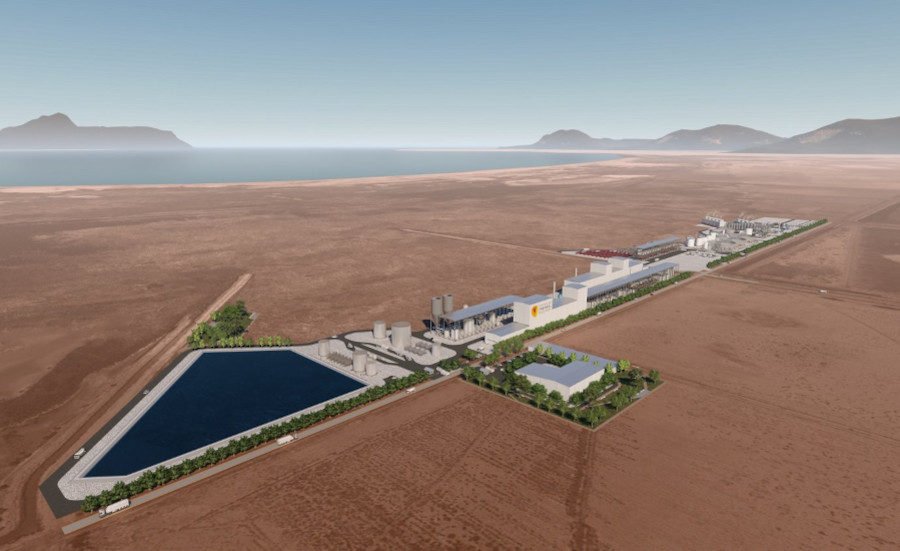
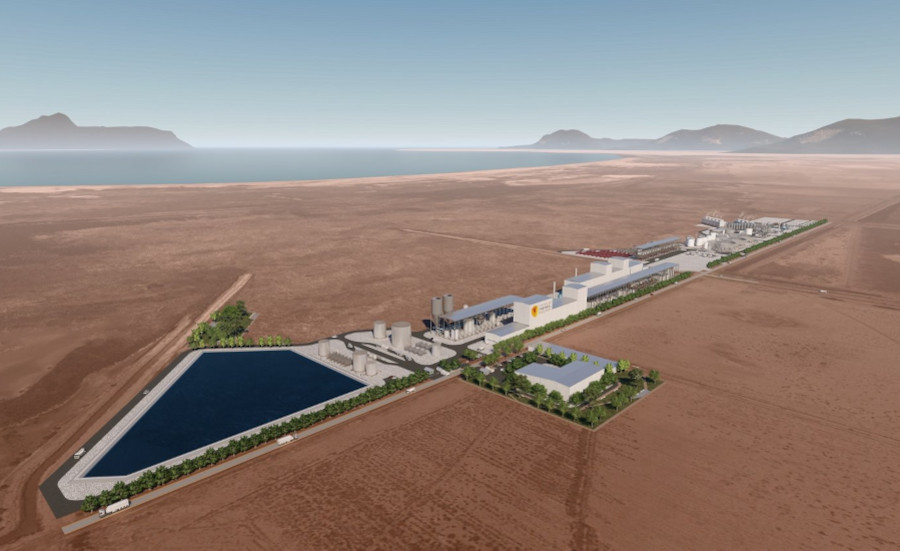
Construction on the first large-scale direct lithium extraction plant in the United States began last month, ushering in the potential to transform California’s “lithium valley” into a major source of the valuable material.
Controlled Thermal Resources Holdings Inc. (CTR), an Australian-based company, is leading the $1.85 billion Hell’s Kitchen project to build a fully integrated lithium and renewable energy production facility on the shores of the Salton Sea in the Imperial Valley , California. The opening ceremony on January 30 marked the start of work on the first phase of the facility.
“We are building the foundation for a truly sustainable clean energy and battery materials campus that will close the gap between upstream, midstream and downstream activities and set new standards for battery supply chain integration in the States United,” said CTR CEO Rod Colwell during the groundbreaking.
The plant will integrate a geothermal plant with lithium production, which will make it the first facility in the world to combine these two processes. Upon completion of the first phase, it is expected to produce approximately 25,000 metric tons of battery-grade lithium hydroxide monohydrate annually, sufficient to support the production of approximately 415,000 electric vehicles each year.
Major car manufacturers have already taken the opportunity to invest in the project. In 2021, General Motors became the first private investor, contributing an undisclosed “billion-dollar” amount. Additional support came in August 2023 when Stellantis invested $100 million in the project.
When fully operational, the CTR site is expected to produce up to 300,000 metric tonnes of lithium carbonate equivalent annually. Under a 10-year contract, CTR will supply Stellantis with up to 65,000 metric tons of battery-grade lithium hydroxide monohydrate annually.
Innovative methods
The direct lithium extraction (DLE) method used at the Hell’s Kitchen plant works through two main steps. Initially, the geothermal plant generates clean energy and steam. The lithium is subsequently extracted from the geothermal brine brought to the surface during the power generation process.
Instead of discarding the brine at the surface, it is injected back into the geothermal reservoir. The lithium extracted through the filtration process is then used in the production of lithium carbonate or hydroxide.
“DLE is not a new technology. Direct lithium extraction has been used for several decades in Argentina, albeit in a hybrid fashion,” explained Michael McKibben, professor emeritus of geology at the University of California, Riverside .
The DLE method offers significant environmental advantages over hard rock mining, which involves blasting rock, followed by crushing it, soaking it in sulfuric acid, and finally roasting it at high temperatures to release the lithium.
“DLE applied to both geothermal brines and oil fields is a much more environmentally friendly technique because the infrastructure is already in place and the brine is already being brought to the surface in the case of generating geothermal energy,” McKibben added. “So you’re simply selectively leaching lithium from the brine flow that’s already occurring. You don’t need to build a huge infrastructure.”
In addition, the DLE method has an extraction rate comparable to hard rock mining, approximately 95%, without the need for evaporation brine ponds, open pit mines and fossil fuel processing while generating its own power to drive the extraction process.
With the huge growth expected in the production of electric vehicles in the coming years, the demand for lithium is also expected to increase. California’s “lithium valley” is increasingly recognized as an important potential source of this material in the United States. A report released last year by the US Department of Energy’s Lawrence Berkeley National Laboratory (LBNL) revealed that production in the Salton Sea region could yield more than 3,400 kilotons of lithium, enough to make more than 375 millions of electric vehicle batteries.
“We could eventually, from this geothermal reservoir, produce enough lithium to meet all our domestic needs and maybe even have some left over for export,” said McKibben, who has been studying the Mar geothermal field of Salton since the seventies. “If we could produce lithium in the Salton Sea, manufacture and recycle the batteries locally, we would essentially have a completely domestic supply chain, which would benefit us greatly, create jobs nationally and generate tax revenue.”
Government support
At the state level, research and development efforts have been ongoing for years. California has allocated more than $27 million to support nearly 20 research projects aimed at advancing innovations for lithium recovery from geothermal brines and related efforts since 2017, according to Gov. Gavin Newsom’s office. In 2022, Governor Newsom signed legislation allocating $5 million to Imperial County to strengthen Lithium Valley and established the Lithium Mining Tax Act to ensure local communities reap the benefits of the industry growth.
“We are fully committed to Lithium Valley, establishing a global hub for clean energy and ensuring that local communities benefit from this unique opportunity,” Newsom said in a press release following the DOE’s findings in November. “This further validates California’s potential to become the leading source of batteries for our vehicles, homes and businesses around the world.”
These initiatives build on the 2022 report of the Lithium Valley Commission, established in 2020 to explore the opportunities and challenges associated with lithium recovery from Imperial Valley geothermal brines. In its findings, the Commission recommended accelerating transmission planning, improving permitting processes, and securing funding for infrastructure investments and economic development incentives to support industry growth and job training.
Just prior to the commissioning of the Hell’s Kitchen plant, the California Energy Commission announced a grant opportunity on January 18 to fund projects aimed at reducing scale and corrosion impacts at California’s geothermal power plants or improve the recovery of lithium and other valuable minerals from geothermal brine. at the Salton Sea Geothermal Field. The deadline for submitting proposals is April 15.
“Although DLE is an established technology, its application to geothermal and oil field brines is relatively recent,” commented McKibben. “The challenge going forward will be to scale these processes to commercial levels, and this will be the key area to monitor.”
