

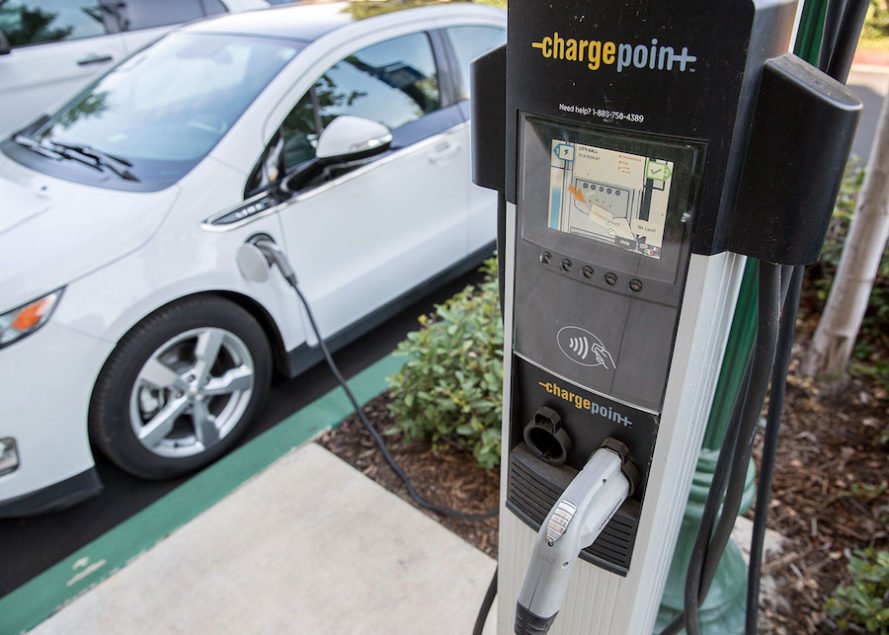
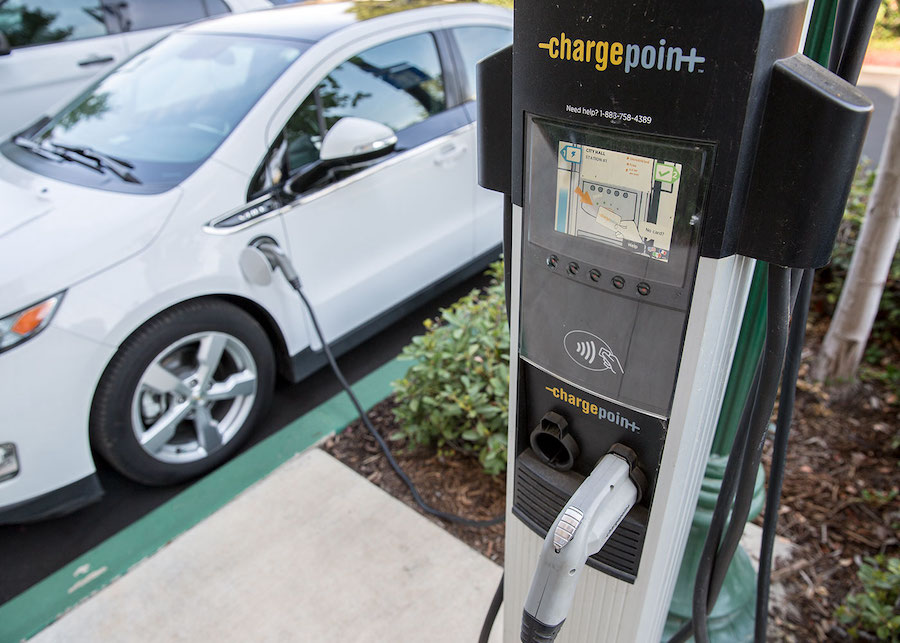
On February 14, the California Energy Commission approved $1.9 billion to expand the state’s network of charging and refueling infrastructure for zero-emission cars, trucks and buses, aimed at creating the charging network and the most extensive hydrogen fueling in the country, according to officials.
State funding comes from its Clean Transportation Program and will be spent over the next four years, with at least 50% targeted to benefit priority populations. As part of the $48 billion California Climate Commitment, it includes more than $10 billion for zero-emission vehicles and infrastructure.
“We need to make sure this is zero-emission refueling infrastructure for everyone,” Transportation Agency Chief Commissioner Patty Monahan said in a statement. “By investing a large amount of funds to benefit low-income and disadvantaged communities, the state ensures that communities most in need have better access to chargers and less pollution from trucks and buses.”
By 2023, 25% of new cars sold in California were zero emissions. Officials say this new funding will create 40,000 new chargers across the state, adding to the nearly 94,000 shared public and private chargers currently installed in the state. Combined with the previous funding, the state hopes to reach the goal of 250,000 chargers in the coming years. This is in addition to private installations and home chargers.
The $1.9 billion will be available over the next four years and will be distributed to projects through competitive grants. Funds include direct incentive and rebate programs for businesses, nonprofits, tribes and public agencies.
The Clean Transportation Program, created in 2007, is one of the first transportation-focused funding efforts established to help advance state climate change policies. It is funded by vehicle and boat registration, vehicle identification plates and smog abatement levies. To date, $1.8 billion has been invested in projects that support zero-emission vehicle infrastructure, alternative fuels and advanced vehicle technologies. This includes nearly 24,500 electric vehicle chargers installed or planned and the funding of 96 public hydrogen filling stations, of which 61 are open today.
The program also provides streamlined incentives for electric vehicle chargers, awarded $100 million to 120 projects for truck and bus charging and refueling, and provided funding to California public school districts for charging electric school buses.
The commission also approved the second Assembly Bill 2127 Electric Vehicle Charging Infrastructure Assessment which projects how much publicly available charging infrastructure is needed to meet demand. The results show that by 2030, 7.1 million electric vehicles will need 1 million chargers and 155,000 electric trucks and buses will need 114,500 chargers.
The funding should help lay the groundwork for the West Coast Clean Transit Corridor Initiative, an ongoing, collaborative effort among 16 utilities in California, Oregon, Washington and British Columbia to support the development of electric vehicle charging facilities along 1,300 miles of Interstate-5, for heavy vehicles. and carriers and medium-load delivery trucks.
Utilities are conducting grid readiness assessments in preparation for infrastructure installations and upgrades to support vehicle charging capacities of at least 3.5 MW, with possible additional upgrades to create sites of greater capacity.
The utilities involved in the initiative are San Diego Gas & Electric, Southern California Edison, Southern California Public Power Authority, Los Angeles Dept. of Water & Power, Pacific Gas and Electric Co., Northern California Power Agency, City of Redding, Sacramento Municipal Utility District, Pacific Power, Portland General Electric, Clark Public Utilities, Cowlitz County PUD, Lewis County PUD, Tacoma Public Utilities, Seattle City Light, Puget Sound Energy, Snohomish PUD and BC Hydro.
