

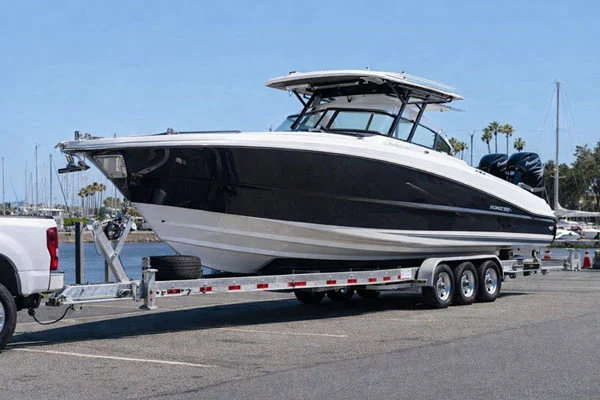
40ft Boat Trailer: A Practical, No-nonsense Guide to Hauling Large Boats Safely
A 40-foot boat trailer is not something you buy on impulse or figure out through trial and error. Once you move a boat this size, every detail matters more than most owners initially expect. The weight is unforgiving, braking distances increase dramatically, and small mistakes can turn into costly damage very quickly. At this level, a boat trailer stops being an accessory and becomes a fundamental piece of transportation equipment that directly protects your investment.
This guide focuses on actual use of a 40-foot boat trailer. Learn how these trailers are built, who really needs one, how to choose the right configuration, and what experienced owners pay attention to long after the purchase. The goal is simple: to help you transport a large boat safely, legally and with confidence instead of guesswork.

What is a 40 foot boat trailer really built for
A 40-foot boat trailer is designed to support long, heavy hulls that place heavy demands on both the trailer frame and its undercarriage. At this size, the trailer doesn’t just carry weight. It actively distributes the load between multiple axles, manages braking forces under pressure and maintains stability at highway speeds and during emergency maneuvers.
These trailers are commonly used for offshore fishing vessels, large center consoles, fast cruisers and large displacement sailboats. The trailer must support the hull evenly, protect the keel and keep the boat stable during transport, braking and cornering. A poorly equipped trailer of this size does more harm than good.
Vessel length versus actual haul length
One of the most common mistakes buyers make is to assume that a boat labeled as 40 feet will automatically fit a 40 foot trailer. In reality, the advertised boat length often excludes swim platforms, bow pulpits, anchor rollers and other extensions that add significant length.
A suitable trailer must support the entire hull, not just the nominal length. When a boat overhangs too far past the sleepers or rollers, the stress is concentrated in the wrong areas. Over time, this can lead to hull warping, gelcoat cracking, and trailer frame fatigue. Experienced owners always measure the actual end-to-end length before selecting a trailer.
Why the 40-foot range is a turning point
Once vessels reach 40 feet, towing moves from a casual towing task to a managed hauling operation. The number of axles increases, braking systems become mandatory on multiple axles and towing laws become stricter. This is where shortcuts stop working and the right equipment becomes non-negotiable.
The limitations of towing vehicles also become apparent at this point. Stability, braking control, grip strength and weight ratings are more important than raw engine power. A well-matched trailer setup becomes the difference between a controlled haul and a dangerous situation.
Who really needs a 40 foot boat trailer
Offshore fishing boats and sport fishermen
Large fishing vessels often need to be moved offshore for maintenance, refits, hurricane preparation or seasonal storage. Relying entirely on marinas or third-party carriers limits flexibility and adds recurring costs. A dedicated 40-foot boat trailer allows owners to control when and how their boat is moved.
Large sailboats and cruise ships
Sailboats introduce additional challenges due to keels and ballast. A properly designed trailer supports the keel while allowing the hull to rest evenly on long bunks. For owners who transport their watercraft seasonally or move between yards, a trailer provides independence and predictable handling.
Commercial and Charter Operations
Charter operators and commercial users value uptime above all else. A 40-foot boat trailer allows for quick repositioning, faster maintenance, and reduced reliance on yard schedules. In this context, the trailer becomes a business tool rather than a convenience.
Types of 40ft Boat Trailers
Bed trailers for long term support
40-foot style boat trailers use long, supporting bunks to distribute the weight of the hull over a wide surface. This reduces point loading and helps protect fiberglass hulls during shipping and extended storage. Bunk trailers are particularly suitable for boats that spend long periods in tow.
Roller trailers for easier launching
Roller trailers use multiple rollers to allow boats to be raised and lowered in shallower water depths. This can be useful on shallow ramps, but it also introduces more moving parts. On a 40-foot trailer, roller maintenance becomes a serious responsibility rather than an occasional chore.
Weight ratings and actual load calculations
A 40-foot boat trailer should be rated by the gross weight of the trailer, not just the dry weight of the boat. This includes the trailer itself, engines, fuel, water, batteries, equipment and accessories. Many large boats gain thousands of pounds once fully loaded, and ignoring this reality is a common mistake.
Fuel and water tanks have a significant impact on overall weight and center of gravity. Smart trailer selection assumes real operating conditions rather than brochure numbers, helping to avoid overloading axles and braking systems.
Axle Configurations for 40′ Boat Trailers
Triple-axle trailers are common for lighter boats at the lower end of the 40-foot range, while quad-axle configurations distribute weight more evenly for heavier hulls. More axles improve stability and reduce load per tire, but also increase maintenance requirements.
Proper axle placement affects tongue weight, tracking and tire wear. Poor alignment causes rocking, uneven braking and premature component failure. Well-designed trailers get this right from the start.
Frame materials and corrosion protection
Galvanized steel frames offer strength and cost effectiveness. They perform well in fresh water and occasional salt water when properly rinsed and maintained. Aluminum frames resist corrosion and reduce overall trailer weight, making them attractive for frequent saltwater environments.
Braking systems for 40 foot boat trailers
Electric over hydraulic disc brakes are standard for trailers of this size. They provide consistent stopping power, better heat management and smoother braking under heavy loads. Disc brakes also perform better in wet conditions during launch and recovery.
Trailer and hitch requirements
A 40-foot boat trailer typically requires a heavy-duty pickup truck or commercial-grade truck. Payload capacity, rear axle capability and braking control are more important than just power. Heavy-duty fifth wheel or gooseneck hitches improve stability and reduce sway.
Launching and recovery of a 40-foot boat
Launching a boat of this size requires proper depth and ramp angle. Not all ramps are suitable, and using an undersized ramp increases the risk and strain on the equipment. While launching solo is possible, experienced assistance improves safety and reduces stress.
Road handling and transport safety
A 40-foot boat trailer requires wide turns, careful lane position and route planning. Stopping distance increases significantly, especially when going downhill. Controlled speed and early braking are essential for safe transport.
Maintenance and long-term ownership
Routine inspections of brakes, bearings, tires and frame welds prevent failures. With proper care, a high-quality 40-foot boat trailer can last for decades. Neglect shortens lifespan and dramatically increases risk.
Frequently asked questions about 40 foot boat trailers
Can a 40ft boat trailer be used for road transport?
yes When properly graded, braked, and paired with an appropriate towing vehicle, a 40-foot boat trailer is designed for over-the-road hauling and long-distance towing.
40-foot boat trailers require permits
Permit requirements depend on width, weight and route. Some boats require oversized permits, while others do not. Local and interstate regulations should always be checked before towing.
Aluminum is better than galvanized steel
Aluminum generally performs better in constant saltwater environments, while galvanized steel offers strength and cost effectiveness. The best choice depends on how and where the trailer will be used.
How often should the brakes be checked?
Brakes on heavy duty trailers should be inspected at least once a year, or more frequently if the trailer is used frequently or exposed to salt water conditions.
