


Modest growth is expected in 2026, Anirban Basu, chief economist at Associated Builders and Contractors, said in a Dec. 10 construction forecast webinar. However, he said there were “real risks”, adding that “stubborn inflation”. [and] stubbornly high interest rates … will continue to hold back construction spending growth.”
High inflation and interest rates are “a drag on construction activity,” Basu said. “So one of the things we’ve seen over the course of the year is that the number of construction job openings has plummeted.” In a survey, webinar participants reported that insufficient demand for construction services was their top challenge, marking the first time “in recent memory” that a lack of skilled workers had not been the top concern. Basu said.
RELATED
US building materials prices rise 3.5% as contractor backlog shrinks
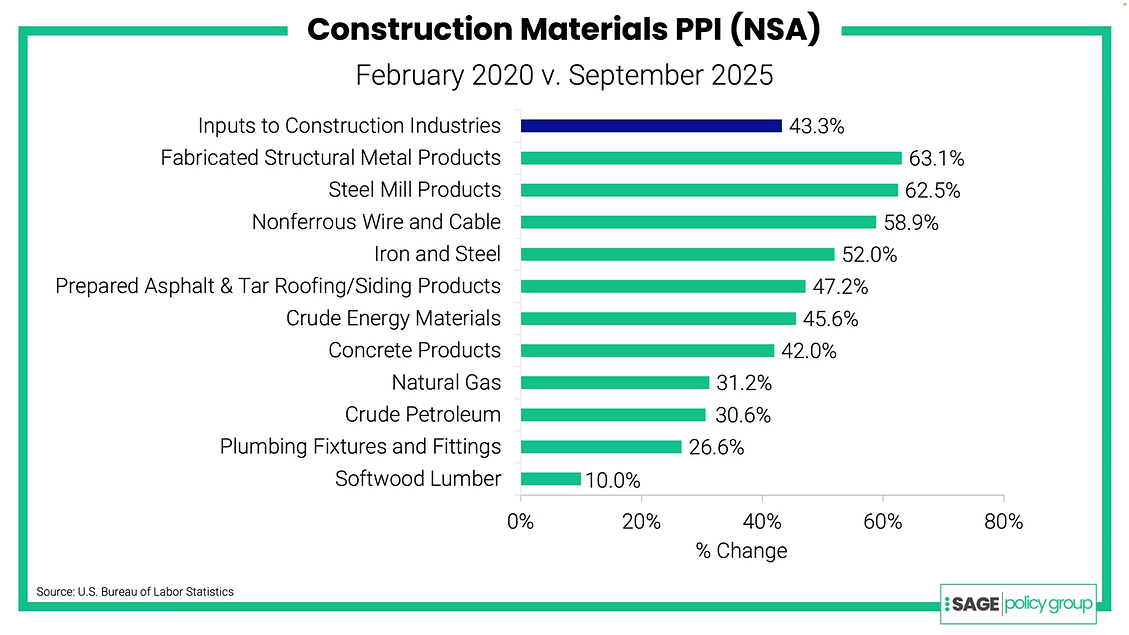
Inflation and tariffs have also led to significant price increases for some materials. In the time between the start of the COVID-19 pandemic in February 2020 and September 2025, overall construction input prices have increased by 43.3%, with the most substantial increase a 63.1% increase in manufactured structural metal products, according to the US Bureau of Labor Statistics.
Prices of steel products and non-ferrous wire and cable also rose significantly, which Basu noted as a concern due to the added costs of data center construction, currently one of the industry’s strongest sectors. “If these products become too expensive … You may see data center spending end sometime in 2027.”
RELATED
Two markets, one industry: Commercial construction splits as 2025 draws to a close
Around the same time Basu was providing the ABC construction forecast, the Federal Reserve announced a quarter-point cut in its benchmark lending rate to around 3.6%.
Total nonresidential construction spending fell 1.5% between August 2024 and August 2025, according to data from the US Census Bureau. The manufacturing and commercial sectors experienced the largest declines, with 8.2% and 7.5% respectively, while spending in the religious building sector increased by 20.8%.
Overall, “the basis of economic growth in the United States has been massively narrowed over the course of this year,” Basu said. “The rich are doing very well, [while] the middle class and below [are] it’s really not that easy.”
