

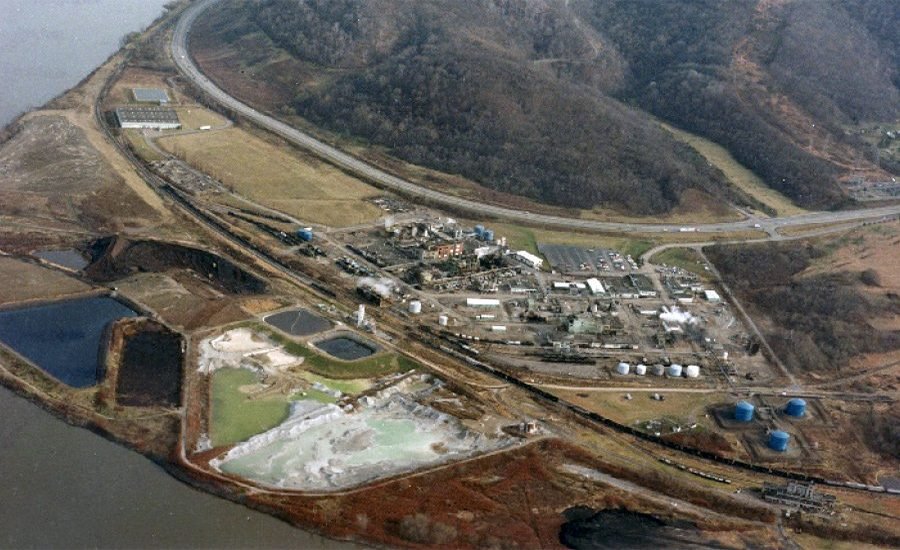

Calpine LLC is moving forward with a more than $1 billion natural gas-fired power plant near Moundsville, W.Va., reviving a project that was first permitted more than a decade ago as electricity demand increases in PJM Interconnection’s service territory, which includes West Virginia.
The project, announced Jan. 22 by Gov. Patrick Morrisey, would add approximately 500 MW of capacity to the regional grid and is expected to generate more than 400 construction jobs and about 25 permanent positions once operational, according to the governor’s office.
Calpine is a business unit of Constellation Energy, which earlier this month completed the acquisition of Calpine from Energy Capital Partners, creating one of the largest power generation portfolios in the US.
Public records show the Moundsville facility was originally proposed and permitted in 2014 with a different developer, but never moved forward with construction. The approval sat dormant for more than a decade, a time when electricity market conditions in PJM did not support the widespread development of commercial combined cycle plants. State and local officials now see Calpine’s move as a revival driven by stronger market signals and growing demand for dispatchable generation.
A draft construction permit issued by the West Virginia Department of Environmental Protection authorizes the project as a 549-MW combined-cycle natural gas facility.
The permit identifies two large frame combustion turbines combined with heat recovery steam generators and a steam turbine, specifying GE Frame 7FA class units equipped with selective catalytic reduction, dry low NOx burners and oxidation catalysts as the primary emission controls. Classified as a primary source for prevention of significant impairment, the facility must meet the highest preconstruction standards of the Clean Air Act and obtain a Title V operating permit within one year of commissioning.
Fuel under the permit is limited to pipeline-grade natural gas, with an ethane blend limited to 25%. Annual emission limits are set for nitrogen oxides, particulate matter, sulfur dioxide and greenhouse gases.
Local officials said the plant’s location, part of the former Hanlin-Allied-Olin Industrial Site along the Ohio River north of Moundsville and 11 miles north of Wheeling, has been considered as a power generation site for years.
Marshall County Commission Chairman Scott Varner told local media that the county commission and the Marshall County Board of Education approved lease and payment-in-lieu agreements in December, clearing the way for Calpine to complete site due diligence and advanced development.
Calpine executives said the revived proposal reflects an improving economy and growing regional demand. In a state statement, Suriyun Sukduang, the company’s vice president of origination, said Calpine’s experience in building and operating gas facilities in PJM positions it to move the project forward while providing construction jobs, tax revenue and broader community benefits.
RELATED
Studies: Speeding up links to the clean energy grid can boost projects and jobs
Why long-allowed PJM projects are resurfacing
Across PJM Interconnection’s footprint, which spans the Mid-Atlantic and parts of the Midwest, the revival of gas projects allowed in the mid-2010s reflects a change in planning assumptions rather than a short-term market shift.
In its 2025 Long-Term Load Forecast report, PJM said it revised demand projections to account for “large and unanticipated load changes,” including data center load growth in various transmission zones. The updated forecast predicts summer peak load growth averaging 3.1% per year over the next decade, with net energy growth of approximately 4.8% per year, well above the assumptions built into planning models a decade ago.
Because PJM’s transmission planning and resource matching processes are anchored to long-term load forecasts, higher forecasted peaks and power consumption increase the modeled system need for distributable capacity over time.
In this context, projects that have already passed environmental permits but stalled with flatter demand expectations may re-enter development with a different risk profile, especially as permitting deadlines have become a binding constraint for new entrants.
The result is a planning environment in which previously shelved fully permitted combined cycle projects have an advantage: regulatory risk has been largely addressed, interconnection pathways are better defined and capacity value improves as forecasts increase.
PJM’s latest load outlook does not predict a shortage, but underscores how faster-than-expected demand growth is reshaping long-term resource planning and prompting a reassessment of dormant projects as potential contributors to future reliability.
RELATED
Studies: Speeding up links to the clean energy grid can boost projects and jobs
What comes next
While the scale of investment and capacity have been confirmed, Calpine has not disclosed a construction schedule, delivery method or procurement team. Company officials have not indicated whether the plant will be delivered under a single EPC contract or multiple packages, nor have they announced a target commercial operation date.
ENR asked Constellation for clarification, and in an emailed response, a spokesperson said the project was still in the early stages of development. “We are engaged in ongoing conversations with various parties and look forward to sharing more details as the project progresses,” wrote Linsey Wisniewski, Constellation’s senior director of external communications.
The Moundsville project is one of several large-scale generation proposals advanced since Morrisey announced his “50 for 50” strategy last fall, which aims to increase West Virginia’s power generation capacity to 50 GW by 2050. State officials have said additional gas projects proposed in northern and central West Virginia could add more than 2 GW of new capacity.
For now, Calpine’s next steps include finalizing site development, interconnection arrangements and construction planning, with additional details expected as the project progresses.
