


US-based infrastructure investment manager Everstrong Capital has signed a project development agreement with Kenya for the $3.6 billion Usahihi Nairobi-Mombasa Expressway project that would link the country’s capital, Nairobi, with the Indian Ocean city of Mombasa. The agreement with the National Highways Authority of Kenya allows the company to arrange the financing, construction, tolling, operation and maintenance of the 440km expressway under a 30-year concession.
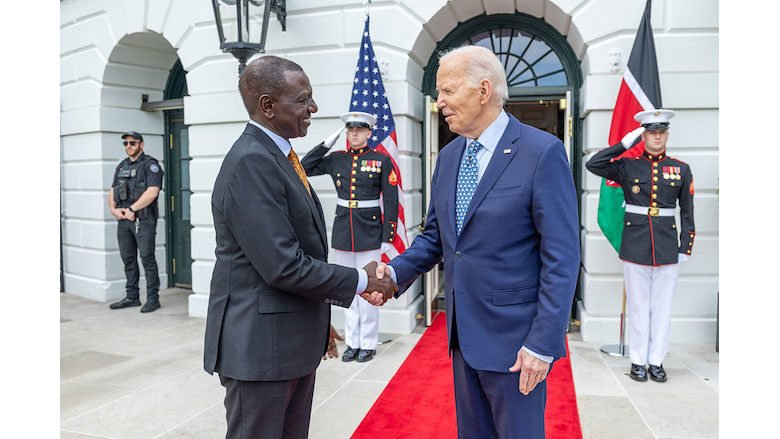
The initial agreement was formally signed in May, during a state visit by Kenyan President William Ruto to Washington DC. The project is expected to last 36 to 48 months, although there is no confirmation yet on the construction start date.
The new expressway would add two to four lanes along the alignment of the existing two-lane Nairobi–Mombasa Road, also known as the A109 road, which is part of the Northern Corridor connecting Mombasa with landlocked countries in the sea of Burundi, the Democratic East. Republic of the Congo, Rwanda, Uganda and South Sudan. Currently these countries depend on road transport for exports and imports of goods. The new express line would complement the 592 km standard gauge railway that runs parallel to the Kenya-Uganda narrow gauge railway built in 1901.
The deal signed with Everstrong, based in Charlottesville, Va., “marks an important step in the construction of a new Nairobi-Mombasa road,” said Meg Whitman. US Ambassador to Kenya. “This stretch of road is vital to Kenya’s continued economic growth and a new road will be safer for all drivers, passengers and pedestrians who rely on this important corridor for work, pleasure and life.”
All high-speed motorways must be built to a bituminous standard set in a previous design by the highways agency. It will be 7 to 14m wide, excluding shoulders and central median, with most shoulders 1.5m wide. Designed to handle 100 kilometers per hour (62 mph) traffic outside urban areas, the expressway is expected to reduce travel time between Nairobi and Mombasa from 10 hours to four hours.
The government intends to establish at least three special economic zones along the motorway route that integrate business with the railway and with local communities.
Reactivation of a stopped project
The new agreement constitutes the latest attempt to build the project. Bechtel was selected in 2017 as the preferred contractor for the high-speed highway, which was designed to have 19 interchanges and toll stations, and would have been the longest toll highway in Africa. Construction was scheduled to begin in 2018.
The project was then “structured to achieve early completion, under a rapid delivery model, with concurrent design and construction, and with the first leg, from Mombasa Road – Kyumvi to ICT Konza, with the aim of to open in 2019.” Bechtel said. Partial funding was expected from US and UK agencies such as the US Export-Import Bank, the Overseas Private Investment Corp. and UK Export Finance.
However, Bechtel abandoned the project in 2021, after the Kenyan government insisted on developing the highway using a P3 model that would allow the contractor to recoup project costs through tolls. Bechtel then stated that Kenya would “get better value for money if the road is built under a [engineering, procurement and construction] model rather than a toll model”.
