

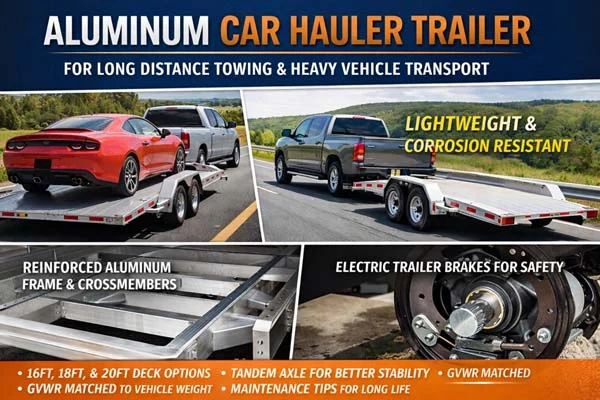
Aluminum car transport trailer for long distance towing and transport of heavy vehicles
If you are looking for a lightweight aluminum trailer for long-distance highway towing, heavy SUV hauling, or commercial vehicle hauling, the most important factors are structural engineering, axle configuration, brake performance, and corrosion resistance. A properly designed aluminum car hauler trailer reduces stress on your tow vehicle, improves fuel efficiency and maintains structural integrity for decades when properly maintained.
Buyers who focus only on initial cost often overlook GVWR ratings, bar spacing, frame reinforcement and brake compatibility. Experienced carriers prioritize these technical elements because they determine real durability and long-term operating cost. Choosing correctly in the beginning avoids costly repairs later.

Why the demand for aluminum car transport trailers is growing rapidly
The growing popularity of aluminum car transport trailers in North America is driven by measurable performance benefits. A lower empty trailer weight means less mechanical stress on your pickup truck or SUV. The reduced weight improves acceleration, shortens braking distance, reduces transmission temperature and increases overall trailer stability on long road trips.
Corrosion resistance is another important factor. Steel trailers require constant rust treatment, especially in northern climates with exposure to road salt. Aluminum does not rust, which dramatically reduces structural degradation in coastal, agricultural and winter environments. For buyers who plan to own a trailer for 15 to 20 years, this difference is significant.
Steel vs aluminum car transport trailer for heavy duty use
Weight efficiency and compatibility with towing vehicles
A steel car hauler trailer can weigh several hundred pounds more than its aluminum counterpart. This extra weight reduces the useful payload capacity and increases the stress on your tow vehicle. A lighter aluminum car hauler trailer allows more flexibility within your truck’s rated towing capacity, providing a safer operating margin.
Lower weight also improves load distribution and reduces excessive tongue weight. When towing at highway speeds, this directly affects stability and braking control.
Comparison of long-term maintenance costs
Steel trailers require ongoing rust management, repainting and protective coatings. Aluminum frames eliminate most maintenance related to corrosion. While you still retain the wheel bearings, electric trailer brakes and suspension components, the structural frame itself naturally resists rust and corrosion.
Over a decade of ownership, the difference in maintenance time and repair expense becomes noticeable, especially for commercial operators.
Structural resistance engineering and load distribution
Aluminum must be designed correctly to achieve optimal strength. Reinforced cross members, reef supports and precise weld alignment distribute the load stress evenly. A properly designed tandem axle aluminum car transport trailer can safely handle substantial vehicle weight without excessive frame flex.
Structural durability depends on the accuracy of the design and not just on the thickness of the raw material. Professional manufacturing standards make a measurable difference in long-term reliability.
Choosing the right size aluminum car transport trailer
16 ft vs 18 ft vs 20 ft deck length
Selecting the correct deck length ensures proper weight balance and load flexibility. A 16-foot aluminum car transport trailer is generally suitable for compact vehicles. An 18-foot deck provides additional versatility for midsize SUVs and crossovers. A 20-foot aluminum car transporter trailer offers improved balance for pickup trucks and larger vehicles.
Longer covers allow better positioning of the vehicle to achieve optimal weight of the tongue and reduce the risk of swaying during road trips.
Matching GVWR to actual workloads
Always choose a trailer with a GVWR that exceeds your heaviest expected load. Continuous operation at maximum rated capacity accelerates wear on axles, suspension systems and braking components. Maintaining a safety margin improves both longevity and braking performance.
Single axle vs tandem setup
Single axle aluminum car transport trailers are suitable for lighter vehicles and occasional transport. Tandem axle configurations provide superior road stability, improved emergency braking control and better weight distribution. For frequent long-distance hauling, tandem axle trailers are strongly recommended.
Key features that define a high-quality aluminum car transport trailer
Reinforced aluminum structure and crossbars
A high quality aluminum car transport trailer features reinforced frame rails and widely spaced cross members to prevent flexing under load. Weld consistency and alignment accuracy contribute directly to long-term structural integrity.
Ramp systems vs tilting roof systems
Heavy-duty aluminum ramps are reliable and cost-effective for most vehicle loading scenarios. Tilting roof systems eliminate removable ramps and simplify loading for vehicles with limited ground clearance. The best choice depends on frequency of use and operational efficiency requirements.
Electric trailer brakes and controller integration
Electric trailer brakes improve stopping power and allow adjustable braking response based on load weight. Proper calibration of the brake controller ensures synchronized braking between the towing vehicle and the trailer, improving safety on steep descents and emergency stops.
Fixation points and safety chains
Reinforced D-rings and secure attachment points prevent vehicle movement during traffic. Safety chains must match the rated capacity of the trailer and comply with towing regulations. Security hardware should never be underestimated.
Long distance road performance and stability
The stability of the road depends on the correct distribution of the load and the appropriate weight of the tongue. Keeping 10 to 15 percent tongue weight improves tracking and reduces rocking. Tandem axle suspension systems improve stability at speeds between 65 and 75 miles per hour.
Proper tire rating and suspension alignment prevent uneven wear and reduce the risk of road failures. Periodic inspection of electric brake systems ensures reliable stopping performance under heavy loads.
Realistic life of an aluminum car transport trailer
A well-maintained aluminum trailer can last 20 years or more. The absence of oxidation-driven deterioration of the frame significantly extends the life of the structure. Routine maintenance focuses on service components such as bearings, brakes, tires and wiring rather than repairing the frame.
Maintenance checklist for aluminum trailer owners
Maintenance of bearings and shafts
Repack wheel bearings annually or after extended mileage. Inspect axle alignment to ensure even tire wear. Replace seals promptly to avoid contamination.
Electric trailer brake inspection
Inspect brake magnets and pads regularly. Adjust the brake tension according to the weight of the load. Clean brake assemblies during seasonal service.
Protection of the electrical system
Keep trailer connectors clean and dry. Inspect LED lighting systems before each trip. Avoid moisture intrusion to maintain electrical reliability.
Frequently asked questions about the aluminum car transport trailer
How much does a 20 foot aluminum car hauler trailer weigh?
Most 20-foot tandem axle aluminum car hauler trailers weigh between 1800 and 2200 pounds depending on axle rating, ramp configuration, and bracing design.
Aluminum car trailers are strong enough for heavy pickup trucks
yes Properly designed tandem axle aluminum trailers can support payload capacities in excess of 7000 lbs. Always check GVWR and axle specifications before shipping.
Is aluminum better than steel for long distance car transport
For extended road transport, aluminum offers advantages of weight efficiency and corrosion resistance. Steel trailers may have a lower initial cost, but require more long-term maintenance.
Aluminum trailers crack over time
Structural cracks are uncommon when trailers are properly designed and operated within rated capacity. Proper load management and maintenance significantly reduce the risk of fatigue.
How can I maximize the life of my aluminum trailer?
Maintain proper tire pressure, service bearings regularly, inspect power brakes, clean connectors and avoid overloading. Preventive maintenance ensures decades of reliable service.
Final considerations for investing in an aluminum car hauler trailer
A properly designed aluminum car hauler trailer provides lightweight towing, reduced maintenance requirements, better fuel efficiency and long-term durability. Selecting the correct cover length, GVWR rating, axle configuration and braking system ensures safe and efficient vehicle transport for years to come.
