

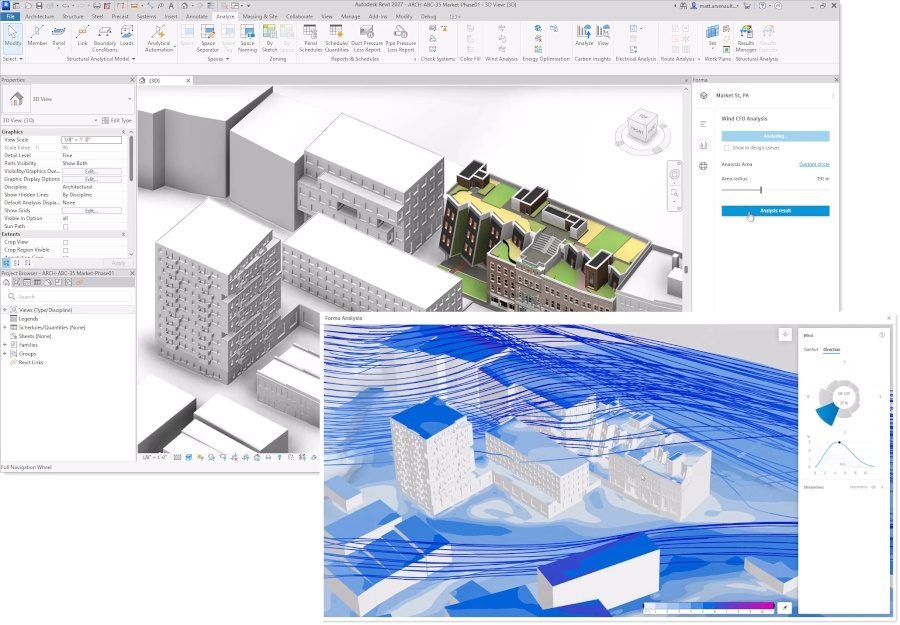

Autodesk has updated its design and construction cloud platform Forma with new connections to its core portfolio. The San Francisco software giant had already announced a rebrand from Autodesk Construction Cloud to Forma last month.
The company is following a roadmap outlined at its Autodesk University conference last year to create deeper connections in design and construction software throughout project life cycles, he said. Forma Building Design, a new application featuring 200- and 300-level detail-focused parametric design in the schematic phase using BIM Forum LOD Spec, was formally launched on 7 April.
At the company’s event, Autodesk had demonstrated how users can configure geolocated sites and create and detail building options with automated design to add or edit facades, floor plans and other elements commonly found in schematic design. Autodesk said this workflow also allows architects to assess building performance, with analyzes that take natural light and carbon footprints into account.
The vendor’s previous conceptual tool, Forma Site Design, had focused more on basics such as building materials, site orientation and size of a built asset and did not offer these features. Arcadis has been testing Forma Building Design. “It’s showing real potential for connecting detailed, early-stage design workflows,” says Sandra Petkute Roberts, the company’s solutions consultant for major AEC platforms. “Forma Building Design makes it easy for us to explore more facade and design ideas without a lot of manual effort or deep expertise in more complex tools.”
As Autodesk continues to introduce AI-enhanced tools like Forma Building Design, it still aims to keep user data in a single cloud ecosystem, even as many of its design clients work with their own in-house AI agents.
“This designation reflects deeper integration between our core products and the Forma industry cloud,” said Amy Bunszel, senior vice president of AEC at Autodesk, in a blog post about the launch. “It enables teams to continue working with the tools they trust while accessing more connected cloud-based workflows.”
The release also introduced Revit as the first Forma Connected client in a technology preview. Revit will have direct integration with Forma Cloud tools, and its data layer will be able to send granular information to cloud tools like Forma Site Design and Building Design without the need for file conversions. “It allows teams to continue working with the tools they trust,” he wrote.
Looking for quick answers on construction and engineering topics?
Try Ask ENR, our new intelligent AI search tool.
Ask ENR →
