

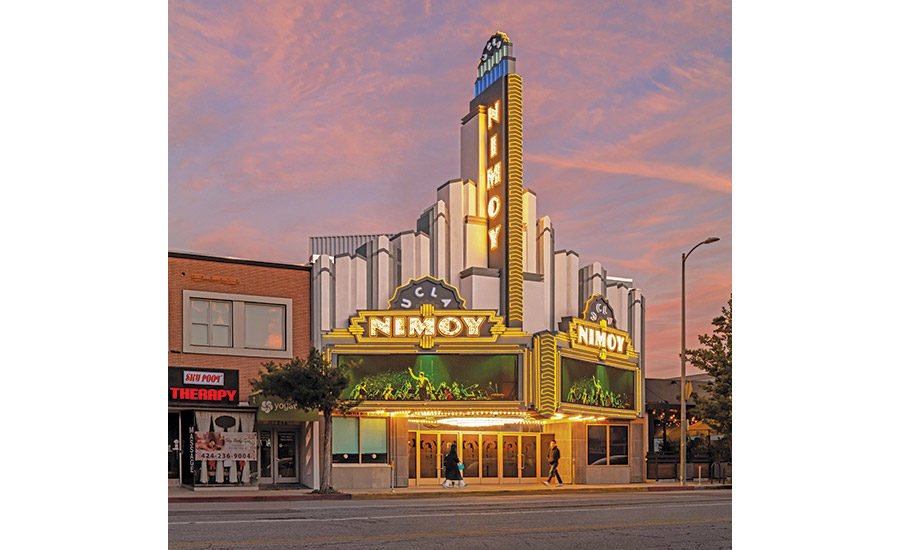

UCLA’s Nimoy Theater
los angeles
BEST PROJECT
Sent by: Shawmut design and construction
Owner: University of California, Los Angeles
Main design company: BAR Architects & Interiors
Construction Manager: Shawmut design and construction
Civil Engineer: KPFF Consulting Engineers
Structural Engineer: Holmes structures
MEP Engineer: Interface engineering
Audio and visual consultant: The Shalleck Collaborative
Lighting Designer: HLB: Lighting design Horton Lees Brogden
Acoustic engineer: Charles M. Salter Associates Inc.
Owner’s representative: Page and Turnbull
Code and Fire Protection Consultant: Woden’s Fire
Elevator consultant: VDA (Van Deusen & Associates)
Covers and waterproofing: Simpson Gumpertz & Heger Inc.
Cost Estimator: cumming corp.
Specifications: Specifications West LLC
After a $24 million renovation, the historic Crest Theater has been meticulously transformed into the state-of-the-art UCLA Nimoy Theater, reclaiming a cultural landmark on Westwood Boulevard and honoring the legacy of actor and philanthropist Leonard Nimoy . Certified LEED Gold, the Nimoy project has not only achieved important sustainability milestones, but has also reinforced the importance of historic preservation, community engagement and environmental responsibility.
The Crest first opened in 1940 and was redesigned in the 1980s, but many of the original theater’s iconic features have been preserved and enhanced, including the 230-foot-long mural depicting Los Angeles in the 1930s , created by performing artist Bill Anderson. Art restoration specialists were hired to meticulously clean and restore the mural, ensuring it retained its original vibrancy and detail.
The Nimoy is a 299-seat, 10,500-square-foot venue with a versatile performance space, including 150 permanent seats and flexible configurations for up to 299 attendees. The 35-foot-wide stage has an adjustable depth. A modern in-line array audio system provides superior sound quality and uniform coverage throughout the venue, while an LED-based performance lighting system offers energy efficiency and customizable effects. Other highlights of the renovation include an expanded lobby, bar, seating areas and gender-inclusive bathrooms.
To reinforce the integrity of the original 1940s structure while preserving its historic facade, the project team used modern materials and techniques that did not alter the appearance of the building, but provided the support required for the new design.
Creating a versatile performance space with flexible seating was another major challenge. The solution involved installing pneumatic seat risers that could be easily reconfigured to accommodate various seating arrangements, from cabaret tables to standing room. Advanced energy modeling provided a comprehensive understanding of the building’s energy use, leading to the implementation of submeters for all end uses, including lighting, HVAC and fan power. The teams completed the work on budget and on time in September 2023.
