

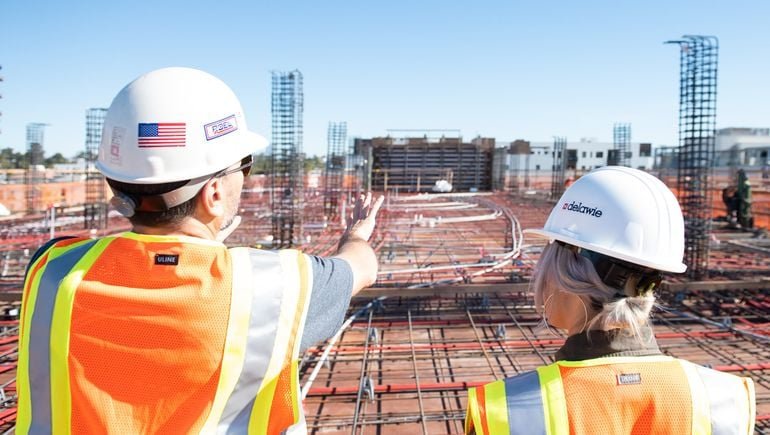
New York is facing a housing shortage and, more than ever, is in critical need of more housing options. Public and private entities have taken steps not only to enable the development and construction of these much-needed housing projects, but also to ensure that the jobs they bring to communities are distributed in a way that reflects the vibrant diversity of the neighborhoods in which they are built.
New York State and New York City have made bold efforts to increase hiring opportunities for Certified Women/Minority-Owned Business Enterprises (M/WBE) in the development of subsidized affordable housing projects. With more than 43 billion dollars of the construction contracts awarded in 2022 by the City of New York alone, there are many business opportunities.
New York has always been one of the most diverse cities in the world. This reality is as true today as ever. The population of New York is now around 8.5 million, with approx 37 percent of residents born abroadwith African Americans, Hispanics and Latinos, and Asians making up more than 67 percent of the population.
Despite the high diversity of New York citizens, a recent Comptroller report revealed that by 2022, M/WBEs accounted for just 9.4 percent of the city’s total eligible construction contract value, while Black, Hispanic American, Asian American, and Native American M/WBEs each accounted for one. less than 2 percent of the total value.
Surely we can do better. New York Comptroller Brad Lander recently said that “increasing hiring and spending with businesses owned by people of color and women is critical to building a more equal city.”
For New York City to thrive, it is vital that the construction industry expands its pool of contract awarding firms, providing qualified M/WBE firms with opportunities to level the playing field.
Through programs implemented by agencies such as the New York City Department of Housing Preservation and Development and the Housing Authority of the City of New York, companies are working to set and meet more ambitious goals for the recruitment of M/WBE. These efforts are part of a broader, industry-wide movement to set higher standards for hiring qualified M/WBE subcontractors.
In the midst of a housing shortage, when construction may seem to have slowed and opportunities are scarce, state and city-subsidized affordable housing projects present a unique opportunity for M/WBEs to grow your business and contribute to a more equitable and diverse industry.
