

The U.S. Department of Energy delivered a pre-Valentine’s Day gift to America’s energy sector infrastructure construction, announcing more than $2 billion in new funding awards — and potential — for the transmission expansion, support for the first time for tidal wave energy projects and the largest infusion. yet for upgrades to the US hydroelectric system.
The DOE said large-scale transmission projects can compete for a second request to speed up grid construction, this time for up to $1.2 billion for capacity contracts that would make the agency a anchor customer for new or improved lines.
The anchor contracts are meant to bolster investor confidence in the projects by allowing the agency to buy up to 50 percent of a line’s transmission capacity over 40 years, DOE said. It also reduces the risk of “under-build or under-sizing” projects. The agency will sell its capacity rights to other customers to recoup its costs.
Support for capacity purchases comes from a $2.5 billion revolving fund established under the Infrastructure Investment Act of 2021. It supports upgrades to existing transmission lines and new projects.
Submissions for the first part of the application are due on March 11, the second part has not yet been published and the project winners will be chosen in October.
The U.S. must double regional transmission capacity and expand interregional connections more than fivefold by 2035 to maintain reliability, improve resiliency and ease congestion, the DOE said in a study released last year. The expanded grid is also needed to accommodate additional clean energy generation.
In late October, three large-scale projects were selected for the first funding request totaling $1.3 billion: the $750 million, 500 MW CrossTie project spanning 214 miles in Nevada and Utah; the 280-mile high-voltage Southline project in Arizona and New Mexico; and the Twin States Clean Energy Link in New Hampshire and Vermont to transport hydroelectric power from Canada.
The DOE expects to launch a third RFP under the public-private partnership program to build a transmission that will connect isolated microgrids in Alaska, Hawaii and the U.S. territories to the grid.
New focus on hydroelectric and tidal projects
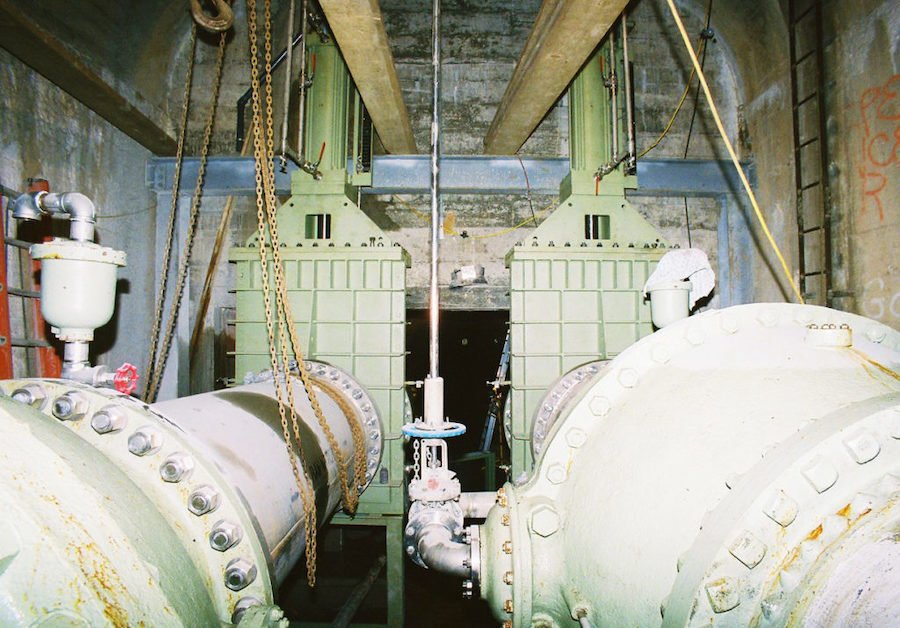
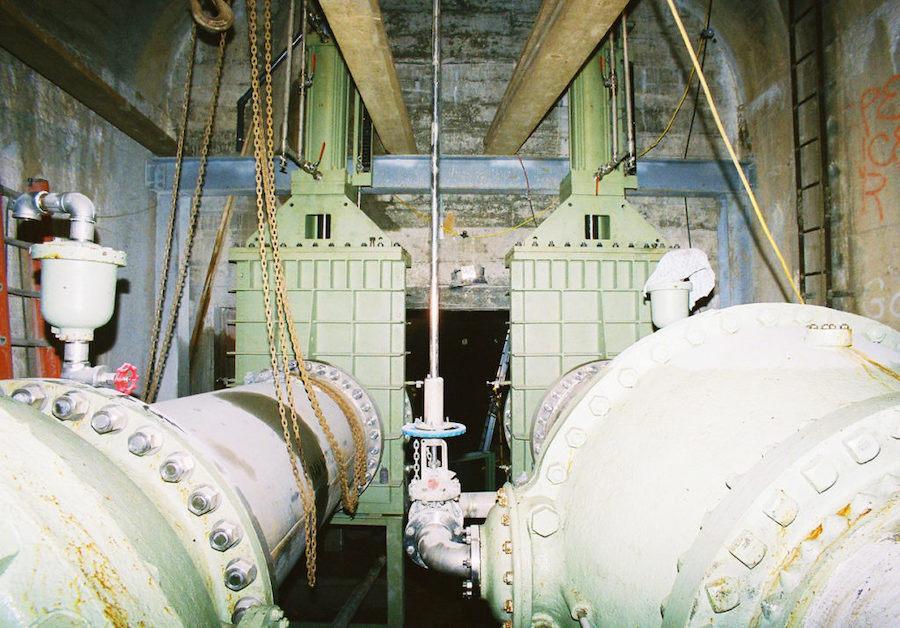
Separately, the DOE said it selected 46 hydro projects to receive up to $72 million in incentive payments to increase plant efficiency in 19 states — the agency’s largest federal investment in this electricity sector, funding also allocated under the federal infrastructure law.
The response to the solicitation has already generated requests seeking $192 million in federal support, the DOE said. The funds will increase capital improvement planned to increase the facility’s efficiency by 14 percent, on average, he said, including upgrades to turbines, generators and water conveyance structures.
Hydropower currently accounts for 27 percent of U.S. renewable electricity generation, as well as 93 percent of all utility-scale energy storage capacity, the DOE said, but the selected plants have 75 years, on average.
Selected projects are located in California, Colorado, Connecticut, Georgia, Idaho, Maine, Massachusetts, New Hampshire, New York, North Carolina, Oklahoma, Oregon, Pennsylvania, Rhode Island, Tennessee, Vermont, Virginia, Washington and West Virginia.
The DOE also said it will support the development of tidal energy through $16 million in new funding: $6 million for two pilot projects developing ocean tidal energy in Maine and Washington state, and about $10 million for a community river system in Alaska.
These are the first of a total investment of $35 million to support projects that can be transitioned to commercial development. The commercial viability of the sites will be assessed over the next year. The DOE will select one project to receive $29 million to test and operate the tidal energy device.
“The projects … are part of the federal government’s largest investment to advance technology to capture energy from ocean tides and river currents, while helping to decarbonize hard-to-reach coastal communities across the country,” said Energy Secretary Jennifer M. Granholm.
