


A U.S. federal court judge in Boston on Dec. 8 threw out federal agencies’ indefinite halt to onshore and offshore wind project permits that was ordered in a Jan. 20 executive order by President Donald Trump.
The ruling comes in a lawsuit filed shortly after the order by 17 states led by New York and Massachusetts, including the District of Columbia. against the order that halted federal project approvals, pending further review. Other states joining as plaintiffs are Arizona, California, Colorado, Connecticut, Delaware, Illinois, Maine, Maryland, Michigan, Minnesota, New Jersey, New Mexico, Oregon, Rhode Island and Washington.
Judge Patti B. Saris called the indefinite pause “arbitrary and capricious” because the agencies did not explain the reasons for the actions or acknowledge the impacts on states and developers who could lose large investments in projects, and who are also violating federal procurement law.
“Massachusetts has invested hundreds of millions of dollars in offshore wind, and today we successfully protected these significant investments from the Trump Administration’s illegal order,” said state Attorney General Andrea Campbell..
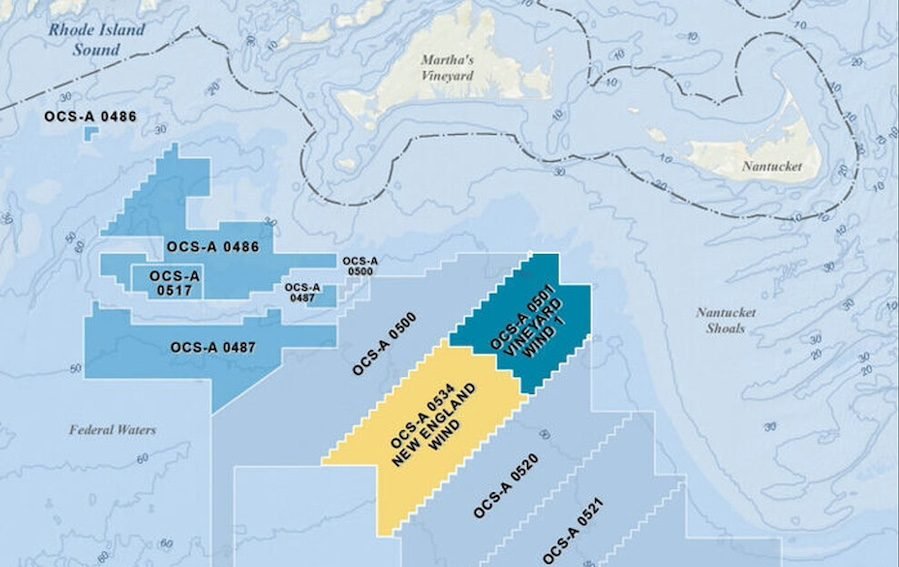
Just days before the ruling, the U.S. Department of the Interior decided to halt and reconsider all 2024 federal approval given to the two-phase New England wind project to be developed on the south coast of Massachusetts and generate up to 2.6 GW upon completion, with similar action threatened against the South Coast Wind Project, which will generate 1.2 GW in its first phase, but with a purchase law of independent energy completed or not completed.
A White House spokesman, who told local media that wind projects received “unfair and preferential treatment” during the Biden administration, did not indicate if or when the Boston federal judge’s ruling would be appealed.
Participants in the case will meet with the judge during the week of Dec. 14 to follow up on the legal matter, and the administration will have 60 days to decide on an appeal.
“Whatever the federal administration’s position on wind power, it has no right to arbitrarily prohibit the development of this sustainable energy resource,” said Maine Attorney General Aaron Frey.
Some wind power supporters are optimistic that the landmark decision could reignite offshore wind development that Trump’s actions had caused to virtually shut down in some states. like New Jersey, but others worry if he can”immediately unlock approvals or end the political uncertainty that has persuaded some developers to scale back their US ambitions,” the wind industry publication said. reload
.
