

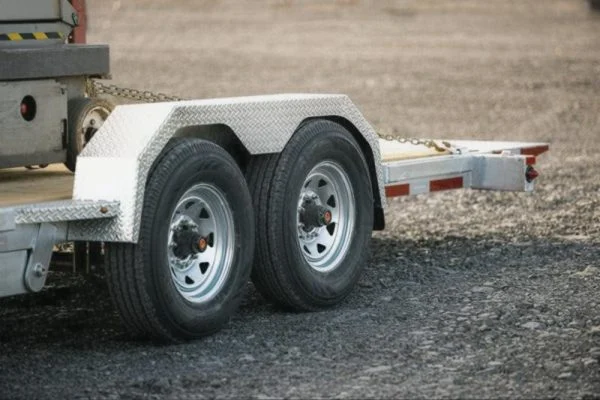
Galvanized tilting trailer for the transport of cars and equipment
A galvanized tilt trailer is not just another variation of a car trailer. It is a long-term transportation solution designed for buyers who care about durability, safety and efficiency for years of real use. If you frequently load cars, SUVs, small machinery or farm equipment, a galvanized tilt deck trailer reduces daily effort while significantly extending service life. Combining a tilting deck cargo structure with hot dip galvanized steel, this type of trailer is built for harsh environments, outdoor storage and demanding commercial work.

Many buyers search for long-tail keywords such as galvanized tilt trailer for car transport, hot dip galvanized tilt deck trailer, or corrosion resistant tilt trailer for coastal use. All these searches point to the same concern. Rust, maintenance cost and cargo safety are more important than paint color or short-term price. This article explains how galvanized tilt trailers work, why they outperform painted trailers, and how to choose the right configuration based on real-world use.
What is a galvanized tilt trailer
A galvanized tilt trailer is a tipping deck trailer whose main frame, deck structure and key steel components are treated by a hot-dip galvanizing process. Instead of relying only on surface painting, the steel is fully immersed in molten zinc. This creates a bonded zinc layer that protects the steel from corrosion, even when the surface is scratched or exposed to moisture.
The tilt trailer structure itself allows the deck to pivot down until it touches the ground. This creates a natural loading angle without removable ramps. Once the vehicle or equipment is loaded, the cover returns to a flat position, locking securely for transport. This design is especially popular for short clearance vehicles and frequent one-person operations.
How a tilt deck trailer performs in everyday use
Tilting deck loading without ramps
Traditional flatbed trailers rely on removable ramps, which add setup time and increase the risk of misalignment. A tilt deck trailer eliminates this step entirely. The deck slopes gently downwards, allowing the wheels of the vehicle or equipment to roll directly on the surface. This makes loading faster, safer and much more consistent, especially on uneven terrain.
For operators looking for a one-person car load trailer or a non-ramp tilt trailer for low cars, this design solves a common problem. You don’t need extra labor and you don’t need to store or carry loose ramps that can bend or slip during use.
Gravity tilting versus hydraulic tilting systems
Gravity tilt trailers use the weight of the load to tilt the deck back. As the vehicle moves forward, the deck naturally levels out. This system is simple, reliable and requires minimal maintenance. It is often preferred for the transport of light to medium cars where simplicity is valued.
Hydraulic tilt trailers use a manual or electric hydraulic system to control the movement of the deck. They are ideal for heavier vehicles, cars that do not run or frequent daily loads. Hydraulic tilt systems offer precise control and smoother operation, especially on uneven terrain or when using a winch.
Why galvanized steel is important for tilt trailers
Corrosion is the silent killer of steel trailers. Painted surfaces look good initially, but once painted, rust spreads quickly. A hot-dip galvanized tilt trailer offers corrosion protection from the inside out. Zinc coats steel internally and externally, protecting welds, hollow sections and hard-to-reach areas that paint cannot reliably cover.
Buyers looking for a rust proof tilt trailer, galvanized coastal car trailer or corrosion resistant farm tilt trailer often deal with moisture, salt air, fertilizers or snow melting chemicals. In these environments, galvanization is not an upgrade. It is a requirement for a long useful life.
Galvanized tilt trailer vs. painted tilt trailer
Painted tilt trailers are usually cheaper to purchase, but usually require ongoing maintenance. Repainting, rust repair and structural degradation add to the cost of ownership over time. Galvanized tilt trailers cost more initially, but the zinc coating dramatically reduces maintenance needs and extends service life.
From EEAT’s perspective, experienced trailer users consistently report that galvanized trailers retain a higher resale value and remain structurally sound much longer than painted alternatives. For professional carriers, farms and rental fleets, this translates into predictable long-term cost control.
Common applications for galvanized tilt trailers
Galvanized tilt trailers are widely used for car transport, SUV transport, compact machinery, generators and agricultural equipment. Their corrosion resistance makes them ideal for outdoor storage, while the tilting platform simplifies frequent loading and unloading.
In rural and agricultural environments, these trailers are exposed to mud, chemicals and moisture on a daily basis. In coastal regions, salt air accelerates corrosion on standard painted trailers. Galvanized tilt trailers perform reliably in both scenarios, making them a practical choice for demanding environments.
Load capacity, axles and safety considerations
Choosing the right load capacity is critical. Buyers should always consider GVWR, which includes trailer weight plus maximum payload. A tandem axle galvanized tilt trailer provides better stability, improved braking performance and higher load capacity compared to single axle designs.
Brake systems are equally important. Electric brakes or hydraulic surge brakes are commonly used depending on regional regulations and trailer size. Proper brakes significantly reduce stopping distance and improve overall safety during road transport.
Manufacturing quality and galvanizing process
A high quality galvanized tilt trailer starts with the selection of structural steel and precision welding. After fabrication, the entire frame undergoes surface preparation, including degreasing and acid pickling. The trailer is then dipped in molten zinc, ensuring full coverage.
This process creates a metallurgical bond between zinc and steel, offering protection that paint can’t match. Reputable manufacturers carry out load testing, welding inspection and brake system verification before shipment to ensure consistent quality.
Customization options for galvanized tilt trailers
Buyers can customize the length, width, axle configuration, braking system, hitch type and accessories such as electric winches, tool boxes and LED lighting. These options allow the trailer to be tailored to specific transportation needs rather than forcing a one-size-fits-all solution.
Professional manufacturers like: contentReference[oaicite:0]{index=0} offers OEM and ODM services for dealers and fleet buyers, ensuring compliance with regional regulations and actual operating conditions.
Maintenance tips for long-term reliability
Although galvanizing reduces maintenance corrosion, mechanical components still require care. Periodic inspection of pivot points, hydraulic systems, brakes and wheel bearings is essential. Cleaning salt, fertilizers and road chemicals after use further extends life.
Frequently asked questions about galvanized tilt trailers
It is a galvanized tilt trailer that is worth the higher price
yes With long-term ownership, reduced corrosion, lower maintenance costs and longer service life often make galvanized tilt trailers more economical than painted alternatives.
Can a person safely load a vehicle onto a tipper trailer?
yes Tilt deck trailers are designed for single operator loading. Rampless design reduces set-up time and minimizes loading risks.
They are galvanized trailers suitable for road transport
Absolutely. As long as the GVWR, axle ratings, brakes and lighting meet legal requirements, galvanized tilt trailers are fully suitable for on-road use.
Galvanization weakens the steel structure
no Hot-dip galvanizing does not weaken structural steel. Improves durability without compromising strength or load capacity.
Galvanized tilt trailers for commercial fleets can be customized
yes Cover size, braking systems, couplers, lighting and branding can be customized for commercial and fleet applications.
conclusion
A galvanized tilt trailer is a practical and professional solution for anyone who values durability, safety and efficiency. Whether used for car hauling, equipment hauling or agricultural work, the combination of tilting deck cargo and hot-dip galvanized steel offers long-term value. For buyers focused on reliability rather than short-term savings, this type of trailer remains one of the most reliable options on the global market.
