

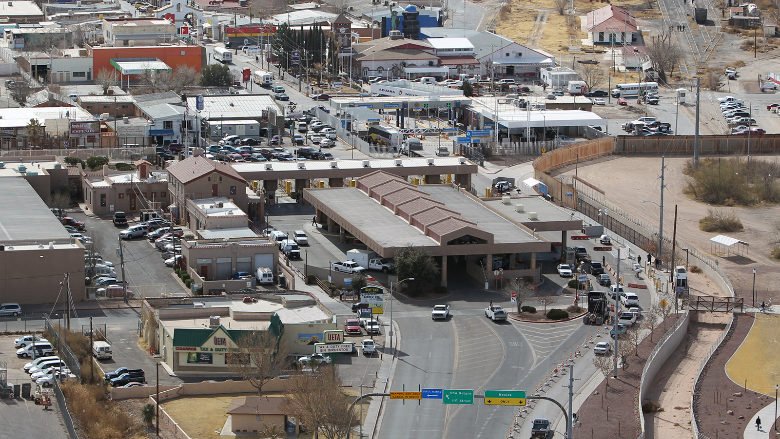

Plans to increase commercial vehicle inspection capacity at the land port of entry along the Mexican border in Douglas, Arizona, are moving forward as the US General Services Administration awarded a design-build contract of $274.7 million to Hensel Phelps Construction Co. port near an existing US Customs and Border Protection facility.
The planned 80-acre facility would increase the number of commercial vehicle inspection lanes from one to four and the number of commercial inspection docks from 12 to 36, compared to the current port of entry ground from Raul Hector Castro to Douglas, according to GSA. It would also be large enough to accommodate large mining rigs, too large for the existing port.
Hensel Phelps, with a team that also includes Jones Studio and Stantec, beat out two other finalist design teams for the job, GSA procurement records show. The other shortlisted teams were Caddell-AISI, a joint venture, and William Charles Construction and Wilson & Co. Engineers and Architects.
Construction is scheduled to begin next fall and be completed by fall 2028.
Hensel Phelps did not immediately respond to inquiries about the project. GSA also selected the contractor this summer for the expansion and modernization of the Calexico West land port of entry in California.
GSA is funding Arizona’s work with $180.3 million from the Jobs and Infrastructure Investment Act of 2021, which includes $3.4 billion to build and modernize land ports of entry, along with 92 .2 billion from the Inflation Reduction Act of 2022, which set aside another $3.4 billion to use incorporated carbon building materials and make federal facilities more sustainable. The project is part of an effort to achieve a portfolio of net-zero federal buildings by 2045.
The project is part of the “two-port solution” to solve problems with the Castro Land port of entry about 4.5 miles away. This 4.8-acre facility was originally built in 1933 and expanded in 1993, but GSA officials say all inbound and outbound trucks must use the same vehicle inspection compound smaller commercial ones, slowing down traffic.
Although all commercial operations would take place at the new port, passenger vehicles, pedestrians, cyclists and buses would continue to use the Castro Land port of entry. GSA also plans to expand and modernize this port separately.
GSA expects to award an independent design-build contract for the rehabilitation of the Castro Land Port of Entry in the fall of 2027. Work is scheduled to begin the following year and be completed in 2031.
