


The U.S. House of Representatives ended its 2025 legislative session by passing an authorization reform bill aimed at shortening the timelines of major federal infrastructure projects and reducing delays caused by what project sponsors describe as “frivolous” litigation. After passing the House, the bill moved to the Senate Environment and Public Works Committee, which is expected to take up the measure in 2026.
While the bill, known as the SPEED Act, has some bipartisan support, it passed the House on Dec. 18 by a split vote of 221 to 196, with several Democrats opposed to a late-stage amendment that prevents it from applying to the administration of offshore wind power, which could delay or cancel it. the Trump administration.
The amendment does not apply to onshore wind or solar power projects, but the bill also did not explicitly address the administration’s new rules that complicate their federal approvals.
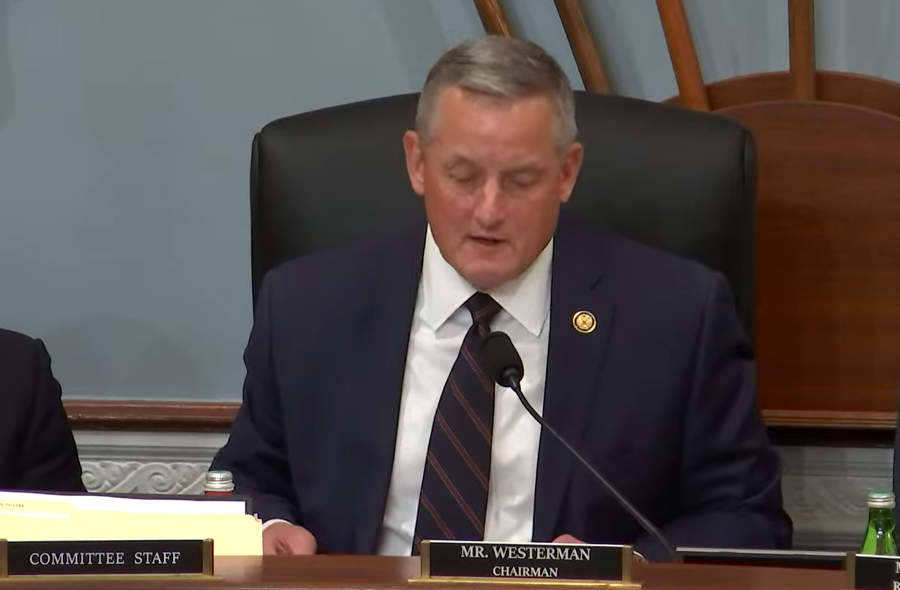
The original legislation, introduced by House Natural Resources Committee Chairman Bruce Westerman (R-Ark.) and Democrat Jared Golden of Maine, would have limited the executive branch’s ability to reverse previous decisions to advance projects after reviews under the National Environmental Policy Act (NEPA). Other key provisions include narrowing the scope of what is considered a “substantial federal action” to trigger NEPA and establishing a 150-day limit on NEPA claims and challenges.
Environmental advocates were highly critical of the legislation, although they acknowledged there is room for streamlining project reviews. Matthew Davis, a former federal environmental scientist and vice president of federal policy for the League of Conservation Voters, said in a statement that “extreme amendments to the SPEED Act fueled by misinformation that explicitly attack clean energy reveal the bill for what it has always been: a fossil fuel giveaway that reduces community input and puts our health and safety at risk.” He added, “Congress should focus on real solutions to rising energy prices, starting with stopping Trump’s effort to ban clean energy and speeding up approval of grid improvements and clean energy projects that are cheap and quick to deploy.”
Natural Resources Defense Council President and CEO Manish Bapna said in a statement that while there may be a “conversation to be had” about reforming the review process, the SPEED Act should be a “non-starter” in the Senate.
Support to the construction industry
Construction industry groups generally support the legislation. Associated Builders and Contractors Vice President of Government Affairs Kristen Swearingen said the SPEED Act “will provide project sponsors and contractors with greater certainty to plan, invest and deliver even the most complex construction projects — certainty essential to meeting the nation’s infrastructure needs.”
Sean O’Neill, senior vice president of government affairs for the American Cement Association (formerly known as the Portland Cement Association), told ENR that the bill would accelerate construction of needed energy, transportation, flood control and other types of essential infrastructure projects.
He noted that in the cement manufacturing sector, not only is cement a vital material for construction projects, but many cement suppliers are also considering reducing carbon emissions in their manufacturing facilities by adding carbon capture and sequestration technologies. Those updates may trigger NEPA reviews, he said. “It can be a little arduous … so something like the SPEED Act could help speed up the process.”
Eleven Democrats voted for the bill in the House, including chief co-sponsor Rep. Golden. “Being a good steward of our environment does not mean we have to tolerate a years-long permitting process that is onerous, overly complex and ripe for litigation abuse,” he said after the move. “We need robust energy production that does not discriminate between energy sources. These investments will create jobs, support our economy, keep prices low and help us maintain energy independence.”
Trump loyalists Andy Harris (R-Md.), Chris Smith (RNJ) and Jeff Van Drew (RNJ), who proposed the amendment, said a legislative solution was essential to allow the administration to remain able to cancel offshore wind projects, particularly in Maryland and New York, where many are under development, but they have also faced hostile headwinds and Trump administration deals against such laws state he reversed them.
