


A key infrastructure bill is moving forward on Capitol Hill, with House committee approval of a measure authorizing 12 new or modified U.S. Army flood and storm protection projects and other types of water
The Water Resources Development Act, or WRDA, which passed the House Transportation and Infrastructure Committee on June 26 by an overwhelming, bipartisan vote of 61-2, authorizes about $4.8 billion for projects to build the new body
The largest allocation in the bill is about $3.65 billion for a coastal storm and flood risk management project in the parish of St. Tammany, La. The second largest allocation is $1.7 billion for hurricane and other storm protection on New York City’s South Staten Shore. island
The House action follows the Senate Environment and Public Works Committee’s May 22 approval of its WRDA measure.
Mixed reactions from the industry
Industry groups had mixed reactions to the House committee bill. American Association of Port Authorities President and CEO Cary S. Davis praised House and Senate lawmakers for their work on WRDA.
The group also pointed to about 20 sections of the House bill that would affect ports, including two of the new project authorizations, in Baltimore and Oakland, California.
Waterways Council Inc. noted an inland waterway project authorization that was incorporated into the House and Senate bills: the Gulf Intracoastal Waterway in Texas’ Brazoria and Matagorda counties.
But WCI President and CEO Tracy Zea said the group was disappointed that the House panel version did not include a provision that was included in the Senate committee bill. This provision would permanently change the cost-sharing ratio for waterway construction and major rehabilitation projects to 75% of general revenue and 25% of the Inland Waterways Trust Fund, compared to the current sharing of 65% General-35% of the Trust Fund.
But Zea said “we are hopeful that the House-Senate conference negotiations will result in a different outcome.”
If enacted this year, the measure would continue a 10-year streak of passing a WRDA measure every two years.
Flooding prompts legislative push
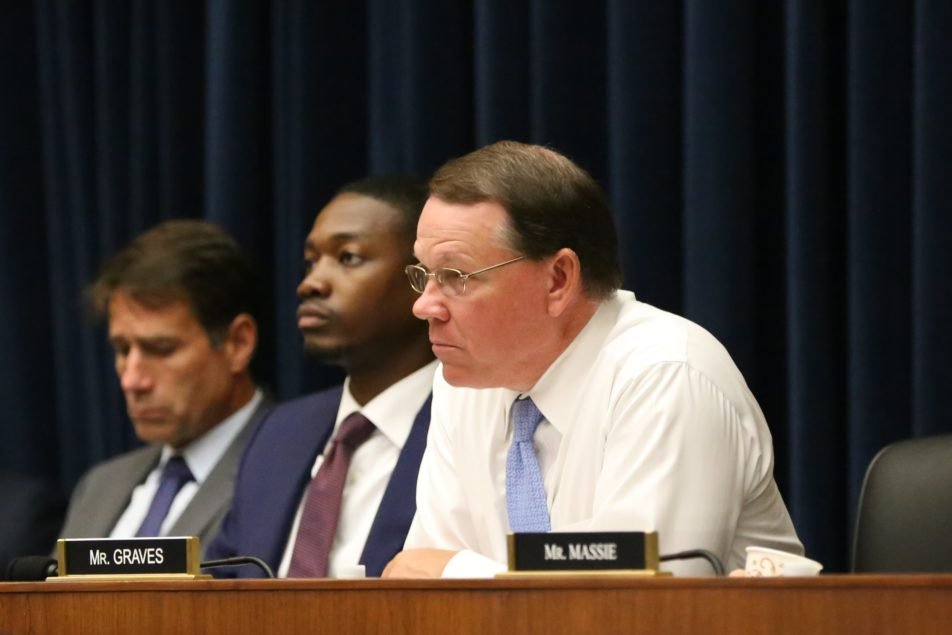
Severe flooding in the Midwest has given lawmakers additional impetus to move quickly on water resources legislation. That’s especially true for committee chairman Sam Graves (R-Mo.), the northern Missouri district spans the entire state and includes portions of the Mississippi and Missouri River watersheds.
Graves said in his opening statement of the committee’s voting session, “For Missourians, this legislation offers hope.” He cited provisions that speed up the project development process and give non-federal project sponsors more authority and get projects completed sooner.
Graves said that in northern Missouri “many of my constituents are anxiously watching river and flood indicators.” He added that these activities are “a reminder of why it is important that we get this bill done as soon as possible.”
In addition to construction projects, the committee’s WRDA includes 160 new feasibility studies.
Among other provisions, the new bill extends the Federal Emergency Management Agency’s National Dam Safety Program until 2028. The program expired last September 30.
The bill also aims to strengthen the high-hazard potential dam program by mandating maintenance of rehabilitated dams and floodplain management plans.
The Senate committee bill authorized about $2 billion for eight Corps construction projects.
Not surprisingly, the House panel’s version is bigger than the Senate committee’s proposal. To be included in a WRDA bill, a project must receive a favorable report from the Army Chief of Engineers, and the number of “Chief’s Reports” tends to grow as legislation moves through the its legislative stages.
The next step for the House committee’s WRDA would be a floor vote.
