

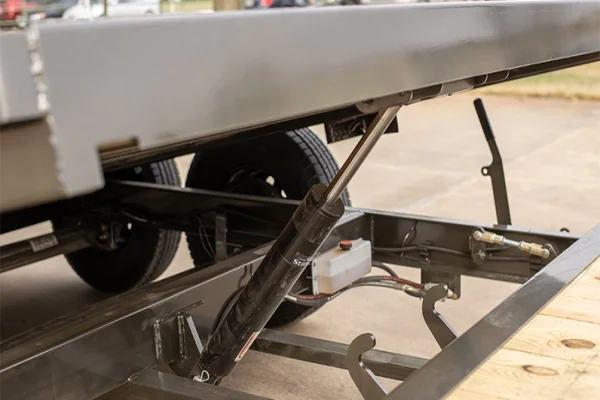
Hydraulic tilting trailer kit
A hydraulic tipper trailer kit is one of those upgrades that seems optional at first, until you use one in real working conditions. If you regularly transport cars, small machines or wheeled equipment, you know that loading is the most stressful part of the job. Traditional ramps take time to install, require physical effort and introduce risk every time you load. A hydraulic tilt trailer kit changes this experience completely by allowing the trailer deck to be smoothly tilted to the ground using hydraulic power.
 This article is written for buyers, fleet operators and dealers who want a deeper understanding of how hydraulic tilt trailer kits work, why they are worth considering and how to choose the right configuration. The focus is on real-world use, long-term value, and practical decision-making rather than theory.
What is a hydraulic tilt trailer kit and why is it important
A hydraulic tilt trailer kit is a complete hydraulic system designed to be installed on a trailer so that the deck can be tilted up and down under controlled hydraulic force. Instead of using loose ramps or relying on gravity-only tilting mechanisms, the hydraulic system actively moves the deck, giving the operator precise control during loading and unloading.
What makes this important is consistency. With a hydraulic tilt trailer kit, the load angle is predictable every time. This matters when you are loading vehicles with little ground clearance, heavy cars or equipment that cannot afford sudden movement. For professional users, this consistency translates directly into fewer accidents, less damage and faster response.
How a hydraulic tilt trailer kit works in real use
Understanding the hydraulic system
At the heart of every hydraulic tipper trailer kit is a hydraulic system consisting of a pump, hydraulic fluid, hoses and one or more hydraulic cylinders. When the system is activated, pressurized fluid moves the cylinder, which in turn raises or lowers the trailer cover. This movement is smooth and controlled, even under load.
In practical terms, this means that the operator does not need to rush or guess the time. The deck moves at a constant rate, allowing vehicles to drive or fit into the trailer without sudden drops or sharp angles.
Power supply and controls
Most modern hydraulic tilt trailer kits use an electric hydraulic power unit powered by a dedicated battery. This configuration allows the trailer to operate independently of the towing vehicle. A wired or wireless control allows the operator to be at a safe distance while lowering or raising the deck.
This level of control is especially valuable on uneven terrain, where small adjustments can make a big difference in the safety of the load.
Why a hydraulic tilt trailer kit is better than traditional ramps
Improved security during charging
Ramps are one of the most common causes of towing-related accidents. They can shift, flex or slip if the floor is uneven or the load is heavier than expected. A hydraulic tilt trailer kit eliminates this variable entirely. Since the deck itself becomes the ramp, there is no separate component that can be moved out of place.
For companies handling customer vehicles or expensive equipment, reducing this risk is often reason enough to choose a hydraulic tilting system.
Faster and less physically demanding
Ramp loading requires lifting, positioning and storing heavy components. Over time, this physical effort adds up. A hydraulic tilt trailer kit reduces the process to a few button presses. Lower the cover, load the vehicle, raise the cover and secure the load.
For operators who load multiple times a day, this efficiency can significantly reduce fatigue and improve overall productivity.
Key components inside a hydraulic tilt trailer kit
Hydraulic cylinders
The hydraulic cylinder is responsible for raising and lowering the cover. High-quality kits often use double-cylinder designs, which provide better stability and reduce torsional forces on the frame. This is especially important when loading heavier vehicles or uneven loads.
Hydraulic pump and battery
The pump generates hydraulic pressure, while the battery supplies power. A well-designed system places these components under the deck or in protected areas to prevent damage and free up useful deck space.
Mounting hardware and reinforcement
A hydraulic tilt trailer kit is only as strong as its mounting points. Reinforced brackets, heavy-duty pins and properly designed hinge points ensure the system can handle repeated load cycles without premature wear.
Manual versus Electric Hydraulic Tipper Trailer Kits
Manual hydraulic tilt trailer kits use a manual pump to move the deck. They are mechanically simple and do not rely on electrical components, which can be attractive in certain environments. However, they require physical effort and work slower.
Electric hydraulic tilt trailer kits are much more common in professional applications. They offer faster operation, smoother movement and minimal physical effort. For frequent use or heavier loads, electric systems are generally the preferred choice.
Load capacity and compatibility with trailers
One of the most important factors when choosing a hydraulic tilt trailer kit is to match the system to the gross weight of the vehicle and the intended payload of the trailer. An undersized kit may work initially, but will wear out quickly and compromise safety.
Tandem axle trailers benefit most from hydraulic tilting systems as they provide better weight distribution and stability during loading. Always evaluate axle configuration, frame strength and deck length before selecting a kit.
Typical applications for hydraulic tilt trailer kits
Hydraulic tilt trailer kits are widely used in car transport, equipment transport, rental fleets and commercial logistics. They are especially valuable when loading vehicles with little ground clearance, cars that are not moving, or wheeled machinery that requires precise control during loading.
For rental companies, tiltable covers reduce customer errors and equipment damage, helping to protect assets over time.
Long-term maintenance and reliability
Maintaining a hydraulic tipper trailer kit is simple. Regularly checking hydraulic fluid levels, inspecting hoses for wear, and keeping moving parts clean are usually sufficient. Compared to the current problems associated with loose ramps, hydraulic systems often result in fewer long-term problems.
Frequently asked questions about hydraulic tilt trailer kits
It is a hydraulic tilt trailer kit that is worth the higher initial cost
For users who charge vehicles frequently, the answer is yes. The time savings, reduced physical strain, and lower risk of injury often make up for the initial investment in a short period of regular use.
A hydraulic tipper trailer can be safely operated by one person
yes One of the main advantages of a hydraulic tipper trailer kit is that it allows for safe one-person operation. The controlled movement of the cover eliminates the need for additional assistance in most situations.
Can a hydraulic tilt trailer kit be added to an existing trailer?
In some cases, yes. However, not all trailer frames are designed to withstand the stresses of a tilt system. Frame reinforcement and proper hinge geometry are critical, so compatibility should always be evaluated before retrofitting.
They are hydraulic tipper trailer kits suitable for heavy vehicles
Hydraulic tilt trailer kits can handle heavy vehicles as long as the system is sized correctly and fits the trailer’s rated capacity. Double cylinder systems and reinforced frames are commonly used for heavier loads.
How long does a hydraulic tipper trailer kit usually last
With proper maintenance, a high quality hydraulic tipper trailer kit can last for many years. Regular inspection and basic care play an important role in extending the service life.
Final considerations for choosing a hydraulic tilt trailer kit
A hydraulic tilt trailer kit isn’t just a convenience feature. It is a practical tool that improves safety, efficiency and consistency in the transport of vehicles and equipment. For buyers who value reliability and long-term performance, choosing the right hydraulic tilt system is an investment that pays off with every load.
