

With a proposed $56 billion state budget through 2027, Illinois Gov. JB Pritzker (D) is calling for a two-year pause in tax incentives for new data centers to assess impacts on the power grid and the potential for increased utility costs.
The proposed moratorium, which would begin in July, would slow tax incentives for new projects while state agencies assess the overall impact of existing and planned installations on energy infrastructure, consumers and the broader economy.
To qualify for Illinois’ current data center tax breaks, facilities must invest at least $250 million over 60 months and create a minimum of 20 good-paying jobs, while meeting specified efficiency and sustainability standards. Eligible projects receive exemptions from various state and local taxes as well as other local taxes. Additional construction wage credits may be available for projects in underserved areas.
State records show 28 applications submitted between 2019 and 2024, with all but one approved for the program, according to the State Data Center’s Investment Report. Developers and operators with projects include Digital Realty, NTT, Microsoft, Equinix, Iron Mountain, Stack, CoreSite, T5, QTS, Aligned, CyrusOne, Serverfarm and EdgeConneX.
By May 2025, Illinois had 201 data centers and investment totaled nearly $15.8 billion, according to the state.
Under the proposal, state agencies would analyze how data center growth affects power generation and transmission needs and whether building associated infrastructure could shift costs to ratepayers.
In 2019, Pritzker signed and promoted bipartisan tax incentives aimed at attracting large investments in data centers, highlighting their importance to the state’s infrastructure and economy.

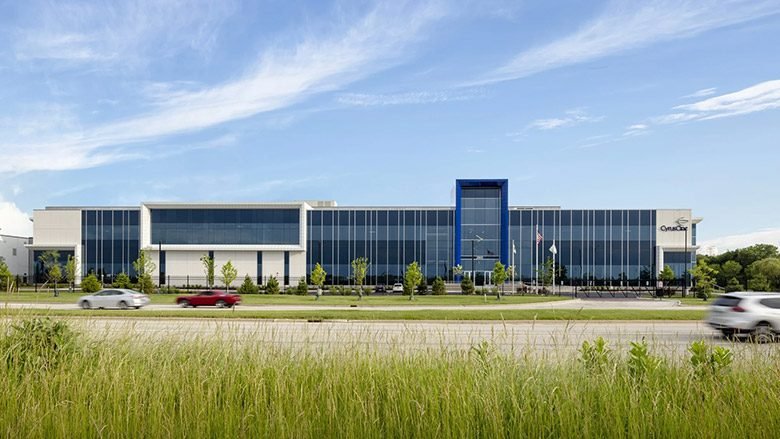
Governor JB Pritzker touted the benefits of a CyrusOne data center at a 2024 inauguration in Aurora, Illinois.
Photo courtesy of CyrusOne
Jack Lavin, president and CEO of the Chicagoland Chamber of Commerce, issued a statement opposing the data center tax credit pause, which he said will “eliminate a proven economic development tool.”
In another proposal aimed at spurring residential housing development, Pritzker is seeking $250 million in capital funding to support infrastructure grants that would cover underground costs, such as water and sewer lines, gas lines, stormwater drainage systems and electrical conduit for residential sites. Grants for developers or local governments would reduce the financial burden of those costs, according to the state.
A recent study shows that Illinois has a housing shortage of 142,000 units and needs to build 227,000 more housing units over the next five years to solve the shortage.
All measures require approval by the Democratic-led Illinois General Assembly.
