

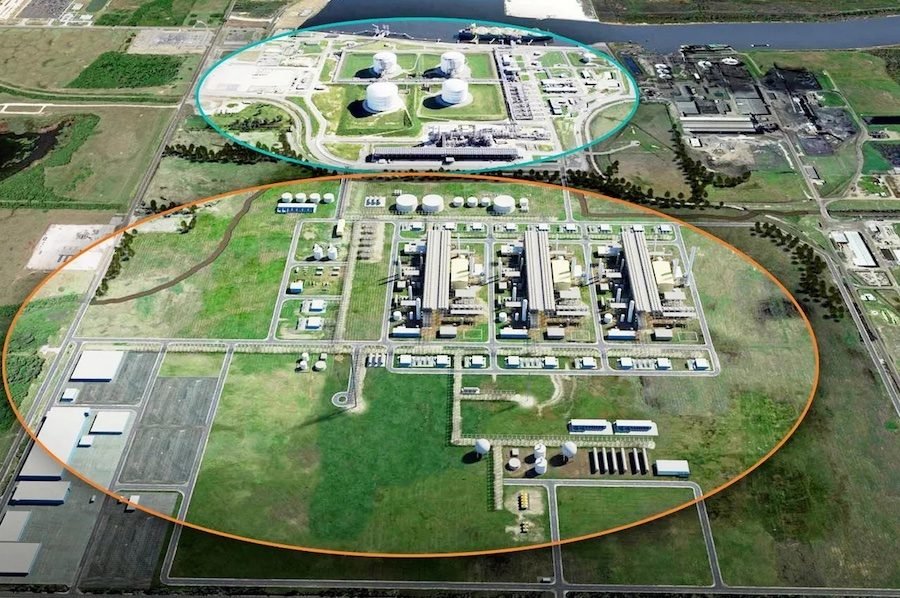

A years-long effort by developer Energy Transfer to convert a natural gas import regasification plant in Lake Charles, La., into an LNG export terminal moved forward this month with the company naming a joint venture EPC and pushing the US Department of Energy for export licenses for the project, despite a pause by the Biden administration to grant them.
In a Sept. 19 statement, Energy Transfer says it selected Houston-based engineer KBR and France-based Technip Energies for the engineering, procurement, manufacturing and construction of the Lake Charles LNG project.
The cost of the project and the value of the contract were not disclosed, and no final investment decision has been announced.
When completed, the three-train terminal would be one of the largest in the United States, with a capacity of about 16.5 million tons per year, Energy Transfer says.
“Lake Charles LNG will help strengthen global energy security and will be designed to be one of the cleanest and most efficient operating facilities in the US,” KBR President and CEO Stuart Bradie said in a statement. Despite its move into more niche federal, scientific and high-tech consulting, KBR said it has nearly 50 years of experience developing LNG facilities.
The DOE last year rejected Energy Transfer’s bid for a three-year extension to finish the project. But after a federal district court in Louisiana in July temporarily halted the administration’s early 2024 pause on non-tradable LNG export license approvals for further review of the project’s impact , the company pushed the DOE to the agency for an immediate signature of Lake Charles LNG.
The ruling, which came in a lawsuit from Louisiana and other mostly Republican-governed states, orders the resumption of license reviews but does not set a timetable or require agency approval. Energy Transfer is now in talks with Australian energy giant Woodside Energy as a customer and investment partner, according to Bloomberg report
The project is believed to have tentative buyers for about 8 million metric tons of gas per year and could reach final investment when it rises to about 12 mmty under contract, analysts said, though noted that the developer will cite earlier “setbacks” in negotiations caused by uncertainty. DOE allows it.
