

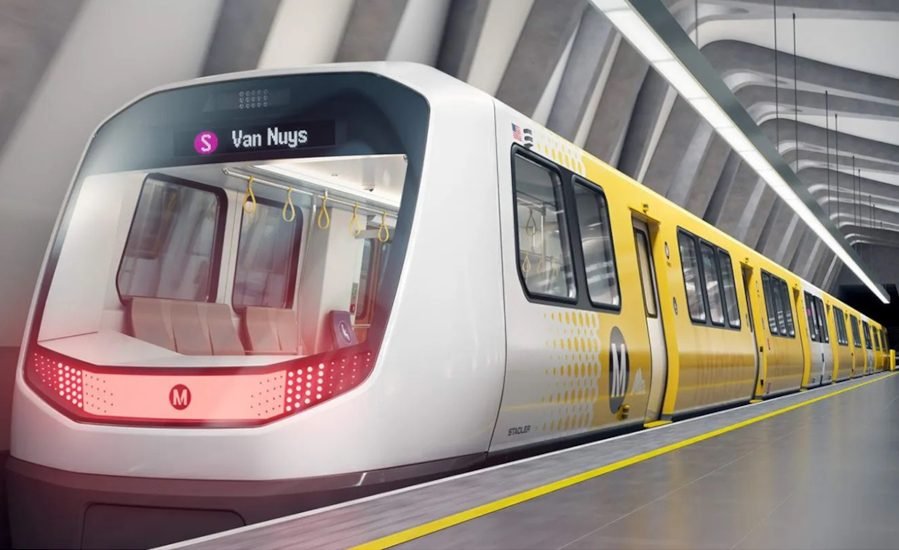

The Los Angeles Metro Board of Directors has approved plans for the Sepulveda Transit Corridor Project, an underground heavy rail subway connecting the San Fernando Valley and West Los Angeles.
Currently, the Santa Monica Mountains force most commuters onto congested Interstate 405, where trips can take up to 90 minutes during rush hour. The locally preferred alternative, approved unanimously by the board on Jan. 22, would cut travel time to about 20 minutes, Metro officials said.
“A direct rail connection through the Sepúlveda Pass will connect people to jobs, schools, airports and entertainment faster than ever before,” Metro Board Chairman Fernando Dutra, a member of the Whittier City Council, said in a statement.
The selected option, known as Modified Alternative 5, is a high-capacity heavy rail line that would provide a north-south transit connection between Van Nuys and Westwood, with a planned future extension to Los Angeles International Airport. The line would use fully automated driverless train technology, a first for the subway system.
The project is currently estimated to cost around $25 billion. Metro said the estimate will be updated as design work continues, including the development of a phased construction strategy that prioritizes an initial operational segment between the valley and UCLA.
Funding currently comes from county sales tax measures approved by voters: Measure R in 2008 and Measure M in 2016. Metro said additional funding will be needed and is expected to include a combination of federal, state and local sources, as well as possible private funding through a public-private partnership.
The council selected the heavy rail option over several monorail alternatives that were expected to be cheaper and faster to build, but were rejected because they would operate more slowly and carry fewer passengers.
The locally preferred alternative is a modification of a heavy rail plan developed by STCP, a consortium led by Bechtel. Under the public-private partnership model, STCP will continue to refine the design with Metro. The partnership could lead to a long-term agreement to build, operate and potentially help finance the project, Metro spokeswoman Mallory Mead said.
The project would include a fully underground, single-hole, 13-mile subway with seven stations, connecting the Van Nuys Metrolink station to the E Line on the Westside.
Construction would require a deep tunnel through the Santa Monica Mountains, with portions of the tunnel reaching depths of up to 500 feet to avoid residential areas and complex geological conditions. While the project poses numerous technical challenges, agency officials say they are confident they are manageable.
“Since 1993, Metro has successfully built more than 30 miles of underground tunnel rail projects that are now part of Los Angeles County’s transit network,” said Cecily Way, Metro’s senior executive officer of countywide planning and development.
The council’s decision allows Metro to move forward with the preparation of the final Environmental Impact Report and any necessary environmental documentation as a result of the selection of the LPZ. The agency will also move forward with the definition of an Initial Operating Segment and a phasing plan for the project. The public-private partnership delivery model being considered may also include improvements to allow for a future connection to the G Line at Van Nuys Boulevard, the official said.
