

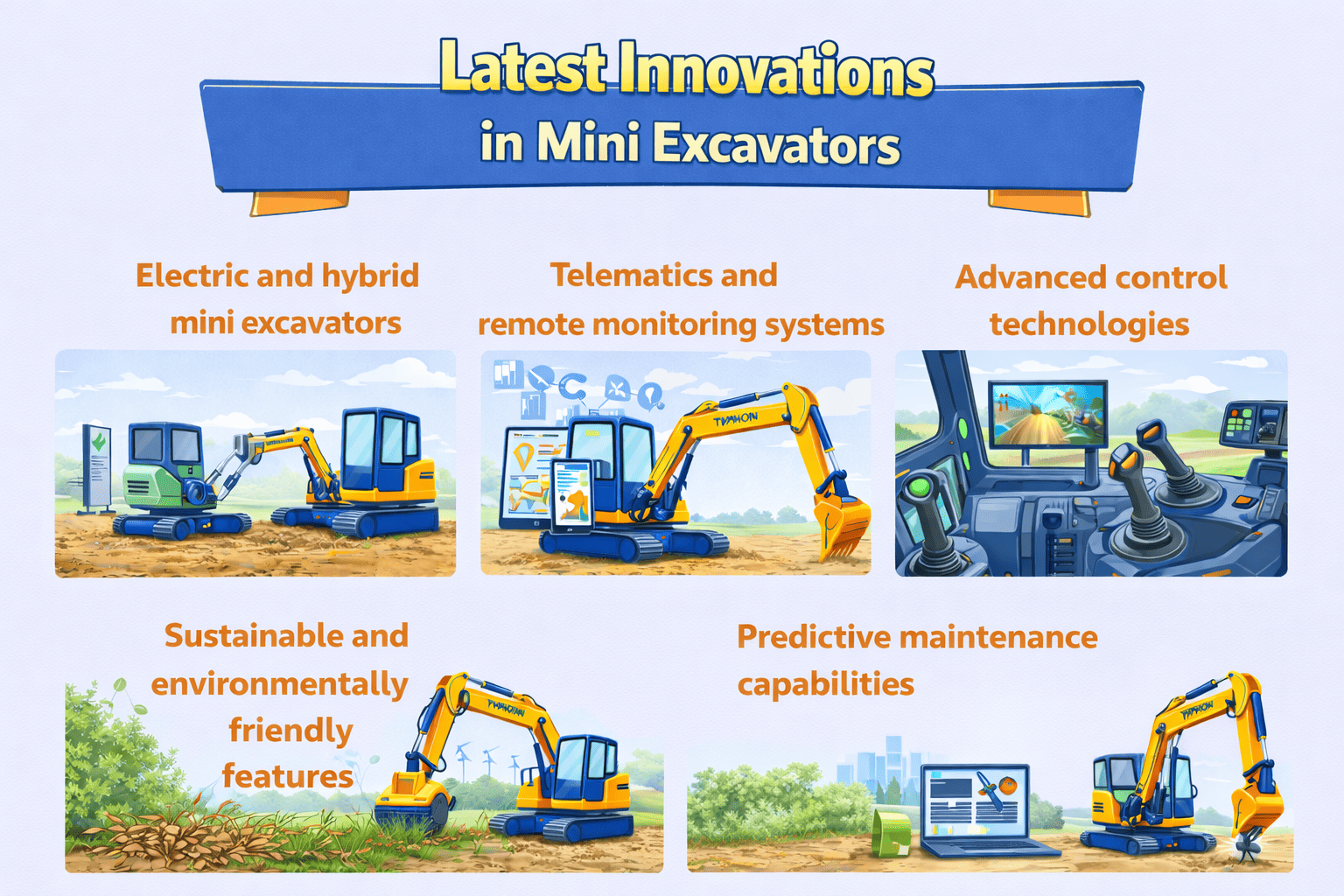
The latest innovations in mini excavators are all about squeezing massive-machine technology into a compact footprint. Today’s advancements heavily feature battery-electric motors to eliminate noise and exhaust, smart telematics to track machines from your phone, and electro-hydraulic controls that make grading precise enough to eliminate the need for a guy in the trench checking depth.
The Ultimate Guide to the Latest Innovations in Mini Excavators
If you’ve spent any time on a job site lately, you know moving dirt is only half the battle. The real headache is managing fuel costs, dealing with noise complaints in tight residential neighborhoods, and trying to find operators who actually know how to run the equipment without tearing up a water line.
Honestly, buying new equipment used to be simple. You checked the breakout force, looked at the digging depth, and bought the machine. Not anymore. The shift toward smaller, smarter machines is happening fast, and the latest innovations in mini excavators are forcing everyone from independent landscapers to massive utility contractors to rethink how they buy iron.
Manufacturers aren’t just slapping a fresh coat of paint on last year’s models. They are ripping out the old mechanical guts and replacing them with tech that used to only exist on heavy, million-dollar highway rigs. We’re talking about compact excavator innovations that literally change how a job is bid and executed.
Whether you’re tired of paying for diesel or you just want to stop your crew from over-digging trenches, you need to know what’s out there. Let’s walk through the mini excavator technology advancements that are actually worth your money right now.
Quick Summary: The Big Changes to Watch
- Power: A massive shift toward electric mini excavators to cut fuel costs and kill job site noise.
- Tracking: Fleet managers are using telematics in mini excavators to catch mechanical issues before a machine actually breaks down.
- Operation: Electro-hydraulics are replacing old-school levers, making the machines smoother and easier for green operators to learn.
- Green Tech: Eco-modes and biodegradable fluids are becoming standard to meet strict environmental site rules.
- Uptime: Smart sensors now alert you to change a part before it snaps in the middle of a pour.
What Are the Latest Innovations in Mini Excavators?
Definition: The latest innovations in mini excavators encompass the new digital, electric, and mechanical technologies integrated into compact digging equipment. These features are specifically designed to lower daily operating costs, improve digging accuracy, and make the machines safer to operate in heavily populated or indoor environments.
In plain English? These machines are getting smarter so your crew can work faster and make fewer expensive mistakes. Here is a breakdown of the specific tech leading the charge.
Electric and Hybrid Mini Excavators: Pulling the Plug on Diesel
Let’s address the significant issue at hand. Many traditional operators may dismiss the concept of battery power. But if you’ve ever had to shut down a weekend job because a neighbor complained about the noise of a diesel engine at 7:00 AM, you’ll understand why the battery industry is blowing up.
Battery-powered mini excavators are quickly becoming the most demanded rental item for urban contractors. You can run these machines indoors for interior demolition without suffocating your crew in exhaust fumes. They are shockingly quiet, meaning you can actually communicate with your spotter without screaming over a roaring engine.
Why Choose Hybrid Compact Excavators?
If you run jobs out in the sticks where you don’t have access to a reliable charging station, going 100% electric might give you range anxiety. That’s exactly why hybrid compact excavators are hitting the market.
- They pair a smaller, highly efficient diesel engine with an electric motor.
- You get the heavy digging power you need without burning 50 gallons of fuel a week.
- They serve as the perfect stepping stone if you want to test out green tech without fully committing to batteries.
Understanding the latest innovations in mini excavators means knowing when to ditch the diesel and when to keep it as a backup.
Telematics and Remote Monitoring Systems
Remember the days of driving from site to site just to read hour meters off the dash with a clipboard? Those days are over. Today, smart mini excavators practically manage themselves.
Telematics in mini excavators is essentially a cellular GPS and diagnostic system hardwired into the machine’s brain. It beams everything happening with that excavator straight to an app on your phone.
How Does Telematics in Mini Excavators Work?
It’s actually pretty straightforward:
- Sensors read the machine: things like fuel level, engine temp, and fault codes are constantly monitored.
- Data hits the cloud: A cellular signal bounces that info to a dashboard.
- You get the alert: Your phone buzzes, telling you the machine at the downtown site has been idling for two hours wasting fuel.
- Security locks: You can set up a digital fence (geofencing). If someone tries to steal the machine at 2:00 AM and puts it on a trailer, it kills the engine and alerts the police.
This is one of the most practical mini excavator technology advancements because it instantly saves you time and stops fuel theft dead in its tracks.
Advanced Control Technologies
Finding a seasoned operator who can grade a trench perfectly by eye is getting harder every year. To compensate for the labor shortage, manufacturers are leaning heavily into advanced hydraulic systems.
Older machines used mechanical linkages. You pulled a lever, a cable pulled a valve, and the boom moved. It was rugged, but it was jerky. Modern smart mini excavators use electro-hydraulics. When you manipulate the joystick, a computer interprets the signal and precisely moves the arm.
The Real-World Benefit of Smart Controls
Because the machine is controlled by a computer, you can dial in specific settings.
- Got a rookie in the seat? You can turn down the hydraulic speed so they don’t swing too fast and hit a wall.
- Digging a foundation? You can program the machine to stop digging once the bucket hits a specific depth.
This means you don’t over-dig, you don’t waste time backfilling, and you don’t waste money on extra gravel.
Sustainable and Environmentally Friendly Features
It’s not just about hugging trees; it’s about winning bids. A lot of municipal and government contracts now demand that contractors meet specific environmental standards to even get on the job site. The latest innovations in mini excavators help you check those boxes.
Besides the shift to electric mini excavators, manufacturers are getting clever with standard operations:
- Aggressive Auto-Idle: If an operator drops the joysticks to check his phone, the machine immediately drops to idle. After five minutes, it shuts itself off.
- Biodegradable Oils: If you blow a hydraulic hose near a creek or a residential water supply, standard hydraulic fluid means a massive EPA fine and a hazmat cleanup. Biodegradable fluid dissolves naturally, saving you from a PR and financial nightmare.
Predictive Maintenance Capabilities
Nothing eats your profit margin faster than unexpected downtime. You have a crew of five guys standing around getting paid hourly while a mechanic tries to swap a busted track motor in the mud.
One of the most valuable latest innovations in mini excavators is the shift toward predictive maintenance.
What is predictive maintenance?
Instead of waiting for a part to violently fail, smart sensors monitor the vibrations and temperatures of the machine’s internal parts. The AI can literally spot the signs of wear and tear before the operator even notices a difference in performance.
The system sends you an alert saying, “The main hydraulic pump is showing stress and will likely fail in the next 30 hours.” You order the part, schedule the repair for a Saturday when the machine isn’t needed, and completely avoid the mid-week breakdown. It turns emergency repairs into scheduled upkeep.
[ecwid widgets=”productbrowser categories” default_category_id=”167967260″ default_product_id=”0″ minicart_layout=”MiniAttachToProductBrowser”]
Frequently Asked Questions (FAQs)
- What are the latest innovations in mini excavators right now? The latest innovations in mini excavators heavily focus on switching to battery-electric power, using telematics for remote fleet tracking, and installing electro-hydraulic controls to make the machines easier and safer to operate.
- How long can electric mini excavators actually work on one charge? It depends on how hard you run them, but most modern battery-powered mini excavators will last a standard 8-hour shift under normal use. If you are constantly digging in heavy clay, you might need to use a fast charger during the crew’s lunch break to top it off.
- What exactly is telematics in mini excavators? Think of it as a smartwatch for your heavy equipment. It’s a built-in cellular tracking system that sends live data about the machine’s location, fuel burn rate, and engine health directly to a fleet manager’s phone or computer.
- Are hybrid compact excavators a smart purchase? Yes, especially if you work in varied environments. Hybrid compact excavators give you the heavy-duty power of a diesel engine for tough jobs but allow you to switch to electric power when you need to run quietly in a residential zone.
- How do advanced hydraulic systems help inexperienced operators? Because advanced hydraulic systems use computers instead of mechanical cables, fleet managers can adjust the sensitivity of the joysticks. You can slow the machine’s reaction time down so a new operator doesn’t jerk the machine around and cause an accident.
- Do smart mini excavators really save money on maintenance? Absolutely. By using predictive maintenance sensors, a smart mini excavator will alert you to a failing part before it breaks entirely. This lets you fix the machine on your own schedule instead of paying for emergency field service during a job.
Ready to Upgrade Your Fleet?
Adhering to outdated machinery may save you a few bucks on the purchase price, but it will result in significant fuel costs, emergency repairs, and inefficiencies on the site. The latest innovations in mini excavators are designed to reduce costs and maintain the productivity of your crews.
If you are tired of dealing with noise complaints, fuel theft, and blown hydraulic hoses, it’s time to look at the new standard of equipment.
