

.webp?t=1767726689)
Appropriators in Congress have reached an agreement on a spending package that would significantly increase funding for key infrastructure projects and programs and avert an impending shutdown of the US government later this month.
Federal agencies are expected to cease operations on Jan. 30 unless both chambers can pass legislation to keep them open. In November, lawmakers ended the longest government shutdown in history by passing a stopgap measure funding the departments. of Agriculture and Veterans Affairs, as well as legislative branch and military construction programs through the end of fiscal year 2026, but funding from other agencies expires on that date.
Appropriators released a bipartisan, bicameral “minibus” bill on Jan. 5 aimed at funding US departments. of the Interior and Energy, US Environmental Protection Agency, US Army Corps of Engineers, and US Bureau of Land Management. The bill is a smaller spending package that does not include the 12 federal appropriations bills, known as an “omnibus” bill, with the alternative format intended to speed up passage.
Senate Appropriations Committee Vice Chairwoman Patty Murray characterized the package as a strong rejection of the Trump administration’s “draconian” cuts. The energy and water development measure would bring $10.44 billion to the Corps of Engineers — $1.75 billion above 2025 enacted levels and $3.8 billion above the administration’s request. The bill would increase spending for the Harbor Maintenance Trust Fund by $702 million to $3.473 billion to dredge harbors, maintain US waterways and fund inland waterway navigation projects.
The bill reverses President Donald Trump’s proposed plan to cut funding for critical solar, wind and hydrogen research programs at the Energy Department and would provide $7.38 billion for federal environmental cleanup of former defense sites, up from just $1.6 billion he requested earlier this year.
The Interior/EPA bill would increase funding for the state’s revolving fund loan program to $2.76 billion, the same as enacted levels in fiscal year 2025, but $2.76 billion above the amount requested by the administration and $660 million more than the version of the bill that passed the House Appropriations Committee in July 2025.
“Passage of these bills will help ensure that Congress, not President Trump and [OMB Director] Russ Vought, decides how taxpayer dollars are spent, once again providing hundreds of detailed spending directives and reasserting Congress’s control over these incredibly important spending decisions,” Murray said. “It’s so important that we re-pass full-year funding bills and refuse to cede power to this administration.”
House leaders tried on Jan. 6 to shore up support for the minibus package so they could vote on the measure later in the week. In a statement, House Speaker Mike Johnson (R-La.) said, “House Republicans will advance the next set [fiscal] 26 funding bills and build momentum to complete the annual appropriations process without a bloated omnibus bill.”
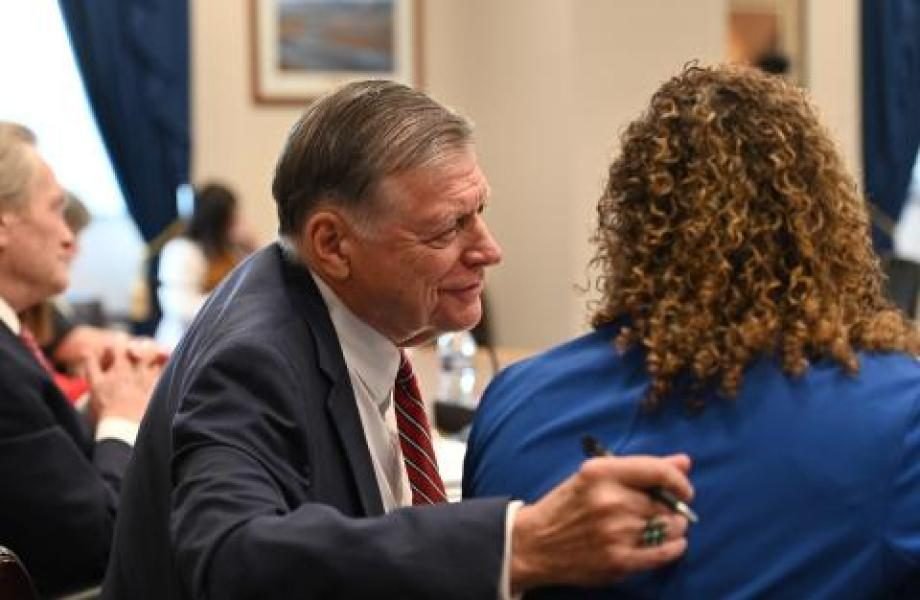
House Appropriations Committee Chairman Tom Cole (R-Okla.) said the package will fund “critical community projects across the country, along with investments in water, port and flood control infrastructure that protect towns and keep commerce moving.”
Alex Etchen, vice president of government affairs for the Associated General Contractors of America, told ENR that it is likely, though not guaranteed, that the spending package will pass and become law. “I think the hangover from the largest government shutdown in history is still very fresh in the minds of both parties,” he said. “Congressional leaders on both sides of the aisle say no one ever wins from a government shutdown.”
