

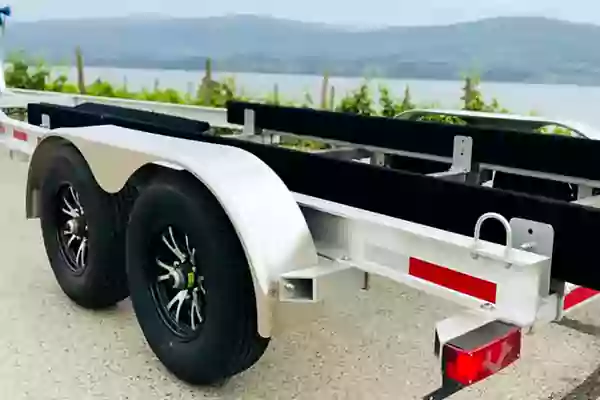
Galvanized Boat Trailer Wheels – Long term durability where the water meets the road
Galvanized boat trailer wheels are not just another component of the trailer. They perform in one of the harshest environments any wheel can face, repeatedly moving out of the water at highway speeds under heavy loads. When the wheels fail, it rarely happens slowly. It usually happens at the worst possible time, often far from home. Choosing the right galvanized wheels is not a matter of appearance. It’s about reliability, safety and controlling long-term ownership costs.

Why are boat trailer wheels under constant stress
Boat trailer wheels deal with stresses that standard vehicle wheels never encounter. They are submerged in water, exposed to salt or minerals, dried by heat and then subjected to sustained highway speeds. This repeated cycle weakens unprotected steel faster than most homeowners expect. Even trailers that look good on the outside can have corrosion forming in hidden cargo areas.
Salt water accelerates corrosion faster than most homeowners realize
Salt water dramatically accelerates corrosion by acting as an electrolyte that allows oxidation to spread rapidly across metal surfaces. Holes, core faces and weld seams trap salt residue that is difficult to rinse completely. Over time, corrosion begins beneath the surface, weakening the wheel’s structure long before the rust becomes visible.
Exposure to fresh water still creates long-term damage
Freshwater environments may seem harmless, but they still introduce oxygen and moisture that promote rust formation. Trailers stored outdoors or frequently thrown into lakes or rivers often show corrosion in areas where water drains slowly or collects after use.
What are galvanized wheels and why are they important?
Galvanized wheels are steel wheels protected by a zinc coating designed to protect the steel from corrosion for many years. This protection is not aesthetic. It is structural. Zinc forms a barrier that prevents water and oxygen from reaching the underlying steel, dramatically slowing deterioration.
How hot dip galvanizing protects the entire wheel
Hot-dip galvanizing involves immersing the finished steel wheel in molten zinc. The zinc chemically bonds with the steel, creating a layered protective coating that covers all exposed surfaces. This includes welds, edges and internal areas where paint often doesn’t reach.
Why galvanized wheels continue to protect even after scratches
Zinc protects the steel through a sacrificial action. When the coating is scratched, the surrounding zinc corrodes first, preventing the rust from spreading to the steel. This feature is especially important for boat trailers that encounter gravel, sand and road debris on a regular basis.
Key benefits of galvanized boat trailer wheels
The true value of galvanized wheels becomes apparent over time. They resist corrosion where it starts, maintain structural strength under load and reduce replacement frequency compared to painted steel wheels.
Improved corrosion resistance in hidden areas
Galvanizing protects the back of the wheel, the lug holes and the weld joints. These areas are often overlooked during inspections, but are critical to the integrity of the wheels. Protecting them delays structural weakening and extends service life.
Longer service life in marine conditions
In real-world marine use, galvanized wheels often last several years longer than painted steel alternatives. This extended service life reduces downtime, replacement costs and the risk of breakdowns down the road.
Galvanized wheels versus aluminum trailer wheels
Aluminum wheels are popular for looks and light weight, but they are not always the best choice for all boat trailers. Strength, fatigue resistance and corrosion behavior must be taken into account.
Differences in strength and load capacity
Galvanized steel wheels tend to carry higher loads with less flex than similarly sized aluminum wheels. For heavier boats or long distance towing, this extra strength improves safety and durability.
Comparison of costs and long-term values
Aluminum wheels tend to cost more upfront. Galvanized wheels often offer better long-term value for owners who prioritize reliability and low maintenance over visual appeal.
How to choose the right galvanized boat trailer wheels
Selecting the right galvanized wheel requires special attention to fit, load capacity and compatibility. Wrong choices can compromise safety even if the wheel is well made.
Bolt pattern and core compatibility
Always confirm the center bolt pattern of your trailer. Common configurations include four-pin, five-pin, and six-pin patterns. Improper mounting can cause vibration, uneven load distribution and tip failure.
Selection of wheel size and load capacity
The diameter and width of the wheel must match the size of the tires and the clearance of the trailer. The load capacity must exceed the weight of the fully loaded trailer, including boat, fuel and equipment.
Common mistakes when buying galvanized trailer wheels
Many owners focus on price rather than specifications. Thin galvanizing, lower rated load capacity, or mixing incompatible hardware can significantly shorten the life of the wheel. Reusing old or corroded nuts undermines the benefits of new wheels.
Maintenance habits that extend the useful life of the wheels
Galvanized wheels require minimal maintenance, but basic care makes a significant difference. Simple habits slow zinc wear and prevent unnecessary corrosion.
Rinse after the salt water launch
Rinsing the wheels with fresh water after using salt water removes surface salt and reduces corrosion pressure on the zinc coating. This practice significantly extends the useful life.
Periodic inspection of zinc wear
Dull or chalky surfaces are normal signs of aging zinc. Deep pitting or exposed steel near load zones indicate that replacement may be necessary.
When to replace galvanized boat trailer wheels
Cosmetic changes alone do not require replacement. Structural cracks, severe warping, or deep corrosion near the extension holes indicate that the wheel can no longer be trusted at highway speeds.
Galvanized wheels are worth it for casual boaters
Even occasional use exposes wheels to moisture that can remain for extended periods. Galvanized wheels tolerate this better than painted steel, making them a reliable choice regardless of frequency of use.
Frequently asked questions about galvanized boat trailer wheels
What makes galvanized wheels better than painted steel wheels
Galvanized wheels use a bonded zinc coating that continues to protect the steel even after the surface is damaged. Painted wheels lose protection once the coating is compromised.
Galvanized wheels can be used in both salt and fresh water
yes Galvanized wheels are suitable for both environments and are particularly effective in salt water where the risk of corrosion is higher.
Galvanized wheels require special nuts
Corrosion-resistant nuts, preferably galvanized or stainless steel, are recommended to maintain proper torque and reduce galvanic corrosion.
How long do galvanized boat trailer wheels usually last?
Lifespan depends on use and maintenance, but galvanized wheels tend to last several years longer than painted steel wheels under similar conditions.
Final thoughts on galvanized boat trailer wheels
Galvanized boat trailer wheels are designed for real marine use, not showroom looks. They provide predictable durability, great load handling and lower long-term maintenance costs. For boat owners who prioritize safety and reliability, galvanized wheels remain one of the most practical upgrades available.
