

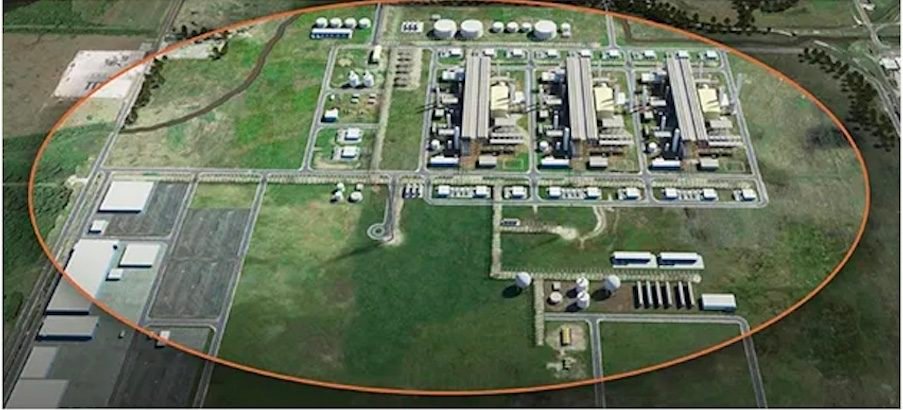

Dallas-based energy infrastructure owner Energy Transfer said Dec. 18 that it is suspending its $5.3 billion Lake Charles liquefied natural gas export terminal project in Louisiana “to focus on allocating capital to its significant backlog of natural gas pipeline infrastructure projects that [it] believes it offers superior risk/return profiles.”
The suspension of the project comes as the company has faced rising project costs and market fears of a global LNG oversupply, but said it is “open to discussions with third parties who may have an interest in developing the project.” Media reports speculate that at least two buyers, including MidOcean Energy LLC, are interested.
The EPC contract for the project was awarded in 2024 to a joint venture of KBR and Technip Energies to convert the existing smallest gas import facility into an LNG export site, with three new liquefaction trains and an annual capacity of 16.5 million metric tons. The Lake Charles site was to supply oil giant Chevron with about 3 million tonnes a year, Energy Transfer previously said.
But analysts note growing U.S. LNG capacity, with one saying “more projects will be exhausted.”
Energy Transfer also announced last month that it is increasing capacity on the planned Desert Southwest expansion of its Transwestern pipeline from the Permian region of Texas through New Mexico to Arizona. The company said the pipeline diameter will be expanded to 48 inches from 42 inches, increasing capacity to 2.3 billion cubic feet per day and project investment to $5.6 billion. The company cited additional customer demand, particularly driven by population and data center growth, as well as the replacement of coal-fired power plants with natural gas facilities. The pipeline is scheduled to be operational by the end of 2029.
Other Southwest pipeline projects include Kinder Morgan’s $455 million Gulf Coast Expansion Project, which will boost Permian Basin gas to South Texas markets by 570 million cubic feet per day and is scheduled for completion by mid-year. In the Midwest, TC Energy Corp. has approved Northwoods’ $900 million expansion of its ANR line, which it said will add 400,000 cubic feet per day of new capacity in Illinois and Wisconsin to support data centers, including 69 miles of new 36-in. and 42 inches. line, with scheduled service at the end of 2029.
Alaska LNG marks a milestone
Meanwhile, the Alaska LNG project passed its final updated federal permits in December 2025 in an estimated $45 billion bid led by developer Glenfarne and with state-owned Alaska Gasline Development Corp. which owned 25%, to build a Prudhoe Bay gas treatment plant and carbon sequestration facility and an 800-mile pipeline to a North Can SNG export pipeline facility. produce up to 3.5 billion cubic feet per day for export and domestic use.
The project got its fast-tracked federal Fast-41 permits last month, Alaska LNG said, amid the Trump administration’s push to speed up domestic fossil fuel projects, but the timing for a final investment decision and the start of construction remains unclear. The developer noted preliminary interest from Asian buyers and said it signed a non-binding letter of intent this month with developers of a proposed gold mine in southwest Alaska for long-term energy supply. Australia-based contractor Worley is preparing a final engineering study and cost estimate, the developers said last year.
“This project is crucial to our future,” said Sen. Lisa Murkowski, Republican of Alaska. “It can help secure Alaska’s economy for the next generation, while providing affordable gas to both the state and our Pacific allies.”
But observers see hurdles to securing supply contracts with new competition from Canada’s now open LNG plant in British Columbia and others under construction. and cost and environmental challenges, before being able to proceed with the first phase of pipeline construction.
