

The Real-World Guide to Mini Excavator Attachments for Different Applications
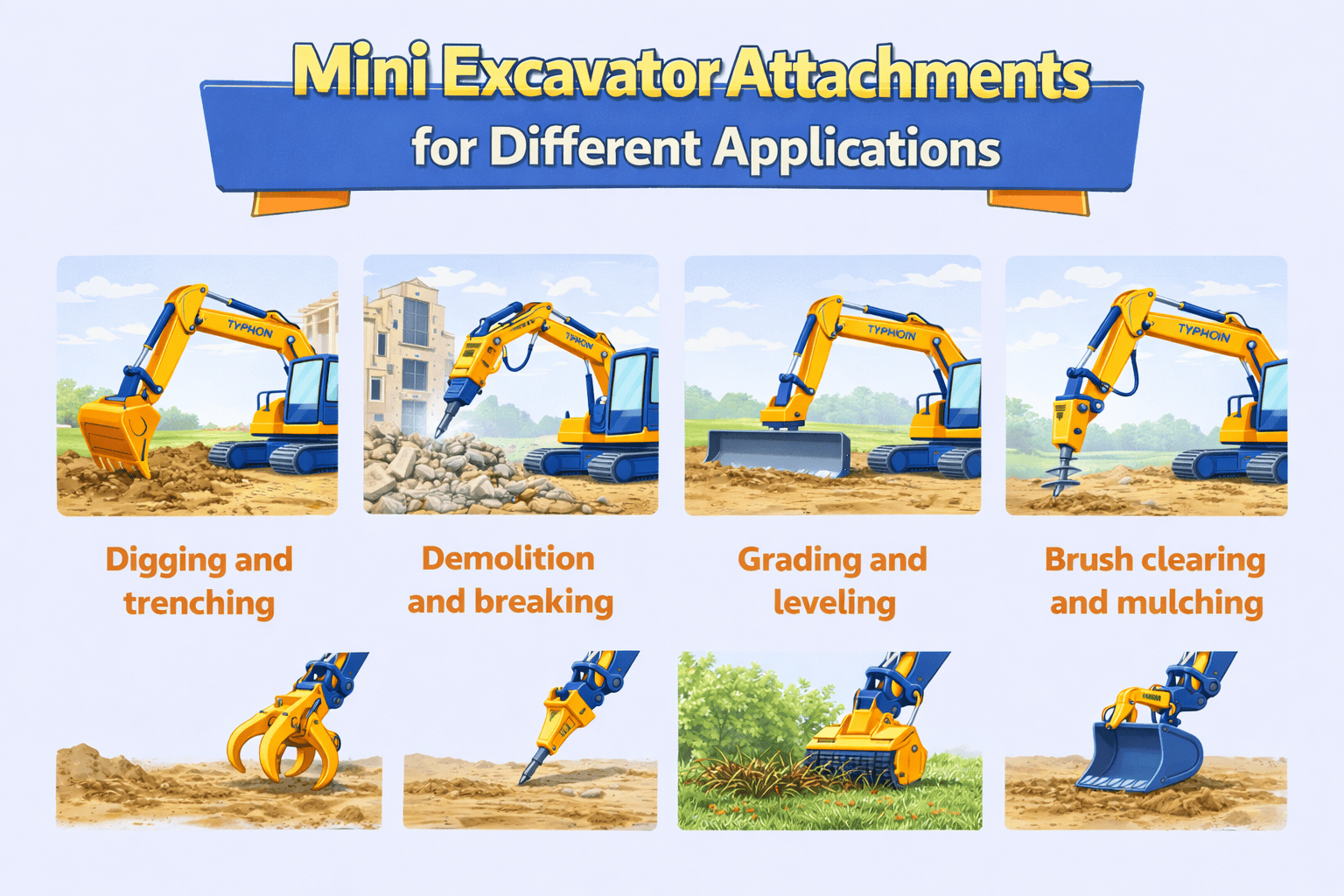
Mini excavator attachments for different applications are interchangeable tools that transform a standard machine into a versatile multi-tasker. The most common tools include trenching buckets for digging utilities, hydraulic breakers for concrete demolition, tilt buckets for precise grading, heavy-duty mulchers for land clearing, and augers for drilling post holes.
Let’s be honest for a second. If you’ve got a compact excavator sitting on the trailer, and all you’ve ever used is the standard bucket it came with, you’re leaving money on the table.
Sure, out of the box, these machines are great for moving dirt. But the real magic happens when you realize your machine isn’t just a digger—it’s a multi-tool. Understanding how to use mini excavator attachments for different applications is the secret to getting a job done before lunch instead of sweating through a three-day weekend.
Whether you’re a contractor trying to bid on more complex jobs or a property owner tackling a massive backyard overhaul, swapping out your tools changes the entire game. You don’t need to rent five different pieces of heavy equipment. You just need a solid baseline machine and a smart mix of excavator attachment types. From smashing up old driveways to ripping through dense brush, the right add-on turns a single piece of equipment into a highly profitable fleet.
This guide aims to simplify the process. We’ll look at the absolute best compact excavator attachments out there, how to match them to your specific job, and why swapping tools beats renting single-use machines every single time.
Quick Summary: What You’re Getting Today
- The Core Tools: A breakdown of the best gear for digging, breaking, grading, clearing, and drilling.
- Tech Talk: Why quick-attach setups and modern hydraulics save you hours of downtime.
- Smart Buying: Figuring out which tools actually give you the best return on investment.
- Expert FAQs: Fast, no-nonsense answers about compatibility and machine limits.
What Are Mini Digger Attachments?
What is a mini excavator attachment?
Basically, mini digger attachments are specialized, swap-and-go tools connected to the end of your excavator’s arm. Instead of just scooping dirt, they tap into the machine’s hydraulic power to drill, crush, cut, or grab. Think of it like swapping bits on a power drill, but on a massive, earth-moving scale.
The Best Mini Excavator Attachments for Different Applications
If you want to maximize your equipment’s value, you need to know exactly what each tool brings to the job site. Let’s break down the heavy hitters and the most essential mini excavator attachments for different applications.
1. Digging and Trenching
When folks think of excavators, they think of digging. But digging a basement isn’t the same as laying a delicate fiber optic cable. Picking the right mini excavator attachments for different applications in earthmoving makes all the difference.
- Trenching Buckets: Trying to dig a narrow pipe trench with a wide standard bucket is a nightmare. A mini excavator trenching bucket is purposely built narrow. It lets you slice a clean, tight line for utilities without moving a mountain of extra dirt you’ll just have to backfill later.
- Adding a Thumb: Ever tried to pick up a boulder with just a bucket? It’s like trying to eat peas with a knife. Adding a mini excavator thumb attachment gives your machine a mechanical “hand.” You can pinch, grab, and carefully place awkward stuff like stumps, jagged rocks, or scrap metal.
Real-World Check: A plumber digging a sewer line uses a 12-inch trenching bucket. They get the pipe laid fast, make less of a mess in the client’s yard, and cut their backfill time in half.
2. Demolition and Breaking
Sometimes you just need to break stuff. If you’re ripping up old asphalt or taking down a retaining wall, standard mini excavator bucket attachments are going to get beat to pieces. You need tools built for violence.
- Hydraulic Breakers: A mini excavator hydraulic breaker is exactly what it sounds like—a giant, hydraulic-powered jackhammer. It uses the machine’s auxiliary hydraulics to deliver rapid-fire blows that shatter solid concrete in minutes.
- Rippers: Got ground that is frozen solid or packed with nasty tree roots? A mini excavator ripper attachment is what you want. It’s essentially one massive, sharp tooth. All your machine’s breakout force gets channeled into that single point, slicing right through the tough stuff.
Why choose a hydraulic breaker? It turns an exhausting, back-breaking manual jackhammer job into a quick task you can do while sitting in an air-conditioned cab.
3. Grading and Leveling
Once you’ve made a mess digging and smashing, you have to put the site back together. This is where precision matters, and using the right mini excavator attachments for different applications during the finishing phase separates the pros from the amateurs.
- Tilt Buckets: A regular grading bucket is fine for flat ground. But a mini excavator tilt bucket has a hydraulic cylinder that lets the bucket pivot side-to-side. It is an absolute lifesaver for cutting ditches, shaping slopes, or contouring a yard without constantly having to move the tracks.
- Compactors: After you backfill, that loose dirt is going to settle. A mini excavator compactor attachment (often a vibratory plate) packs the dirt down hard and fast, so you don’t end up with sinkholes a year later.
4. Brush Clearing and Mulching
Clearing overgrown land pays incredibly well, provided you aren’t doing it with a chainsaw and a weed whacker. The latest mini excavator attachments for landscaping have totally changed how we handle heavy vegetation.
- Brush Cutters and Mulchers: These beasts use a spinning drum covered in heavy teeth to shred saplings, thick brush, and even small trees right down to the ground, turning them into mulch on the spot.
- Grapples: When you need to move the timber you just cut, a mini excavator grapple attachment is your best friend. Unlike a single thumb, a grapple has dual jaws that aggressively clamp down on massive, awkward loads of brush or logs.
Real-World Check: A guy clearing a steep embankment uses a flail mower attachment. Because the excavator has reach, he can sit safely on flat ground while the mower arm reaches down to chew up the heavy brush on the slope.
5. Augering and Drilling
Building fences, setting deck posts, or planting trees? Manual post-hole diggers are awful. Save your back and let the hydraulics do the heavy lifting.
- Auger Drives: A mini excavator auger attachment acts like a giant drill. It hooks into the machine’s hydraulics and spins massive bits into the earth, giving you perfectly clean, deep holes in seconds.
How does an auger actually work?
The drive motor hooks to your excavator arm and plugs into the hydraulic lines. When you hit the pedal, fluid rushes through the motor, spinning the bit. It bites into the dirt, and you just lift the arm to pull the loose soil right out of the hole. Easy.
[ecwid widgets=”productbrowser categories” default_category_id=”167971012″ default_product_id=”0″ minicart_layout=”MiniAttachToProductBrowser”]
How Does Quick Attach Technology Work?
Years ago, changing mini excavator attachments for different applications meant sweating with a sledgehammer to knock out greasy, stubborn pins. It took forever. Thankfully, modern tech fixed that.
Today’s quick attach mini excavator attachments use a clever coupler system at the end of the arm.
- Mechanical Couplers: You hop out of the cab, use a wrench or lever to pop the locking pins, drop the bucket, hook the new tool, and lock it in.
- Hydraulic Couplers: The luxury option. You press a button in the cab to drop the tool and grab a new one without ever leaving your seat.
Keep in mind, if you’re running hydraulic mini excavator attachments (like a breaker or an auger), you still have to jump out to connect the hydraulic hoses. But the physical heavy lifting of the steel? That takes seconds now.
Why Buy Attachments Instead of Renting Dedicated Machines?
A lot of guys ask, “Should I buy an auger attachment or just rent a standalone drilling rig?” Here is why leaning into mini excavator attachments for different applications usually wins:
- It Costs Less Upfront: Buying a breaker and an auger attachment is way cheaper than buying a whole separate skid steer and a drilling rig.
- Hauling is a Breeze: You only have to strap down one machine on your trailer. The attachments can just ride in the bed of your truck.
- Less Wrenching: One engine means you only have one set of oil changes, fuel filters, and tracks to worry about maintaining.
Frequently Asked Questions (FAQ)
Got questions about making everything fit together? Here are the straight answers about mini excavator attachments for different applications.
- Are mini excavator attachments universal?
No, they aren’t. While a lot of brands use similar setups, you absolutely have to match the pin diameter, pin spread, and ear width to your specific machine. Always double-check your manual before spending cash.
- What is the best mini excavator attachment for landscaping?
For general dirt shaping, you can’t beat a tilt grading bucket. But if you do a lot of land clearing, a heavy-duty flail mower or a mini excavator grapple attachment will pay for itself the fastest.
- Do I need auxiliary hydraulics to run a thumb?
Yes and no. To run a fully hydraulic mini excavator thumb attachment from the cab, you need two-way auxiliary hydraulic lines. If you don’t have those, you can buy a mechanical (stiff-link) thumb, but you’ll have to adjust it by hand.
- What size hydraulic breaker do I need?
It all comes down to your machine’s weight and hydraulic flow (GPM). If you put a massive mini excavator hydraulic breaker on a tiny machine, you’ll damage the excavator. Put a tiny breaker on a big machine, and it won’t hit hard enough to crack the concrete.
- Can I use a skid steer attachment on my mini excavator?
Usually, no. Skid steers use a flat universal mounting plate, while excavators use pins. That said, you can buy aftermarket adapter plates to run skid steer tools on an excavator, as long as your hydraulic flow can handle it.
Ready to Actually Get the Most Out of Your Machine?
Figuring out the right mini excavator attachments for different applications is the fastest way to turn your basic digger into a serious money-maker. Whether you’re trying to punch perfect holes for a retaining wall, chew through a stump, or grade a tricky slope without repositioning your tracks twenty times, there’s a tool out there designed to make your life easier.
