

The Kansas City Chiefs’ decision to move from Missouri to Kansas is setting in motion a $4 billion construction program focused on a new domed stadium, a separate headquarters and training campus and two mixed-use developments, according to state and team documents released Dec. 22.
Kansas Gov. Laura Kelly and Chairman and CEO Clark Hunt announced an agreement to build a $3 billion indoor stadium in Kansas City, Kan., Wyandotte County, with a goal of opening for the 2031 NFL season, along with a new team headquarters and practice facility in Olathe, Johnson County, Kan.
“This deal to bring the Chiefs to Kansas takes our state to the next level,” said Kelly, who called the deal “a game changer for Kansas.” Hunt said the team was “excited to partner with Kansas State,” adding that the stadium, practice facility and surrounding development “would benefit the entire region.”
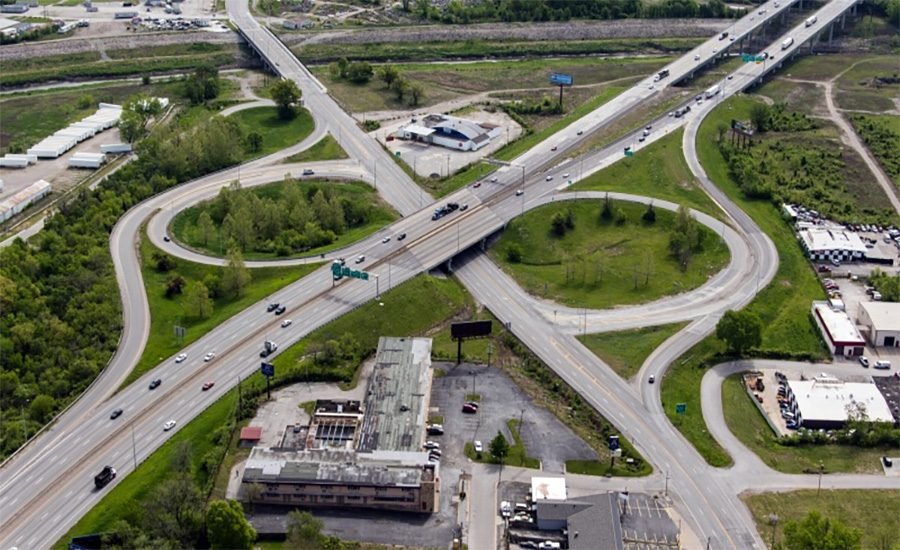
Project documents reviewed by ENR place the stadium near the interchange of Interstates 70 and 435, within a newly designated STAR bond district that also includes the Olathe Training Complex, subject to final boundary approval by state and local officials. Wyandotte County and the city of Olathe have yet to adopt ordinances promising incremental local sales tax revenue generated within the district to support the bond repayment.
Financing, delivery and risk allocation
Under this framework, the stadium would be delivered through a public-private partnership with approximately 60% public funding and 40% private funding. Public participation would be funded primarily through sales and revenue tax (STAR) bonds and the state’s Attracting Professional Sports to Kansas Fund, which is capitalized through lottery and sports betting revenue.
RELATED
Kansas City becomes the key driver of urban redevelopment
The preliminary STAR bond agreement specifies that the stadium will be a fully enclosed facility with a minimum seating capacity of 65,000, to be constructed in a “first-class manner” comparable to recent NFL indoor facilities. The agreement also contemplates pursuing sales tax exemptions applicable to construction materials, subject to required approvals.

A preliminary map outlines the proposed STAR bond district covering the planned site of the domed stadium in Wyandotte County and a separate Chiefs practice facility in Johnson County, Kan.; Final district boundaries will be established by subsequent approvals.
Map courtesy of the Kansas Department of Commerce
The scope of the stadium explicitly includes parking, utility infrastructure and related site improvements, but the documents have not allocated responsibility or cost allocations for off-site road improvements, interchange modifications or broader transportation improvements beyond what is ultimately incorporated into the final project schedule. Coordination with state and local transportation agencies is anticipated but not yet defined.
The agreement sets out a guaranteed maximum price (GMP) delivery structure, with bosses responsible for managing the design and build procurement and covering any cost overruns beyond the public funding limit. The state’s public contribution is limited to 60 percent of the stadium budget, or $1.8 billion, and the team must demonstrate sufficient private financing capacity before any bond issuance. During construction, public and private funds would be disbursed on a pari passu basis, meaning public participation cannot exceed 60% of costs.
While the Chiefs would oversee construction, the stadium must be transferred to a government or quasi-government entity before the bonds are issued, with the team signing a long-term lease and management agreement. The initial lease term is 30 years, with multiple five-year extension options. Annual lease payments would start at $7 million, increasing annually, with portions directed to reserves for repairs, maintenance and capital operations.
The agreement sets a reserve funding threshold of $17 million annually, increasing “the greater of 2% or CPI,” and requires the public owner to retain an independent engineering or facility conditioning firm to regularly evaluate structural, mechanical, electrical and architectural systems. Public funding is capped at the agreed level, with bosses responsible for costs above this threshold.
RELATED
Missouri offers incentives to keep Chiefs and Royals from moving to Kansas
Economic impact
WHAT TO WATCH NEXT
While the agreement outlines the financing structure and ownership terms, several key infrastructure and delivery decisions remain unresolved. Project documents place the stadium near the interchange of Interstate 70 and Interstate 435, but responsibility for off-site road improvements, access modifications and traffic management has not yet been defined.
The STAR bond agreement sets out a guaranteed maximum price delivery framework, but does not yet identify the procurement path, leaving open questions about whether construction will proceed through a single CM-at-risk contract, phased advance works packages or another model.
Design leadership, utility upgrades, stormwater infrastructure and labor requirements have not been announced. State and local approvals, including ordinances that promise local sales tax revenue within the STAR bond district, will shape the project timeline and determine when contractors and designers begin to see hiring opportunities.
An independent economic impact study prepared for the Kansas Department of Commerce estimates that the combined stadium, headquarters, training facility and mixed-use development would generate about $4.4 billion in economic output from the construction phase, supporting nearly 21,000 jobs and $1.6 billion in labor income in Johnson and Wyandotte counties. Once fully constructed, the facility is expected to generate approximately $1.1 billion in annual economic output and support approximately 4,000 ongoing jobs, with a mixed-use development completed in 2038.
Missouri officials expressed disappointment. Gov. Mike Kehoe said in a statement reported by Kansas City media that Missouri had “submitted a competitive and attractive proposal” to keep the Chiefs at Arrowhead Stadium, but that the team’s decision to relocate was “deeply disappointing.” Kansas City, Mo., Mayor Quinton Lucas also acknowledged the impact of the move, calling it a setback, according to local media reports.
The Chiefs plan to continue playing home games at Arrowhead through the 2030 season before moving to the new facility in Kansas. The move follows the failure in April 2024 of a Jackson County sales tax measure to fund major stadium renovations.
Several critical elements of the project remain unresolved and are expected to be addressed in later phases. These include leading the final design, acquisition sequencing and procurement strategy; allocating and funding off-site transportation and utility improvements; labor requirements, including the prevailing wage or labor contract provisions of the project; and the scope and timing of environmental review and permitting. No architects, engineers or construction companies have been named.
